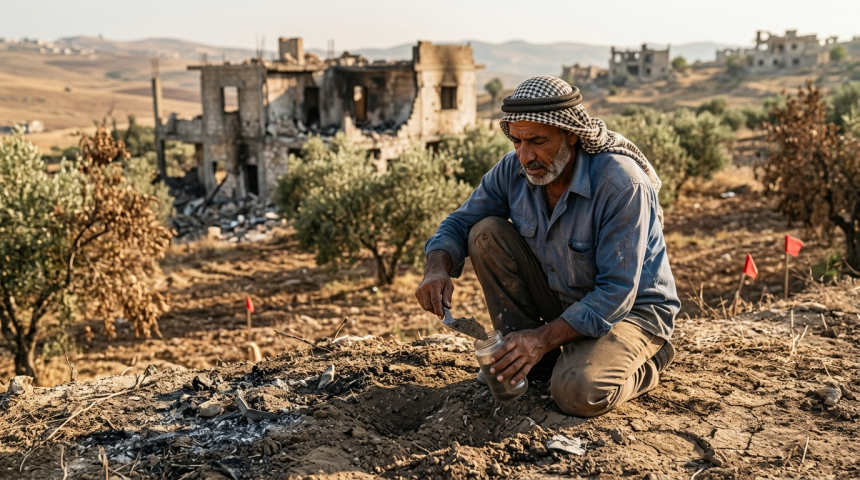
Contaminated soil is emerging as a lasting threat across southern Lebanon, where war damage has extended from shattered villages to farmland and sensitive ecosystems.
Soil samples from affected areas reportedly contain elevated levels of heavy metals, the herbicide glyphosate, and white phosphorus. The findings raise concerns about farming, public health, and environmental recovery long after active fighting ends.
The contamination follows the conflict between Israel and Hezbollah in southern Lebanon. While destroyed buildings offer a visible record of war, harmful substances in soil can remain harder to detect and remove.
Tests Point to Several Contaminants
The reported samples identify three broad concerns. Each substance behaves differently and requires separate testing, risk assessment, and cleanup plans.
- Heavy metals can remain in soil for long periods and may enter crops or water.
- Glyphosate is a widely used herbicide, but its reported presence requires further investigation into its source and concentration.
- White phosphorus can cause severe burns and start fires. Residue may also pose risks if fragments remain in the ground.
“Soil samples of the land show high levels of heavy metals, the herbicide Glyphosate, and white phosphorus.”
No laboratory figures, sample locations, testing dates, or research methods were provided with the findings. Those details would be needed to measure the scale of exposure and compare contamination across communities.
The available account also does not include responses from Israeli authorities, Hezbollah, Lebanese officials, farmers, or independent scientists. It does not establish how each contaminant entered the soil.
Farmland and Ecosystems Under Pressure
Southern Lebanon includes villages where agriculture supports household income and local food supplies. Scorched fields may lose crops immediately, while contaminated soil could delay planting or make some produce unsafe.
Heavy metals are a special concern because they do not break down like many organic chemicals. Their effect depends on the metal, concentration, soil conditions, and route of human exposure.
Glyphosate presents a different question. Detecting it does not by itself prove when or why it was applied. Investigators would need to determine whether it came from routine agricultural use, wartime activity, runoff, or another source.
White phosphorus creates both immediate and delayed hazards. It can ignite when exposed to oxygen, making any remaining fragments dangerous to residents, cleanup crews, and farmers disturbing the ground.
Recovery Requires Transparent Testing
The claim that ecosystems have been harmed “for generations to come” reflects the seriousness of persistent pollution. However, the duration of damage cannot be confirmed without wider sampling and continued monitoring.
A credible assessment would map contaminated sites, publish laboratory methods, and test nearby water and crops. It would also distinguish pollution caused by military activity from older industrial or agricultural contamination.
Independent oversight will be important because environmental findings in a conflict zone can carry political weight. Public access to results could help communities make decisions about returning, planting crops, and rebuilding homes.
Cleanup may involve removing polluted soil, restricting access, treating affected land, or monitoring sites over time. The proper response will depend on verified concentrations and the risks at each location.
Southern Lebanon’s recovery will therefore require more than rebuilding roads and villages. Authorities and researchers must establish where contamination exists, who faces exposure, and which land can be used safely. The next key step is a transparent, independent survey that turns early warnings into clear public guidance.