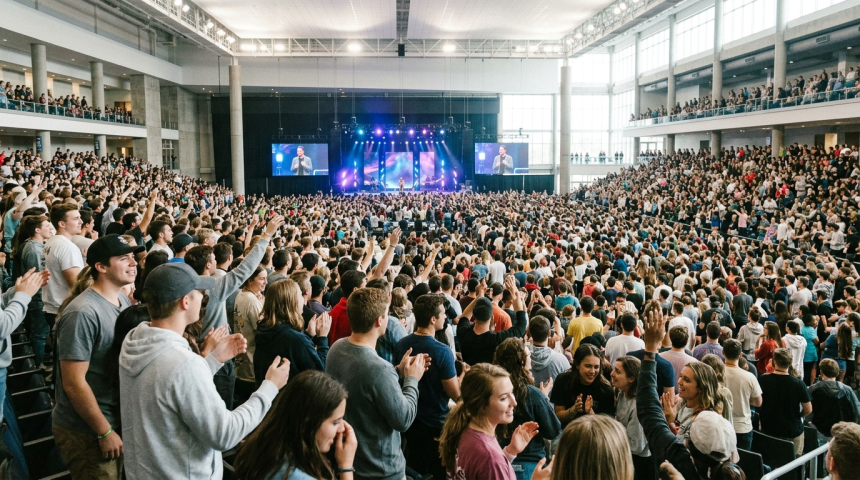
More than 26,000 young people attended the Catholic conference SEEK 2026 across three cities, setting an attendance record and posting 24% growth.
The increase offers a clear sign of energy among young Catholics at a time when many religious groups are working to keep younger members involved. By using three host cities, the conference also reached participants across a wider area.
Attendance Rises by Nearly One-Quarter
The reported 24% increase suggests the previous comparable attendance was about 21,000 people. That means SEEK added roughly 5,000 participants in a single cycle.
Those figures make the latest gathering more than a modest annual gain. A nearly one-quarter jump points to rising demand for large, shared religious events among young people.
- More than 26,000 people attended.
- Events were held across three cities.
- Attendance grew by 24%.
- The total established a new conference record.
The three-city model likely played an important role in the turnout. Multiple locations can reduce travel time and costs, two common barriers for students and young adults. It can also widen access for campus groups, parishes and families.
A Measure of Catholic Engagement
Large conference attendance does not provide a full measure of church health. It does, however, show that tens of thousands of young people were willing to commit time and money to gather around their faith.
That distinction matters. Attendance can reflect enthusiasm, strong promotion, easier access or successful local organizing. Long-term vitality depends on whether participants remain active after the event ends.
For Catholic leaders, the next test will come in parishes, campus ministries and local service programs. Conference energy can fade quickly without regular opportunities for worship, friendship and leadership.
Still, a record crowd gives organizers a large pool of potential volunteers and future leaders. It also challenges the idea that young adults are uniformly detached from organized religion.
Growth Brings New Pressures
Rapid expansion creates practical questions for future SEEK events. Organizers must decide whether to add locations, enlarge existing venues or limit registration. Each option affects cost, staffing and the character of the gathering.
A larger conference can attract more speakers and resources. Yet scale can also make personal connection harder. The trick is familiar to any growing event: fit more people through the doors without making them feel like seat numbers.
Future reporting will need to examine who attended, how many were first-time participants and whether growth was spread evenly across the three cities. Retention data would also show whether the event produced lasting involvement.
SEEK 2026 nevertheless delivered a clear result. More than 26,000 young people gathered across three cities, and attendance rose 24%. The record indicates strong momentum. The broader measure of success will be what those attendees do once they return home.