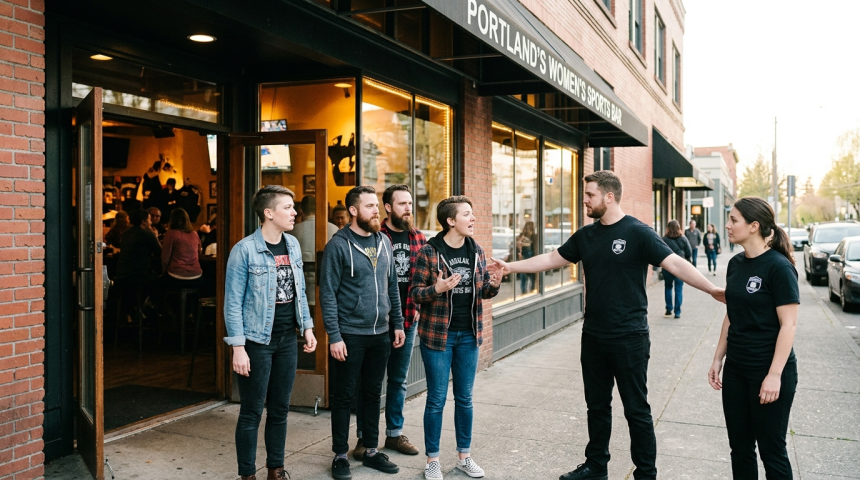
Five people were removed from a Portland women’s sports bar after patrons objected to their shirts, according to group member Amy Sousa. The incident has prompted questions about customer complaints, dress rules, and how venues handle disputes over political or social messages.
Sousa said patrons reported that the shirts made them “uncomfortable.” The wording or images printed on the clothing were not identified, and the reason given by staff was not described in detail.
The bar, its location, and the date of the incident were also not provided. No statement from the venue or the complaining patrons was available. Those gaps limit any firm conclusion about what happened before the group was removed.
One Account, Several Unanswered Questions
Sousa’s account presents a clear central claim: the group’s clothing drew complaints, and all five members were asked to leave. Yet several facts needed to assess that decision remain unknown.
- What words or symbols appeared on the shirts?
- Did the bar have a posted dress or conduct policy?
- Did staff warn the group before removing it?
- Were arguments, threats, or other disruptions reported?
The answers matter because discomfort alone can cover much ground. A shirt may express a lawful opinion, target another customer, violate a venue rule, or become part of a wider confrontation. Each situation calls for a different response.
Without the venue’s account, Sousa’s statement remains an allegation rather than a complete record. Fair reporting requires both the group’s experience and the business’s explanation.
Private Venues Face Difficult Calls
Sports bars often build their identity around a shared audience. A women’s sports bar may seek to offer a welcoming place for fans who have long received less attention from traditional sports media and venues.
That mission does not remove the daily challenge of managing conflict. Staff must balance open expression with safety, order, and the comfort of other guests. The line can become especially hard to draw when clothing carries a disputed message.
Private businesses generally may enforce neutral rules on clothing and behavior, subject to local laws and protections against discrimination. Whether a removal was lawful or fair often depends on the policy, how consistently it was applied, and why staff acted.
A rule against threats or harassment differs from a rule based only on unpopular opinions. Consistency is the hinge. If similar messages receive different treatment depending on who wears them, a venue may face criticism even when staff have broad discretion.
Transparency Could Clarify the Dispute
The incident may remain a clash of competing accounts unless more information emerges. A written policy, staff explanation, witness account, or image of the shirts could help establish whether the dispute concerned speech, conduct, safety, or all three.
Sousa said five people in her group were removed after patrons complained that their shirts made them “uncomfortable.”
For venue operators, the episode offers a practical lesson: rules work best when they are clear before a dispute begins. Staff should document removals and explain which policy was violated. Customers, meanwhile, should know that provocative clothing can draw complaints, though a complaint does not settle whether removal is justified.
The key issue is not simply who felt uncomfortable. It is whether the bar used a clear, lawful, and evenly applied standard. Until the venue and other witnesses provide their accounts, the public has one side of a story that still needs basic facts.