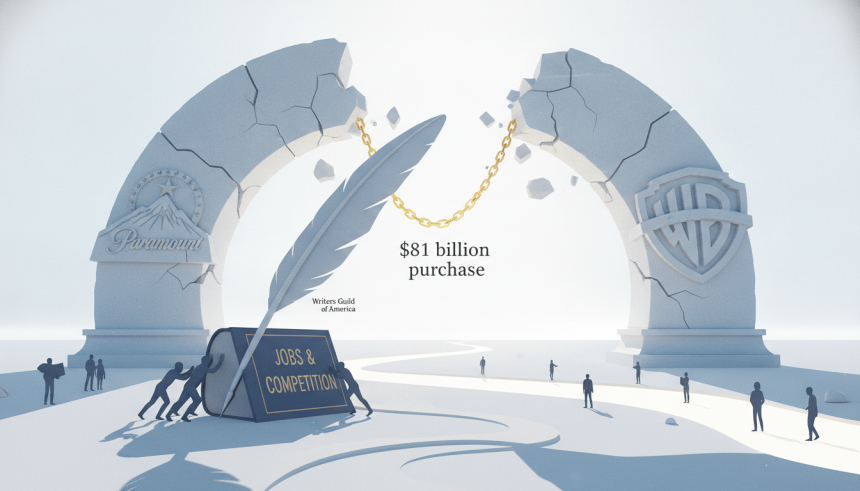
A fresh obstacle has emerged for Paramount’s proposed $81 billion purchase of Warner Bros. Discovery, as the Writers Guild of America moved to challenge the deal. The action places labor’s voice squarely in a high-stakes media tie-up that could reshape Hollywood. The filing raises concerns about jobs, competition, and the future of streaming at a moment when viewers and creators are already strained by change.
The Writers Guild of America has become the latest group to challenge Paramount’s $81 billion acquisition of Warner Bros. Discovery.
The move adds pressure to a transaction that would combine storied studios, major cable networks, and streaming platforms under one roof. It also invites closer review by regulators who are already skeptical of large media mergers.
What Prompted the Challenge
The guild’s core worry is size. A combined Paramount and Warner Bros. Discovery would pool vast film and TV libraries, sports rights, and popular franchises. That kind of reach could give the company more leverage over wages, staffing levels, and contract terms. Writers say those pressures are already intense after years of belt-tightening in streaming.
The filing also reflects lingering frustrations from the 2023 writers strike, when the WGA fought for better pay, transparency on streaming viewership, and guardrails on the use of AI in script work. Consolidation, they argue, can make gains in those areas harder to protect.
The Stakes for Writers and Viewers
For writers, fewer major buyers can mean fewer chances to pitch shows and negotiate fair deals. It can also lead to shorter orders and longer waits between seasons as bigger companies prioritize cost cuts.
For audiences, the near-term risk is reduced variety. Consolidation tends to concentrate investment in known hits while trimming riskier ideas. Pricing and bundling could also change if the merged company tightens its streaming strategy.
- Fewer buyers can reduce bargaining power for creators.
- Programming slates may favor franchises over new voices.
- Streaming bundles could shift pricing and access.
Antitrust Questions Facing Regulators
The Justice Department and Federal Trade Commission have signaled tougher scrutiny of tie-ups that could lessen competition. In media, regulators weigh not only consumer prices but also the impact on suppliers, including writers, actors, and smaller production firms.
Enforcers will likely study market share in scripted TV, film distribution, and streaming subscriptions. They may test whether the merged entity could push tougher terms on talent or withhold must-have content from rivals.
Industry Precedent and Possible Outcomes
Hollywood has seen major deals reshape the business in recent years. Disney’s purchase of Fox in 2019, valued at about $71 billion, concentrated marquee franchises under one company. The 2022 WarnerMedia and Discovery combination reordered the streaming race and kicked off deep cost cuts.
Regulators have tools short of blocking a deal. They can seek divestitures, behavioral conditions, or limits on licensing exclusivity. Labor groups may push for transparency pledges on viewership data or commitments to minimum staffing and development budgets.
Investors will watch debt levels and promised savings. Large media mergers often count on cost reductions to make the numbers work. Those cuts can fall hardest on development and mid-budget projects, the very space where new talent breaks through.
How Studios and Supporters Might Respond
Paramount and Warner Bros. Discovery are likely to argue that scale helps them compete with tech-backed streamers, keep prices in check, and maintain theatrical releases. They may point to plans for unified technology, fewer overlapping services, and a stronger content pipeline.
Supporters could also claim that a larger library improves recommendation quality and reduces churn. They might say that steadier cash flow allows for longer runs of fan-favorite series. Whether those gains reach writers and smaller creators is the open question.
What Happens Next
The challenge by the WGA sets the stage for a detailed review process. Expect filings from consumer advocates, rival studios, sports leagues, and theater owners. Regulators will solicit data, interview market participants, and assess remedies.
The clock on deal approval can stretch if agencies request more information. Any settlement would need to address competition, labor impact, and access to key content libraries.
The guild’s move signals that consolidation fatigue has hit a boiling point in Hollywood. The coming months will test whether regulators accept the scale argument or demand carve-outs and clear protections for creative work. For now, writers are drawing a visible line, and the industry is on notice.