OpenAI is expanding its presence in Brazil as it seeks closer ties with developers, businesses, and local communities across the country. The company said the effort will support wider artificial intelligence adoption, though it has not disclosed investment figures, locations, or a timetable.
The move places Brazil at the center of OpenAI’s latest international outreach. It also signals that the company sees local relationships as an important part of increasing access to its technology.
Three Groups Shape the Expansion
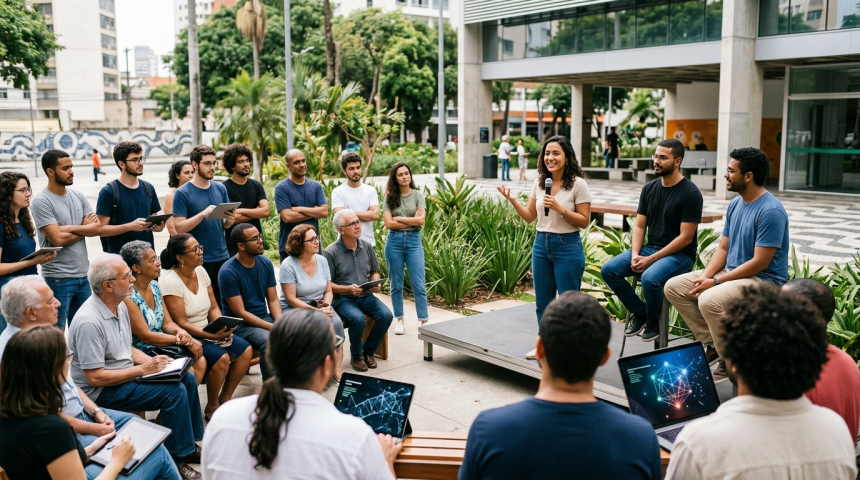
OpenAI identified three groups as the focus of its work: software developers, businesses, and communities. Each group could play a different role in how AI tools are tested, adopted, and understood.
- Developers may build products and services using OpenAI’s models.
- Businesses may apply AI to customer service, research, writing, or internal operations.
- Communities may influence training, access, and discussions about responsible use.
The company described the plan in broad terms rather than announcing a specific office, partnership, or product.
“OpenAI is expanding its presence in Brazil, deepening engagement with developers, businesses, and communities to support AI adoption across the country.”
The wording suggests that engagement, rather than infrastructure alone, will guide the initial expansion. It may include local events, educational work, commercial relationships, or developer support. OpenAI has not yet provided those details.
Brazil Offers Scale and Technical Talent
Brazil is Latin America’s largest economy and one of its biggest consumer markets. Its large technology sector gives AI companies access to established firms, start-ups, universities, and independent programmers.
Local engagement can also help a global AI provider address language and cultural needs. Brazilian Portuguese users may expect tools that understand local expressions, business practices, and social context.
For companies, easier access to OpenAI could speed experiments with automated tasks and digital services. However, useful adoption depends on staff training, reliable systems, clear oversight, and careful handling of sensitive information.
Questions Remain About Implementation
The announcement does not explain how much OpenAI plans to invest or whether it will hire employees in Brazil. It also leaves open whether the company will work with government agencies, universities, or established technology firms.
Those details will matter because greater AI use can bring both gains and risks. Businesses may improve productivity, while workers may face changes in their roles. Developers may gain new tools, but they must also assess accuracy, safety, and cost.
Community participation could help identify concerns that commercial partnerships miss. These may include unequal access, the treatment of personal data, misinformation, and the quality of Portuguese-language results.
Local Trust Will Be a Key Test
OpenAI’s success in Brazil will depend on more than the availability of its products. The company will need to show that its engagement produces practical value for local users and responds to Brazilian priorities.
Clear information about partnerships, staffing, training, and safeguards would help measure the expansion. Transparency will also allow businesses and communities to judge who benefits from increased AI adoption.
For now, the announcement marks a broader commitment rather than a detailed operating plan. The next steps to watch include local hiring, developer programs, business agreements, and community initiatives. Those actions will show how OpenAI intends to turn its stated presence into lasting participation in Brazil’s technology sector.