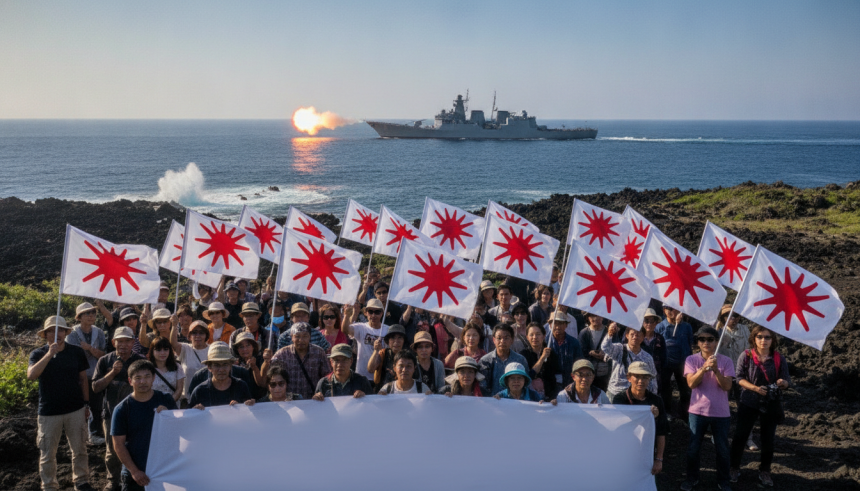
Japan raised concern after a Chinese navy destroyer held live-fire drills off a remote Japanese island in the Pacific Ocean on Sunday. Officials said the activity posed a risk near Japanese territory and could heighten tensions. The incident adds pressure to a region already on edge over maritime patrols and military exercises.
The reported drills took place near one of Japan’s far-flung islands. Tokyo has not publicized the exact location or the class of ship involved. Officials described the situation as serious and under review. They said relevant agencies were coordinating their response and gathering more details.
“Japanese officials say they are concerned after a Chinese navy destroyer conducted live-fire drills off one of Japan’s remote islands in the Pacific Ocean on Sunday.”
What Happened and Why It Matters
Live-fire exercises involve the use of real ammunition. Conducting them near another country’s islands can create safety hazards for ships and aircraft. It can also send a political signal. For Japan, the timing and location raised alarms about military activity close to its territory.
China’s navy has grown in size and range. Its ships now operate routinely across the Western Pacific. That reach often puts Chinese vessels near Japan’s exclusive economic zone. Tokyo sees these moves as part of a pattern of pressure at sea.
Chinese officials often frame exercises as routine and lawful. They say drills improve readiness and are not aimed at any country. In this case, Beijing had not issued a detailed public statement as of the report. The two sides may share more information through defense channels.
Legal and Strategic Context
International law allows navies to operate in international waters. Coastal states have sovereignty up to 12 nautical miles from their shores. Beyond that, in the exclusive economic zone, foreign militaries may transit and train, but safety and notification practices vary. Live-fire drills near another state’s islands can be legal, yet still controversial.
Japan’s concern centers on two issues. First, safety for civilian shipping and aviation routes. Second, the signal sent by holding combat training close to Japanese land. Tokyo has faced similar worries in recent years with repeated patrols and exercises in nearby seas.
This activity fits a broader trend. Regional militaries are increasing operations, exercises, and surveillance. With more ships and planes in the same waters, the risk of miscalculation rises.
Views From Both Sides
Japanese officials described the drills as troubling due to proximity and the use of live munitions. They said they were monitoring closely and consulting allies. They did not disclose immediate countermeasures.
Security analysts in Tokyo say such drills can test response times and communications. They warn that live-fire events complicate safety notices and maritime traffic management. One analyst noted that even if outside territorial waters, the choice of area matters.
Chinese defense voices typically argue that the navy conducts lawful training. They stress that exercises improve readiness and follow international rules. They also object when other countries conduct drills near China. This mutual suspicion shows how fragile the region’s security balance can be.
Risks and Possible Off-Ramps
Past incidents show that close military activity can escalate quickly. Clear communication can help. Advance notices about training areas and times reduce risk. Shared procedures for unplanned encounters at sea also matter.
- Issue safety notices for live-fire zones and timing.
- Use military hotlines to clarify intent and location.
- Avoid training near shipping lanes and air routes.
Japan and China have some crisis links and agreed rules for unexpected meetings at sea and in the air. Using these tools can prevent accidents. Third-party monitoring by regional partners can also add transparency.
What to Watch Next
Tokyo may seek more details through diplomatic channels and defense hotlines. Lawmakers could press for stronger maritime patrols near remote islands. Japan’s Self-Defense Forces may increase surveillance flights and vessel tracking in the area.
Beijing, for its part, could continue routine exercises. It may also release statements emphasizing legality and safety. Any shift to larger or repeated live-fire drills near Japanese islands would draw a sharper response from Tokyo.
The region’s stability will depend on restraint and clear rules. If both sides keep open lines and avoid risky maneuvers, the chance of a dangerous incident falls. The opposite choice would raise the odds of a stumble that neither side wants.
The latest report shows how a single exercise can ripple across the Western Pacific. Japan’s concern is likely to persist while navies operate so close together. The next steps, including safety notices and dialogue, will signal whether this becomes a new flashpoint or a brief scare.