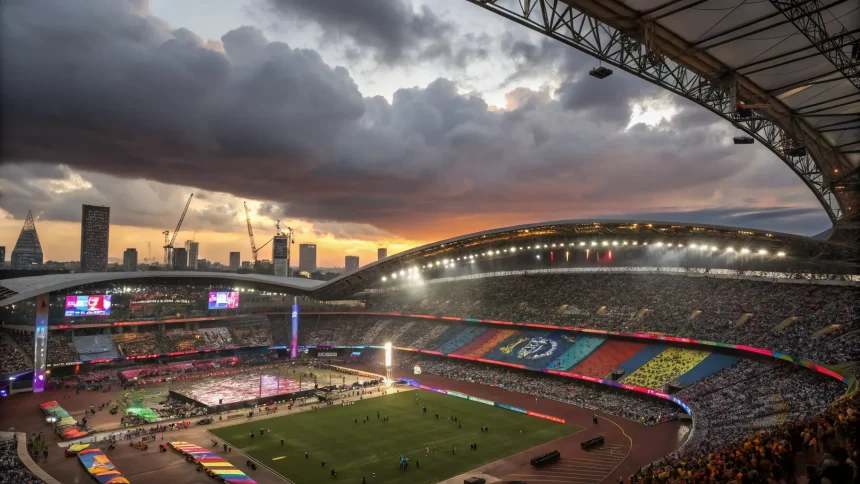
The world’s most-watched televised pop contest, infamous for bold costumes and onstage theatrics as well as headline-grabbing spats, is preparing to set up on a new continent. Organizers signaled an expansion that could reshape the show’s reach and stir fresh debates about music, identity, and politics. Details remain limited, but the move points to a larger push to turn a regional hit into a wider global event.
The world-famous TV pop spectacle known as much for its elaborate costumes and theatrical performances as it is for its political controversies is setting up stage on a new continent.
Background And Why It Matters
For decades, the contest has stood as a mass-audience showcase where ballads, dance anthems, and novelty acts fight for attention under bright lights. It is as much a TV format as a music event, built on national entries, fan voting, and suspense-filled live finals. That formula has drawn hundreds of millions of viewers for flagship broadcasts in recent years, powering tourism, sponsorships, and streaming spikes for breakout acts.
The show’s cultural pull has often mixed with geopolitical tension. Acts and broadcasters have sparred over lyrics, flags, and staging. Viewers argue over voting blocs and fairness. Yet controversy has never dimmed interest for long. In many ways, debate fuels the brand.
What Expansion Could Look Like
Taking the spectacle to a new continent opens fresh markets, new sponsors, and diverse talent pools. It also raises hard questions about format control and cultural fit. Time zones, broadcast rights, and local music tastes will test the playbook that made the show a hit at home.
- Production: Staging and live voting must work across wider regions and platforms.
- Rules: Eligibility, language use, and political symbols face new scrutiny.
- Talent: Regional stars could draw big crowds but shift the show’s sound and style.
Past format exports in entertainment have seen mixed results. Some versions thrived with local twists; others faltered when they copied too much from the original. Success will likely depend on giving the new edition its own identity while keeping the signature tension of song, spectacle, and score.
Industry Reaction And Risks
Music executives see expansion as a way to break artists on a bigger stage. A single high-impact TV moment can boost streams and tour sales. Advertisers are drawn to live events that cut through streaming clutter. Still, there is risk of brand dilution if spin-offs crowd the calendar or if quality control slips.
Cultural critics warn that political flashpoints could intensify in a broader field. A larger roster of entries may heighten disputes over flags, borders, or topical lyrics. The show’s organizers will need clear rules and fast decisions to avoid protracted disputes that overshadow the music.
Viewers And The Voting Question
Fans prize the drama of live voting. Expanding across regions will put pressure on how votes are cast, counted, and audited. Anti-bot safeguards and transparent reporting will be key to trust. Any hint of bias or technical failure could trigger backlash and dent ratings.
Streaming and social media will likely shape audience behavior more than ever. Clips of standout performances can outpace the main broadcast, creating surges for some acts and leaving others unseen. Platforms that highlight short-form video will be central to buzz and discovery.
Cultural Impact And Representation
A move to a new continent can widen representation on a stage long associated with a specific region and set of traditions. That could refresh the show’s sound and fashion, bringing in new languages, genres, and dance styles. It may also challenge long-time fans to adjust to a broader identity for the brand.
The contest has often served as a soft stage for national image-making. New hosts and broadcasters will likely use it to showcase cities, tourism, and creative sectors. That brings economic benefits but also heightens scrutiny when politics cross into performance.
The expansion signals a high-stakes next chapter for a unique fixture of pop TV. If organizers balance spectacle, fair play, and local flavor, the show could win new audiences while keeping loyal fans engaged. Watch for concrete details on host cities, entry rules, broadcast partners, and voting systems. Those choices will reveal whether this leap can turn a celebrated regional format into a stable global franchise without losing the spark that made it must-watch television.