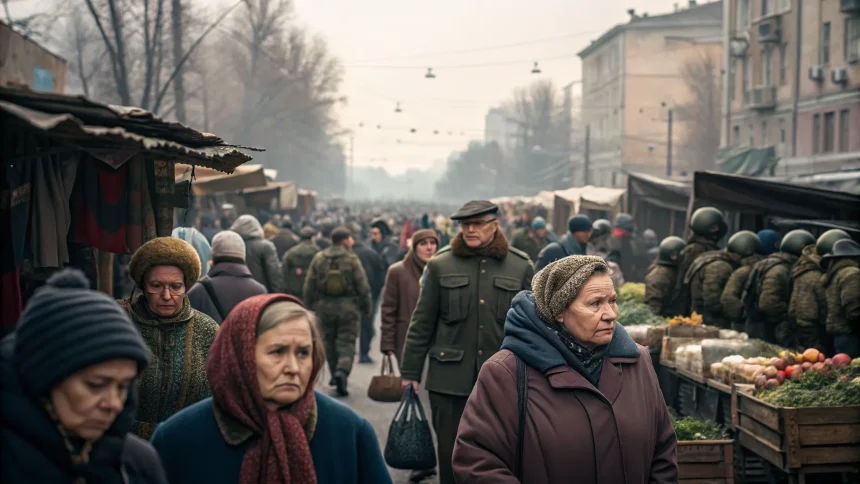
Four years after Russia launched its full-scale invasion of Ukraine, pressure is building at home as costs mount, patience wears thin, and the war grinds on. Across the country this spring, economic strains, a tight labor market, and a heavy security climate are converging in ways that hint at unease. The stakes are high for the Kremlin, which is trying to keep society steady while sustaining an expensive military campaign on its western frontier.
“Four years after the full-scale invasion of Ukraine, Russia is facing a spring of discontent.”
A Nation Under Strain
The war that began in February 2022 has reshaped daily life in Russia. Mobilization waves, tighter information controls, and the militarization of industry have touched most regions. Families have dealt with deployments and losses. Businesses have adjusted to sanctions and disrupted trade routes. While public protest remains limited and risky, private frustration has grown alongside fatigue.
Analysts say the current mood reflects a mix of resignation and quiet criticism. Some citizens focus on rising prices and fewer consumer choices. Others worry about another round of call-ups. Independent polling has long shown a gap between reported support for the military and unwillingness to participate personally, a tension that has not disappeared.
Economy Fueled by War Spending
War spending has lifted headline growth, even as it distorts the economy. The International Monetary Fund estimated that Russia’s output rose in 2023, driven by defense orders and public investment. But inflation remained elevated and workforce shortages deepened as conscription, migration, and army contracts pulled men from civilian jobs.
Budget priorities have shifted hard. Defense and security now take a much larger share of federal spending than before the invasion. Economists warn that this can crowd out health, education, and regional services. It also risks locking the economy into low-productivity activities while sanctions limit technology imports.
Sanctions have not collapsed Russia’s finances, thanks to oil exports, price discounts to Asian buyers, and complex rerouting of goods. Still, the costs show up in higher logistics expenses, weaker investment, and slower innovation. Consumer brands have left or been replaced, and parts of the auto and aviation sectors rely on workarounds.
Public Mood and Political Space
Public dissent remains constrained. Strict laws and high-profile prosecutions have raised the risks of speaking out. Yet signals of strain surface in small ways. Online complaints spike after news of local casualties. Parents press school directors about military training programs. Regional authorities sometimes struggle to explain new restrictions or quota targets.
Religious leaders, teachers, and municipal officials are often caught in the middle. They are expected to show unity and meet wartime goals, but they also field daily concerns about prices, jobs, and men sent to the front. The gap between official messaging and lived experience can widen as the war enters another year.
- Inflation pressures hit food and housing hardest for low-income households.
- Labor shortages raise wages in factories while small firms struggle to hire.
- Information controls limit debate and push frustration into private channels.
Frontline Realities and Military Pressure
The war’s human cost is central to the current unease. Casualty estimates vary widely, but even conservative counts suggest significant losses. Rotations remain difficult, and contract recruiting has to keep pace with frontline demands. Each new local obituary or report of wounded troops reignites concern in communities far from Moscow or St. Petersburg.
For the Kremlin, operational momentum matters politically. Gains help sell patience; setbacks fuel questions. As spring turns to summer, both sides are likely to push for advantage, raising the chance of rapid shifts at the front that can echo at home.
What to Watch Next
Several signposts will shape the coming months. The first is inflation. If prices keep climbing, even small protests over utilities, transport, or food could spread. The second is manpower. Any new mobilization, formal or quiet, would test public tolerance. The third is regional finances. Governors face rising costs and shrinking options, and their ability to manage tensions will be closely watched.
External pressure will also matter. Tighter sanctions enforcement on oil shipping or technology could strain supply chains again. On the battlefield, changes in control of key towns or infrastructure may ripple into recruitment and morale inside Russia.
Four years on, this war has become a test of stamina. The state is betting that higher pay, patriotic messaging, and security measures can contain discontent. Households are betting that the worst has passed. The coming weeks will show whose bet holds. If prices ease and the front stays stable, the mood may cool. If losses rise or a new draft emerges, the “spring of discontent” could harden into a longer season of pressure.