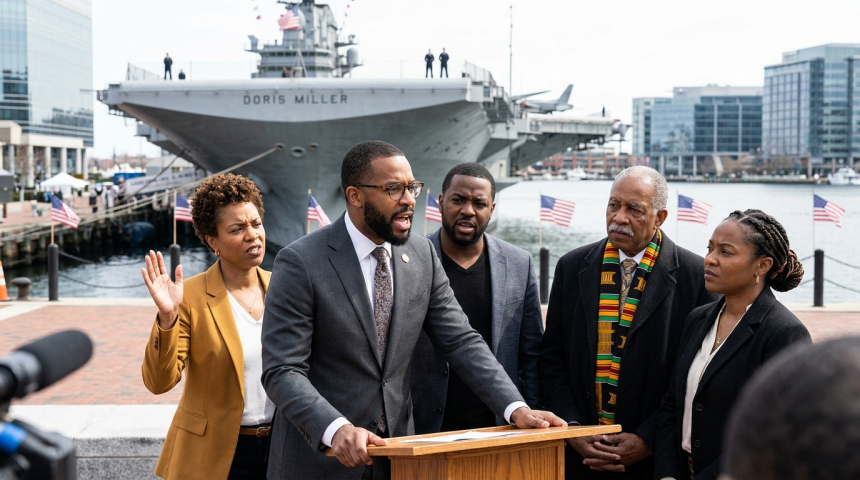
Black community leaders are criticizing reported U.S. Navy discussions about naming an upcoming aircraft carrier after President Donald Trump instead of a Black World War II hero.
The dispute centers on who should be honored through one of the military’s most visible traditions. Critics see the reported change as a retreat from recognizing Black service. Supporters may view a presidential name as consistent with past Navy practice.
A Choice With Lasting Meaning
Aircraft carriers serve for decades and carry their names around the globe. Their names can shape how the Navy presents its history, values and national identity.
Black leaders argue that replacing the planned honoree would carry a message far larger than lettering on a ship. Black troops served during World War II while facing segregation and unequal treatment at home.
Honoring a Black war hero would recognize both military courage and the barriers that Black service members faced. Reversing that plan, critics contend, could make that history less visible.
The reported discussions also raise questions about how far the planning had advanced. Internal consideration does not always lead to a final decision. The available account does not identify a formal announcement or completed naming action.
Navy Names Reflect Competing Traditions
The Navy has used several approaches to naming major ships. Aircraft carriers have often honored presidents, lawmakers, military leaders and major figures in American history.
That tradition gives officials room to argue that naming a carrier after Trump would fit an established pattern. A president serves as commander in chief, and several presidents have been honored by Navy carriers.
Yet ship naming has also become a public debate over whose service receives national recognition. Recent choices have placed more attention on people from groups once overlooked in official military history.
- Presidential names emphasize civilian leadership of the armed forces.
- Military heroes highlight individual sacrifice and battlefield service.
- Representation can broaden the history presented to sailors and the public.
The competing traditions make the decision more than a simple contest between two people. It is also a choice between different stories about American leadership and service.
Political Pressure Could Intensify
Naming a carrier after a sitting or recent political figure can invite partisan scrutiny. Trump remains a dominant and divisive figure in national politics, which could turn a ceremonial decision into a wider cultural fight.
Black community leaders are likely to press officials for details about the original plan, the decision process and who has final authority. Transparency may determine whether the dispute grows or cools.
The Navy also faces an internal concern. Sailors come from varied backgrounds, and ship names can affect morale and institutional trust. A decision perceived as erasing an earlier commitment could be harder to explain than an initial naming choice.
What Comes Next
The key issue is whether the reported talks become official policy. Any announcement would likely prompt questions from civil rights groups, veterans, lawmakers and military historians.
Officials could retain the planned tribute, select Trump for another vessel or reconsider the carrier’s name through a broader review. Each path would carry political and historical costs.
For now, the criticism shows that military naming decisions no longer pass as quiet administrative matters. They are public judgments about memory, honor and who gets a place on the nation’s largest ships.
The Navy’s next move will signal whether representation remains central to its naming policy. It will also show how the service balances presidential recognition against the long-delayed honor sought for Black wartime service.