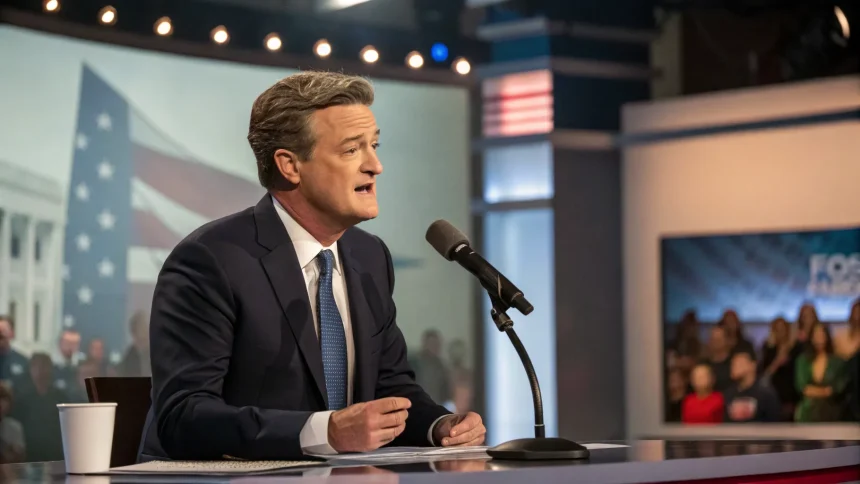
Television host Joe Scarborough said Democrats have defined their rivals and argued the label will last, a claim that speaks to the power of political branding. In a recent on-air discussion, Scarborough asserted that Democrats laid out what Republicans stand for and predicted the effect “will stay with voters for years to come.” His view drops into a charged debate over how long campaign narratives last and who benefits when one party frames the other first.
Who Said What, And Why It Matters
Scarborough, a former Republican congressman and host of MSNBC’s Morning Joe, has become a sharp critic of the GOP on key issues. He suggested Democrats have landed a clear, simple frame on Republican priorities. For campaigns, clarity can be destiny. Voters often carry a few lasting impressions into the booth. Scarborough argued Democrats have supplied those impressions.
“Democrats successfully exposed what Republicans stand for,” Scarborough said, adding that the reality “will stay with voters for years to come.”
His claim echoes a core rule of politics: first definitions tend to stick. Parties spend millions trying to stamp a few plain words on their opponents. Once set, that image is hard to shake without time, unity, and new facts.
How Party Images Take Hold
Political memories often hinge on repeat themes. When a party’s positions line up across news cycles, voters start to see a pattern. That can help mobilize supporters and harden independents against you. Research in campaign strategy shows simple, repeated messages beat long policy white papers. Scarborough’s point taps that playbook.
History offers several examples where a frame lingered:
- In 2010, Republicans tied Democrats to federal spending and health care expansion, a focus that helped them win the House.
- In 2012, a leaked “47 percent” remark weighed on Mitt Romney as Democrats painted him as out of touch.
- After the 2022 Supreme Court decision on abortion, Democrats pressed the case on personal rights, shaping several statewide races.
None of these moments lived alone. Each fused with other stories to create a broader picture. That is the effect Scarborough says Democrats have now achieved.
What Democrats Claim Republicans Stand For
While Scarborough did not list specifics in his brief remark, recent Democratic messaging has centered on issues like reproductive rights, voting access, and threats to democratic norms. They also highlight internal Republican splits on spending, immigration, and foreign policy. The goal is to present a coherent story: the GOP is focused on culture wars and intraparty fights rather than problem-solving.
Democratic strategists often push three aims at once. First, energize their base. Second, peel off moderate voters in suburbs. Third, force Republicans to defend unpopular stances rather than promote their own agenda. Scarborough suggests that trifecta may be landing.
How Republicans Respond
Republican strategists reject that picture and say Democrats are dodging concerns about inflation, crime, border issues, and classroom debates. They argue voters will judge day-to-day costs and security more than partisan frames. Some push for a tighter focus on the economy and parental rights. Others warn that internal feuds and primary fights risk feeding the very narrative Scarborough highlights.
For Republicans, the fix is discipline. That means fewer side battles, clearer policy lines, and a forward message on growth and safety. It also means elevating local wins, not only national fights. If they want to shake a label, they must replace it with a steadier one.
Will Voters Remember For “Years”?
Voter memory depends on repetition, salience, and lived experience. Economic pain can overpower any campaign line. So can a major crisis or scandal. But many impressions last through multiple cycles, especially when tied to values. Scarborough’s warning suggests Democrats think they have attached Republicans to positions many swing voters dislike. If that is true, it can shape down-ballot races and state policy fights well past a single election.
Forecasts are risky. Polls can swing with news events, and turnout patterns can surprise professionals. Yet campaign veterans agree on one thing: it is easier to maintain a set image than to rebuild one during the final weeks.
What To Watch Next
Three signals will test Scarborough’s claim:
- Whether Republicans settle on a core economic message and repeat it every day.
- If Democrats keep their focus on rights and democracy without overreaching into niche fights.
- How independents in battleground suburbs respond to months of ads and local coverage.
Scarborough’s bottom line is simple and sharp: early frames last. Democrats believe they have drawn one that will stick to Republicans. For voters, the next months will stack daily prices, school debates, and security concerns against that story. The side that keeps a clear message through the noise will set the terms of the next contest—and maybe the one after that.