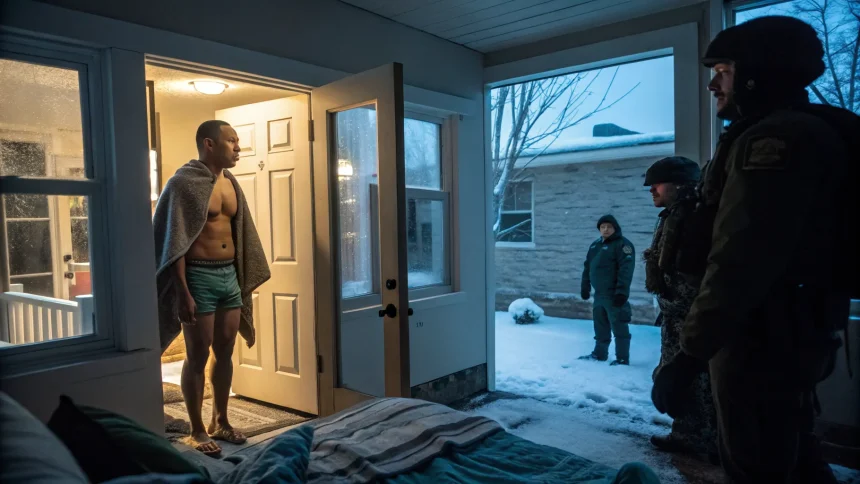
In a frigid January dawn, a man named ChongLy Thao was taken from his home wearing only underwear and a blanket, after immigration officers forced the door open at gunpoint. The incident, which the family says happened without a warrant, raises urgent questions about how federal agents conduct home arrests and protect the people in their custody.
The account centers on a residential address where Immigration and Customs Enforcement (ICE) officers executed the operation. Family members say the door was battered down, and Thao was led outside in freezing weather. They argue the officers did not present a judge-signed warrant, which is often required for entry into a private home.
What Allegedly Happened
“ICE officers bashed open the door of ChongLy Thao’s home at gunpoint without a warrant, then led him outside in just his underwear and a blanket in freezing conditions.”
The account describes a chaotic scene and a hurried removal. It also highlights a common point of confusion in immigration enforcement: the difference between an administrative warrant and a judicial warrant.
Warrants, Doorways, and Rights
Under the Fourth Amendment, officers generally need either consent or a judicial warrant to enter a private home, absent emergencies. In immigration cases, ICE often operates with administrative warrants signed by supervisors, not judges. Those documents allow arrest, but they usually do not authorize home entry without consent.
Civil liberties groups have long warned residents not to open the door unless shown a warrant signed by a judge that specifically names a person and place. They also urge people to ask officers to slide any warrant under the door for inspection. ICE, for its part, says its officers follow the law and work to safely take custody of individuals who are subject to removal.
ICE Practices Under Scrutiny
Home arrests often happen early in the morning, when people are more likely to be home. Advocates say that timing can heighten fear and confusion. Allegations about heavy-handed entries have surfaced across the country over the past decade, prompting lawsuits and policy reviews.
Legal experts note that any forced entry without a judicial warrant may face court challenges unless there are urgent circumstances, like an immediate threat to safety. Clothing and weather conditions may also factor into the government’s duty of care once someone is in custody.
Safety and Cold Weather Concerns
Being outside in freezing temperatures with little clothing can be dangerous. Emergency physicians warn that hypothermia can start within minutes, especially when wind and moisture are involved. Public safety standards typically urge officers to protect detainees from exposure and to provide clothing as needed.
If confirmed, the reported conditions raise questions about training, supervision, and protocols for handling arrests during winter. Agencies often have internal guidelines for clothing, transport, and medical checks. Transparency around those rules matters when incidents like this surface.
Competing Views on Enforcement
Advocates argue that aggressive tactics erode trust, making communities less likely to report crimes or cooperate with investigations. They also note that mistakes—like wrong addresses or misidentified targets—can have lasting effects on families.
ICE officials generally emphasize that operations target people with outstanding removal orders or criminal records and that officers face unpredictable risks at doorways. They also say that split-second decisions are sometimes required to protect everyone on scene.
What Residents Can Do
- Ask to see a warrant signed by a judge before opening the door.
- Request that officers slide documents under the door for review.
- State that you do not consent to entry if no judicial warrant is presented.
- Remain calm and avoid physical confrontation; ask for a lawyer.
What Comes Next
The reported January incident is likely to draw attention from local leaders and legal groups pressing for documentation, body-camera footage where available, and a clear accounting of any warrants. If litigation follows, a court could sort out whether the entry and handling of the arrest met constitutional and agency standards.
Home arrests sit at the tense intersection of public safety, civil rights, and immigration policy. This case highlights a plain question with big stakes: when officers knock, what are the limits? Expect calls for clearer guidance, more training on cold-weather procedures, and stronger oversight of warrant practices. The answers will shape how home arrests unfold the next time agents come to the door.