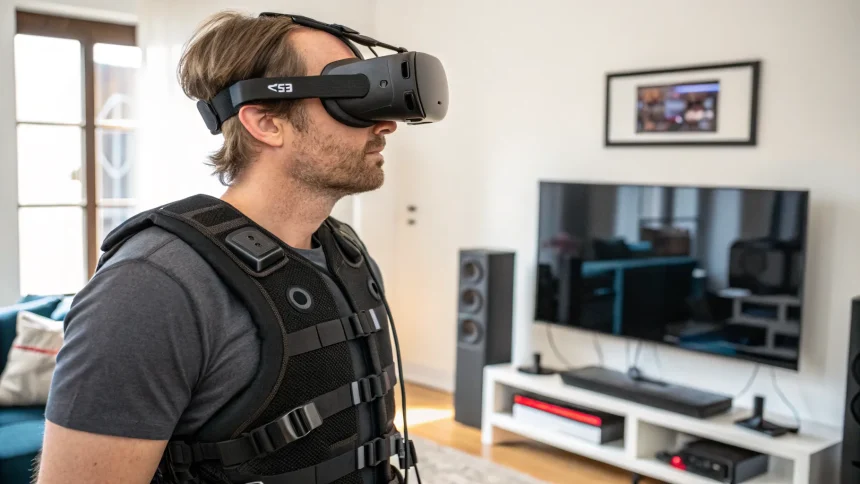
A tech reviewer who first saw the Woojer vest years ago is putting the latest model through hours of testing to see if it earns its US$350 price. The vest, built with bass-driven transducers, promises a deeper connection to games, films, and music. The reviewer’s early skepticism has given way to a patient evaluation, as interest in tactile audio rises across home entertainment and virtual reality.
From Kickstarter Pitch to Living Room
Woojer entered the spotlight on Kickstarter about seven or eight years ago. At the time, haptic audio wearables were still a curiosity. They targeted early adopters who liked the idea of “feeling” sound. The category has since gained traction with gamers and VR fans who want extra immersion without loud speakers.
The reviewer recalls that first impression from the crowdfunding days as a mix of fun and doubt. That sentiment still shapes how many casual buyers view these vests. Are they useful tools or just a novelty?
“When I first saw the Woojer vest about seven or eight years ago on Kickstarter, I remember thinking that it sounded fun, but maybe a little gimmicky.”
This latest evaluation began after the company contacted the reviewer with a test unit. That direct outreach suggests Woojer wants fresh scrutiny at a time when haptics are moving from niche to mainstream.
“So when Woojer recently reached out and asked if I wanted to review it, I said, ‘Heck yeah, send it over!’”
Hands-On Time Shapes a Verdict
The reviewer has logged many hours with the vest in different settings. That kind of testing matters for a device built on feel and fit. Short demos can impress or disappoint in minutes. But long sessions show comfort, battery behavior, and whether the effect still feels helpful after the novelty fades.
For music, low-end kicks and basslines drive the experience. For games, explosions and engine rumbles can add tension. For films, action scenes may gain physical weight. The question is whether those moments justify a wearable that sits between a subwoofer and a controller’s rumble in purpose and price.
The reviewer signals that a clear conclusion is within reach after this time investment.
“Now that I have it and have spent many hours using it in various scenarios, I think I’ve concluded whether it’s worth the ~US$350 price of admission for a vest fitted with bass-thumping transducers.”
Value Debate: Price, Fit, and Use Cases
At around US$350, the vest competes against several options:
- Upgrading headphones that improve detail and comfort.
- Adding a compact subwoofer to a living room setup.
- Buying game accessories that enhance control or aim.
Fans of tactile gear argue that the vest adds presence at any volume, which helps in apartments or late-night sessions. Skeptics say a tuned subwoofer or better headphones deliver more for less. Comfort is another factor. A vest must fit well to be worn for hours. It also needs simple controls and quiet operation so it does not distract from the screen.
Where Haptics Make the Biggest Impact
Haptics tend to shine in genres with heavy low-frequency content. Racing, flight, and shooters can gain urgency from precise rumble patterns. Horror films and action sequences also benefit from physical cues that match on-screen peaks. For podcasts, audiobooks, or casual TV, the gains are smaller.
There is a social angle too. A wearable keeps sound pressure off neighbors while still delivering punch. It can also aid some users who prefer tactile cues. Yet the need to charge, adjust levels, and manage straps may put off those who want a simple plug-and-play setup.
Outlook for Haptic Audio Wearables
Haptic vests are seeking a stable spot in home entertainment. Strong support from PC and console titles would help. So would presets that match popular games and streaming apps. Battery life, durability, and lighter designs could expand the market. Competing devices, including seat shakers and cushion pads, add pressure on price and ease of use.
For Woojer, a clear value story is key: who gains the most, and in which moments? Core users will be gamers and cinephiles who want intense sessions without shaking the room. Everyone else may weigh the vest against a simpler audio upgrade.
The reviewer’s journey from curious skeptic to thorough tester mirrors the broader debate. A haptic vest can raise immersion, but value depends on habits, space, and comfort. As the verdict takes shape, shoppers should watch for software updates, new game profiles, and holiday pricing. Those signals will help answer a simple question: is the thrill of feeling sound worth US$350 now, or better after the next round of refinements?