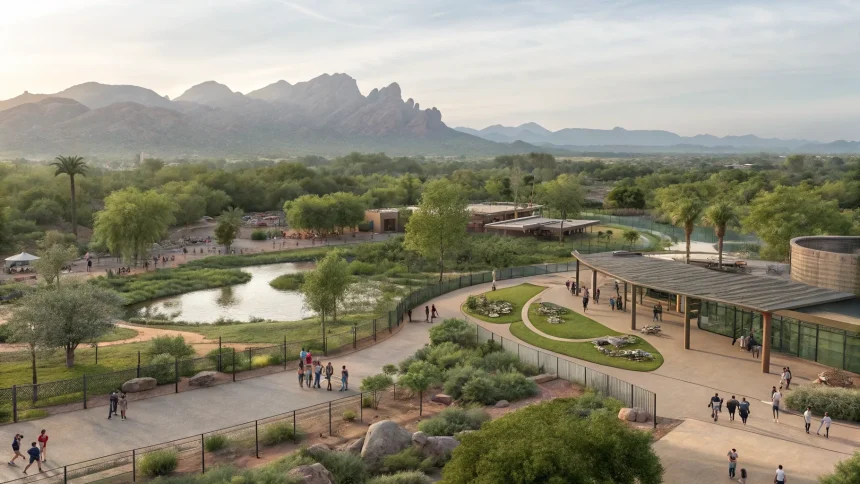
Arizona’s largest zoo began with a simple idea in 1962 and grew into a civic touchstone. In Phoenix’s Papago Park, a private, nonprofit zoo opened its gates and set out to prove that community support could build a world-class home for wildlife. Six decades later, it remains a beloved landmark with a mission that blends care, education, and conservation.
“The Phoenix Zoo opened in 1962 as the Maytag Zoo.”
The early name honored the vision of founder Robert Maytag. He and local supporters rallied donations, volunteers, and animals to get the project on its feet. Within a short time, the zoo adopted the city’s name and leaned hard into a community-first identity. The shift signaled that this was Phoenix’s zoo, built by and for residents who wanted a living classroom and a place to connect with nature.
Origins and a Bold Bet on Community
The zoo’s start was unconventional. Rather than rely on city funding, backers formed a nonprofit and asked the public to pitch in. That gamble shaped how the institution operates to this day. Decisions moved quickly because they were local. Exhibits rose with the help of donors and service clubs. Early school groups found open doors and hands-on lessons.
Robert Maytag’s plan was simple: create access. Keep prices fair. Put animals in habitats that teach people how they live. The result was a space where families could wander desert paths, see wildlife up close, and leave with a few new facts tucked into their pockets.
From Family Name to City Pride
The change from the Maytag name to the Phoenix Zoo reflected a broader goal. Leaders wanted the institution to feel like a public square for wildlife education. The name tied it to the city’s identity and future. It also made fundraising easier, since residents saw their hometown on the sign.
That strategy worked. The zoo grew in size and reputation. It added desert-adapted species, improved care standards, and built exhibits that explained how animals thrive in heat and drought. Visitors returned year after year, turning the zoo into a shared local tradition.
Conservation That Reaches Farther Than the Fences
While the zoo began as a community project, its work soon stretched across borders. Breeding programs supported species at risk. One of the best known involved the Arabian oryx, a desert antelope once driven to extinction in the wild. The zoo helped build a managed herd that fed reintroduction efforts abroad.
Projects like these showed how a regional zoo could make a global dent. Staff teamed with partner institutions, wildlife officials, and scientists. The results traced a simple loop: protect a species in managed care, then return healthy animals to the wild when possible.
- Emphasis on desert species matched Arizona’s climate and expertise.
- Education programs linked field science to classroom lessons.
- Partnerships widened the impact of local donations.
A Cultural Anchor With Year-Round Draw
The zoo’s mission does not end at the exhibits. Seasonal events pull in crowds and dollars that support animal care. The best known is a winter lights display that turns the park into a glowing maze. Families plan annual trips, and membership sales surge. Those funds matter when food prices rise or habitats need upgrades.
Educators run camps and after-school programs that make science feel friendly. Keepers share behind-the-scenes tours. Teens learn job skills while helping visitors. The aim is to hook curiosity early and keep it alive long after the field trip buses roll out.
What the Next Decade May Bring
Zoos face tough questions. How do you balance animal welfare, education, and entertainment? How do you prepare for heat waves, water stress, and shifting public expectations? Phoenix’s model offers clues. It relies on local backing, focuses on species suited to the desert, and builds programs that link fun with learning.
Expect more shade, water-wise landscaping, and habitat design that mirrors natural ranges. Expect tech that tracks health and reduces stress. Expect new partnerships that tie exhibits to field projects so visitors can see where their tickets make a difference.
From a start under the Maytag banner to a city-wide institution, the Phoenix Zoo has stayed true to one idea: people will support what they love. The next chapter will test that idea again as costs climb and habitats evolve. If history is a guide, community pride—and a few smart, sturdy plans—will keep the gates open and the mission on track.