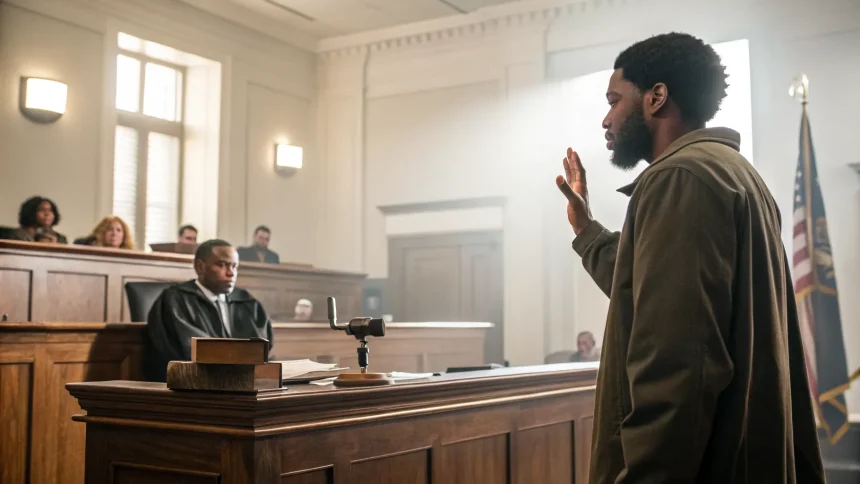
Nearly 25 years after the killing of Jam Master Jay, a man admitted in court to a role in the rapper’s death, offering a long-sought turn in a case that frustrated a generation of investigators and fans. The admission came Monday in New York, where the 2002 shooting stunned hip-hop and left one of its pioneers without justice.
Jam Master Jay, born Jason Mizell, was part of Run-DMC, the Queens trio that helped take rap mainstream in the 1980s. His fatal shooting inside a Jamaica, Queens recording studio on October 30, 2002, remained one of music’s most stubborn cold cases. The latest court development signals movement in a case once thought frozen.
A Break After Years of Silence
The killing hovered over the genre for decades, fueled by unanswered questions and thin leads. Monday’s courtroom admission marked a rare moment of clarity in a case marked by dead ends and street-level fears that kept witnesses quiet.
“Nearly a quarter-century after rap star Jam Master Jay of Run-DMC was shot to death, a man admitted in court Monday to a role in a killing that stymied investigators for decades.”
For years, the investigation wrestled with limited cooperation, conflicting accounts, and the challenge of a crime carried out in a small studio with few people willing to speak. Authorities often pointed to witness intimidation and the tight-knit nature of the circles around the studio that night.
Who Jam Master Jay Was—and Why It Mattered
Run-DMC reshaped popular music with hits like It’s Tricky and their crossover with Aerosmith on Walk This Way. The group set the template for rap’s leap into mainstream radio, television, and fashion. Mizell was widely viewed as the crew’s steady hand and community builder, mentoring young artists and supporting youth programs in Queens.
His death shocked fans who saw him as a connector, not a combatant. That contrast—between a public figure known for bridge-building and a shooting inside a familiar studio—made the case feel both personal and public.
Why the Case Went Cold
Investigators struggled with key obstacles that often stall high-profile shootings:
- Witnesses feared retaliation and declined to testify.
- Leads were fragmented, with stories that shifted over time.
- Physical evidence was limited and hard to verify years later.
Those barriers kept the case in limbo even as anniversaries piled up and pressure mounted from the music community and Mizell’s family.
Community Reaction and Industry Impact
News of the court admission spread quickly through hip-hop circles. For many, it renewed hope that a case long defined by frustration could reach a clearer ending. Artists and fans often linked Mizell’s killing to a broader pattern of unresolved violence that has shadowed rap for decades.
The case also exposed the difficulty of prosecuting crimes where loyalty and fear keep witnesses quiet. Advocacy groups have pushed for stronger witness protection and community outreach, arguing that unsolved killings erode trust in law enforcement and deepen grief for families.
What This Means for the Case
A courtroom admission can reshape next steps. It may strengthen existing prosecutions, prompt new charges, or open paths to plea deals if cooperation follows. It can also support the credibility of past witnesses whose accounts were questioned.
Legal experts say the value of Monday’s statement will depend on its detail, corroboration, and whether it links other people, motives, or planning to the studio attack. If the admission includes specifics that match records or ballistics, it could anchor a fuller account of what happened and why.
The Road Ahead
Families in cases like this often ask for three things: truth, accountability, and a public record that corrects rumor. Monday’s court moment moves one step closer to that outcome, but it is not the end.
Key questions remain. How complete is the account? Will it lead to more cooperation? And will the court’s findings deliver a narrative that matches the evidence and the memories of those who were there?
For fans, the hope is simple. That the story of Jam Master Jay—DJ, innovator, mentor—will not close on a mystery, but on facts, accountability, and a final measure of peace for his family and community.