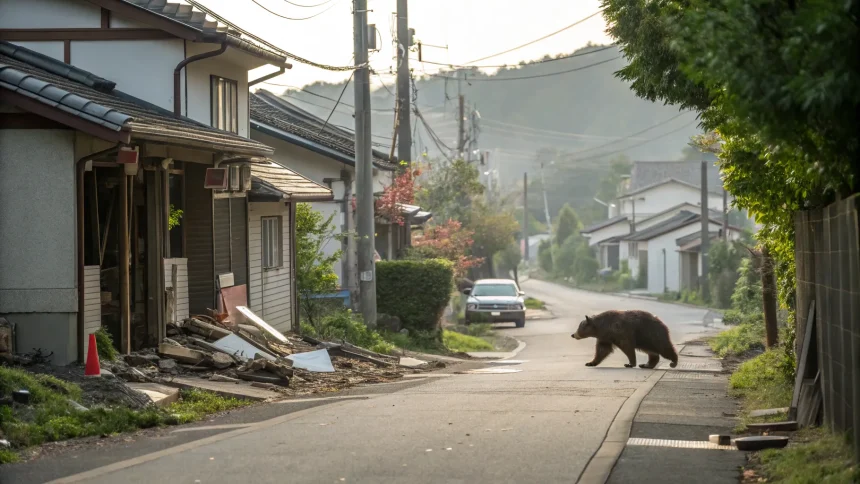
A bear injured four people in a residential area in Japan, heightening concern over a rise in wildlife encounters near homes and schools. Local authorities said the victims were treated for injuries, and patrols were increased in nearby streets and parks. The incident is part of a wider uptick in bear sightings and attacks reported in several parts of the country this year.
“A bear has injured four people in a Japanese residential area in the latest case of attacks by the animals in the region.”
Officials urged residents to stay indoors when possible, avoid wooded edges at dawn and dusk, and report sightings quickly. Wildlife teams searched the area to track the animal and assess if relocation or other measures were needed.
Rising Encounters Put Communities On Edge
Encounters with Asiatic black bears have been increasing in parts of Japan, especially near the foothills where towns meet forest. In recent years, several prefectures have recorded more emergency calls about bears, with local governments warning that food shortages in forests can push the animals into neighborhoods.
Wildlife officers say bears come looking for easy meals: crops, trash, pet food, and persimmons left on backyard trees. When surprised at close range, they can become aggressive. That risk grows in autumn as bears fatten up ahead of winter.
Government advisories have emphasized prevention. Municipalities have rolled out public alerts, issued handheld alarms, and installed signs along popular walking routes. Some communities also support volunteer patrols that warn hikers and check school routes.
What Drives Bears Into Towns
Experts point to a mix of habitat change and food cycles. When acorn and beech harvests are poor in mountain forests, bears search lower elevations. Expanding suburbs and shrinking rural populations can leave unattended orchards and unsecured sheds—easy access points for wildlife.
Climate variability can also shift when and where nuts and berries appear, changing bear movement patterns. Hunters and forestry workers report that bears sometimes follow river corridors and utility lines that act as highways through human areas.
Local governments balance public safety with conservation. Relocation is one option, but it can be difficult if bears return or if suitable habitats are already crowded. In some cases, lethal control is authorized when a bear poses an immediate threat.
Public Safety Measures And Community Response
Following the latest injuries, emergency services stepped up patrols and used loudspeakers to advise residents. Schools reviewed routes, asking students to walk in groups and avoid wooded shortcuts. Farmers secured storage sheds and collected fallen fruit to remove easy food sources.
- Store garbage in secured containers and place it out close to pickup time.
- Remove fallen fruit and protect crops with fencing where feasible.
- Travel in groups near forest edges and make noise to avoid surprise encounters.
- Report sightings promptly to local authorities.
Community groups say clear information helps reduce panic. Residents want faster alerts and better mapping of recent sightings so they can adjust daily routines. Many support targeted fencing and improved lighting along paths used early in the morning.
Policy Debate And Long-Term Outlook
Officials are weighing broader steps, including standardized alert systems between municipalities and more funding for wildlife rangers. Some prefectures are testing early-warning networks that link camera traps and resident reports to send phone alerts by neighborhood.
Forestry agencies and universities continue to track bear populations to better predict movements. They also study how mast failures—years when nut production drops—correlate with increased urban visits by bears. Better forecasts could allow preemptive outreach before problem periods.
Advocates for rural communities want more support for fencing, crop protection, and safe bus routes. Conservation groups argue that keeping bears wild requires reducing attractants and improving forest management so animals can find natural food away from towns.
The latest injuries add urgency to a trend that has worried residents and officials alike. Authorities are treating the case as part of a broader pattern and are moving to tighten prevention and response. Communities will watch whether new alert tools, better waste control, and seasonal planning can reduce risk as autumn approaches. Continued coordination between residents, schools, and wildlife teams will be key to keeping people safe while limiting conflict with bears.