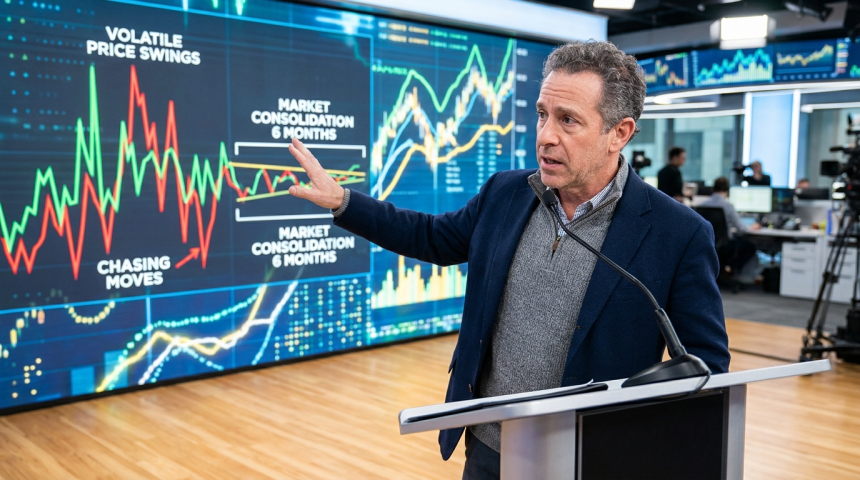
A market commentator has urged investors to avoid trading sharp price swings, warning that current volatility could expose them to sudden losses. The caution focuses on a simple strategy: wait several months for prices and expectations to settle before making major decisions.
“Today is a dangerous day to be trading on these big moves. Better to let things settle out over the next couple of months.”
The speaker did not identify a specific asset, market, or event. No price data or economic figures accompanied the warning. Still, the message reflects a familiar concern during unstable trading sessions, when rapid moves can tempt investors into rushed choices.
Why Large Moves Carry Added Risk
Sharp market changes often follow unexpected news, policy decisions, earnings reports, or shifts in economic forecasts. Early reactions can be severe because traders are trying to assess new information at the same time.
Prices may reverse as more facts emerge. A market that falls quickly can recover, while a sudden rally can lose momentum. Investors who enter during the first move may pay an inflated price or sell near a temporary low.
Volatile sessions can also produce wider gaps between buying and selling prices. That can increase transaction costs and make it harder to complete a trade at the expected level.
- Rapid prices can encourage emotional decisions.
- Thin trading can magnify relatively small orders.
- Early market reactions may change as new details arrive.
- Short-term losses can grow when borrowed money is involved.
A Case for Waiting
The recommendation to wait “over the next couple of months” points to a longer process of price discovery. During that period, investors may receive added economic reports, company updates, or policy guidance.
Waiting does not remove risk. Markets can keep moving, and cautious investors may miss gains. However, a pause can provide more time to compare market prices with business results, economic conditions, and personal financial goals.
This approach may be more useful for long-term investors than active traders. Professional traders often seek short-term volatility, but they may use strict limits to control losses. Individual investors may lack the same tools, speed, or access to market information.
Different Strategies for Different Investors
The warning should not be read as a universal instruction to leave the market. Risk tolerance, time horizon, cash needs, and portfolio size can affect the right response.
Some investors may choose to make smaller trades rather than wait entirely. Others may rebalance holdings gradually, reducing the risk of committing all their money at one price. Investors with diversified portfolios may decide that no immediate action is needed.
Those with short-term financial needs face a different concern. Money needed soon for housing, education, taxes, or emergencies may be poorly suited to assets experiencing large daily swings.
What Investors Should Watch
Future market direction will depend on the cause of the initial move. Investors should watch whether later data support the first reaction, whether trading conditions improve, and whether volatility begins to ease.
The central message is restraint. Large price moves can create opportunities, but they can also hide uncertainty. Allowing time for clearer information may reduce the chance that fear or excitement drives a costly decision.
Over the coming months, the key test will be whether prices stabilize or continue to swing. Until then, disciplined position sizes, diversification, and a clear time horizon may offer more protection than attempts to predict each turn.