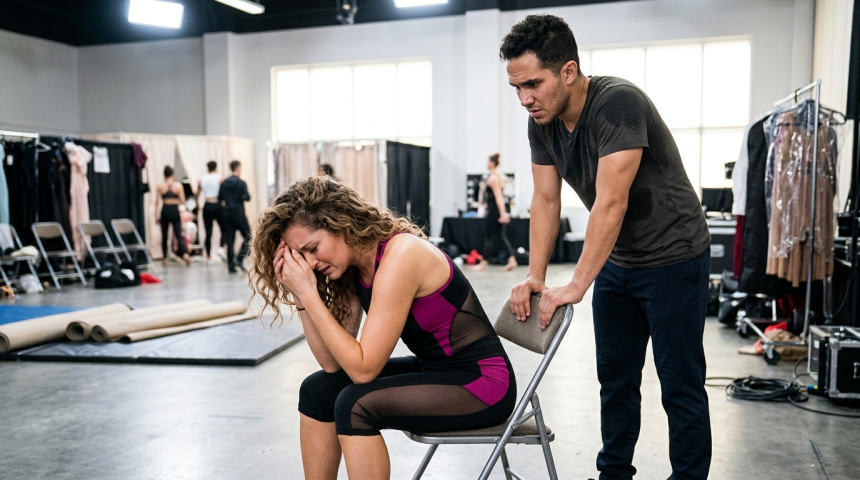
Alexa PenaVega and Carlos PenaVega say competing on “Dancing With the Stars” brought jealousy, stress and “a lot of baggage” into their marriage. Their account offers a candid look at what can happen when spouses become rivals under intense public scrutiny.
The actors entered the televised contest as a married couple, but each competed with a professional dance partner. That setup turned rehearsals, scores and eliminations into shared pressures. It also forced them to manage emotions that stretched far past the dance floor.
Competition Followed Them Home
“Dancing With the Stars” asks celebrity contestants to learn demanding routines within days. Performances are then judged by a panel and television viewers. For couples competing at the same time, every score can invite an awkward comparison.
The experience brought “jealousy, stress and a lot of baggage,” Alexa and Carlos PenaVega said.
Their description cuts through the glitter surrounding the show. Competition can be entertaining for viewers, yet far less tidy for the people living through it.
Both spouses faced the same deadlines and public judgment. However, they did not necessarily receive the same routines, feedback or audience support. One person’s strong night could easily become the other person’s disappointment.
A Marriage Under Public Pressure
Jealousy carries extra weight in a dance competition. Contestants spend long rehearsal hours building trust with professional partners. They must also perform intimate choreography before millions of viewers.
For a married couple, that arrangement may blur the line between a job and private emotion. Even harmless stage chemistry can become uncomfortable when exhaustion and competitive nerves enter the picture.
The format also leaves little space to recover from a difficult performance. Couples must return to rehearsals while online reactions, judges’ comments and rankings remain fresh. Home may no longer feel separate from work when both partners are chasing the same prize.
- Each spouse faces individual scores and criticism.
- Rehearsal schedules can reduce private time together.
- Public comparisons may deepen ordinary insecurities.
- Dance partnerships can create emotional strain.
Candor Challenges Reality TV’s Gloss
The PenaVegas’ comments add a useful counterpoint to reality television’s polished image. Viewers see costumes, music and a few minutes of performance. They rarely see every tense rehearsal or private conversation afterward.
The couple’s shared experience also differs from that of contestants whose spouses remain outside the competition. A supportive partner can usually provide distance from the show. The PenaVegas had no such clean divide because both were inside the pressure cooker.
At the same time, their account should not be read as proof that couples should avoid competing together. Shared challenges can expose unresolved problems, but they can also prompt clearer communication. The outcome depends on how partners handle rivalry, boundaries and disappointment.
What Their Experience Reveals
The story is less about ballroom technique than the cost of mixing marriage with public competition. Fame did not protect the PenaVegas from familiar emotions. If anything, cameras and scorecards gave those emotions sharper edges.
Their reflections may resonate with couples who work together or compete in the same field. Success is rarely experienced in isolation when two careers share one household. Praise for one partner can feel complicated to the other, even in a loving relationship.
Alexa and Carlos PenaVega’s account leaves a clear lesson: televised fun can carry private consequences. The sequins may sparkle, but they do not make jealousy or stress disappear. Future celebrity couples entering the ballroom may want to prepare their relationship as carefully as their routines.