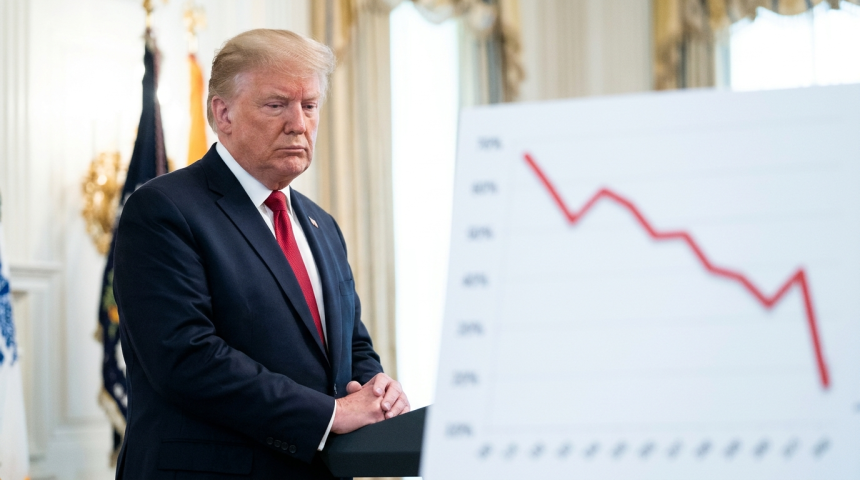
President Donald Trump’s approval rating has dropped to a record low in a new Economist/YouGov poll, signaling fresh political trouble for the White House.
The finding offers a stark measure of public sentiment during Trump’s current term. It may also shape how Republicans, Democrats, and independent voters assess his performance before the next federal elections.
The available poll finding does not include the approval percentage, field dates, sample size, or margin of error. Those details are needed to judge the size and meaning of the decline.
A Warning Sign for the White House
Approval ratings provide a broad snapshot of how voters view a president’s job performance. A record low suggests Trump has fallen below every earlier result in this poll’s comparable series.
“President Donald Trump’s approval rating has fallen to a new record low,” the poll finding said.
That does not mean every polling organization will show the same result. Survey methods, question wording, voter samples, and timing can produce different numbers.
Still, repeated declines can carry political costs. Weak approval may make it harder for a president to promote legislation, rally uncertain lawmakers, or persuade voters outside the party base.
The White House could respond by sharpening its message around issues where Trump receives stronger support. Opponents, meanwhile, are likely to treat the result as evidence that voters want a different course.
Why Poll Details Matter
A single headline number rarely tells the whole story. Analysts typically examine several measures before deciding whether public opinion has shifted in a lasting way.
- The difference between approval and disapproval
- Changes among independents and party supporters
- Results across age, income, race, and region
- The poll’s sample size and margin of error
- Whether other surveys show a similar trend
Comparisons also require consistent methods. A “record low” within one polling series is not automatically a record across all presidential polling.
Short-term events can move approval ratings quickly. Economic news, policy disputes, foreign conflicts, court decisions, and presidential statements may all affect responses.
Political Impact Depends on Duration
Presidential approval can influence congressional races because candidates from the president’s party often share the political weather. A weak rating may encourage challengers and complicate fundraising.
Yet approval is not a direct election forecast. Voters choose between candidates, not survey categories. Turnout, local concerns, campaign spending, and the quality of opponents can alter results.
Trump has also shown an ability to retain intense loyalty among core Republican voters. That support may limit internal party pressure even when his standing falls among the wider public.
Democrats will likely seek to connect their criticism to the reasons behind the decline. Without issue-level findings, however, the poll alone cannot show whether voters are reacting to the economy, government policy, Trump’s conduct, or another concern.
The record-low result is a clear warning, but its weight will depend on what follows. Additional polls, demographic data, and approval trends over several weeks will show whether this is a brief dip or a deeper political slide.