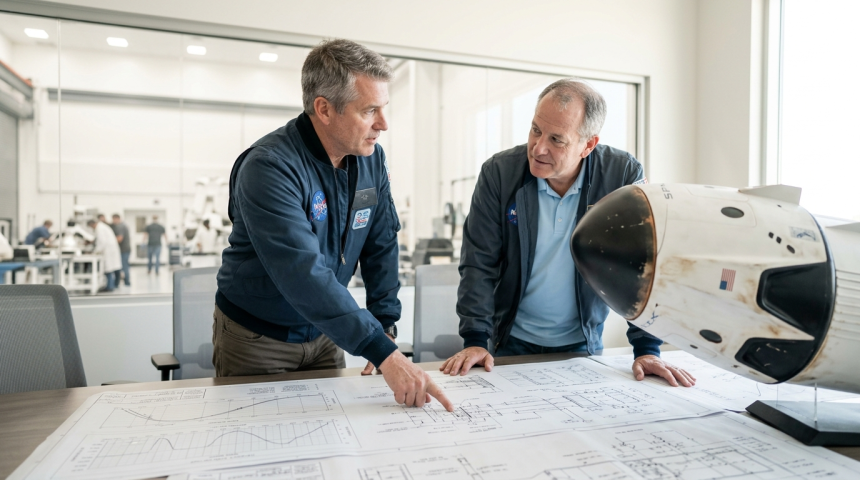
Former NASA astronauts Butch Wilmore and Clayton Anderson examined lessons from SpaceX Crew-12 after its months in orbit, placing the mission’s experience under a veteran lens.
During an appearance on “Fox News @ Night,” the two astronauts discussed what the Dragon crew learned during its extended journey. Their analysis highlighted a central fact of human spaceflight: time in orbit tests far more than launch and landing systems.
Long missions require crews to manage spacecraft operations, scientific work, physical health and life in confined quarters. Each flight also gives NASA and SpaceX information that can shape later missions.
Veteran Experience Informs the Review
Wilmore and Anderson bring direct knowledge of the demands placed on astronauts. Their perspective helps translate technical mission lessons into practical questions about preparation, safety and crew performance.
Wilmore has flown for NASA, while Anderson is also a former agency astronaut. Both understand that a mission’s public highlights tell only part of the story. Daily routines, maintenance tasks and unexpected problems can provide equally useful evidence.
The discussion did not present detailed findings, mission data or direct comments from Crew-12 members. It instead centered on the value of lessons gathered during a monthslong Dragon flight.
Why Time in Orbit Matters
A longer stay gives crews more opportunities to test procedures under real conditions. Spaceflight can expose small weaknesses that brief missions may never reveal. In orbit, even ordinary chores become carefully planned operations.
Mission reviews generally examine several broad areas:
- Crew health, workload and readiness during a long stay
- Spacecraft reliability and maintenance needs
- Communication between astronauts and ground teams
- Training gaps revealed by actual flight conditions
- Procedures that should change before another launch
Such findings can affect training schedules, equipment choices and emergency planning. They may also help engineers decide whether a problem requires new hardware or simply clearer procedures. Spaceflight has little patience for vague instructions.
Dragon’s Growing Operational Role
SpaceX’s Dragon spacecraft has become an important vehicle for carrying astronauts on long-duration missions. That role makes each crew’s experience relevant to both NASA and the company.
The partnership also reflects a wider shift in U.S. human spaceflight. NASA sets mission and safety requirements, while a private company operates the transportation system. That arrangement can speed operational learning, but it also requires close oversight and clear responsibility.
Former astronauts offer a useful bridge between engineering reports and public understanding. They can explain why apparently minor details matter without treating every problem as a crisis. At the same time, independent scrutiny remains important when agencies and contractors assess their own work.
Lessons for Future Crews
The most useful result of Crew-12 may be what changes before the next mission. Agencies learn from successful procedures as well as failures, and repeated flights can reveal patterns that one mission cannot.
Attention will now turn to how NASA and SpaceX apply the crew’s experience to training, operations and spacecraft support. Detailed findings, if released, would offer a clearer measure of the mission’s effect.
Wilmore and Anderson’s assessment points to a simple conclusion: returning safely does not end a mission’s value. The careful review afterward may protect the astronauts who fly next.