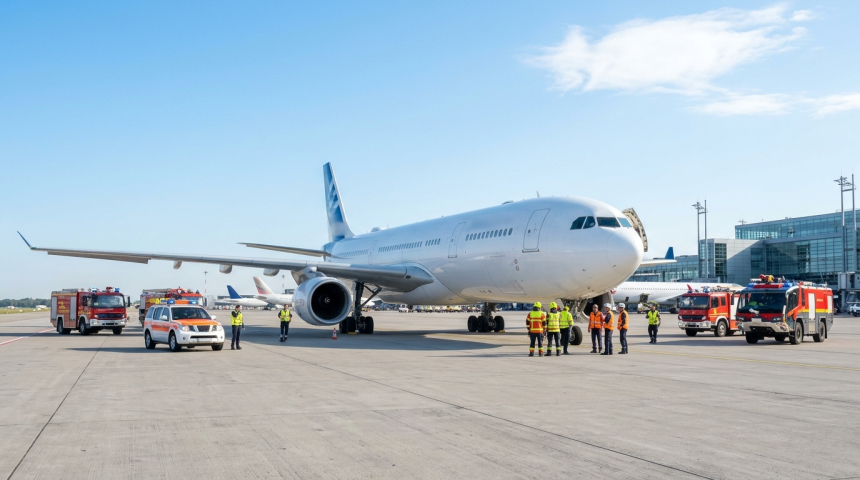
Several flights across Europe faced alleged bomb threats that later proved false, triggering searches, diversions and an Italian Air Force escort. The incidents disrupted normal operations and showed how quickly an unverified warning can force aviation authorities to act.
Details about the airlines, airports, flight routes and timing were not immediately available. No explosive devices were reported found. The threats were ultimately treated as hoaxes, but only after officials completed security checks.
Threats Prompt Immediate Security Measures
Bomb warnings involving aircraft are treated as credible until authorities establish otherwise. A false report can therefore set off an extensive response involving pilots, air traffic controllers, airport security and police.
Authorities used several measures during the incidents:
- Aircraft and passenger areas were searched.
- Some flights were diverted from their planned routes.
- One aircraft received an Italian Air Force escort until landing.
A military escort allows authorities to monitor an aircraft closely while civilian controllers direct it to a safe airport. It does not, by itself, prove that a threat is genuine. The response reflects the risks created by an aircraft carrying passengers and fuel over populated areas.
Why Hoaxes Still Cause Major Disruption
A threat later judged false can still delay flights and close airport areas. Passengers may need to leave an aircraft while specialists inspect the cabin, cargo hold and baggage. Other flights can also be affected if a runway or gate is temporarily unavailable.
Airlines must then manage missed connections, crew schedules and aircraft positioning. Airports may need added security staff, while police and military units can be pulled from other duties.
The cost of a hoax can extend far past the targeted flight. Diversions require more fuel and may leave an aircraft at an airport without the airline’s usual ground support. Travelers can face hours of uncertainty even when no danger is found.
Aviation Protocol Favors Caution
European aviation security rests on cooperation among national agencies. Pilots can receive instructions from several authorities as a flight crosses borders. Those agencies may include civilian air traffic services, airport operators, police and military defense units.
Officials must assess how a warning was delivered, whether it contains specific details and whether it matches other intelligence. Yet investigators cannot rely only on the apparent credibility of a message. The potential harm is too great if a real warning is dismissed.
That approach creates a difficult balance. A rapid response protects passengers, but it can also give a hoax caller the disruption sought. Authorities generally limit operational details because public disclosure could help others evade security procedures.
Investigators Face a Cross-Border Task
The involvement of several flights across Europe may require agencies in multiple countries to compare evidence. Investigators are likely to examine communication records and determine whether the warnings were linked. Available information does not establish a common source.
False bomb threats may lead to serious criminal penalties. Prosecutors can consider the disruption caused, the resources deployed and any danger created during diversions or emergency landings. Establishing responsibility can be harder when threats are sent through concealed or foreign communication channels.
The immediate danger in these cases was ruled out, but the operational impact was real. The main questions now concern who made the threats, whether the incidents were connected and how widely flights were disrupted. The response also offers a clear lesson: aviation authorities will accept delays and expense rather than gamble with passenger safety.