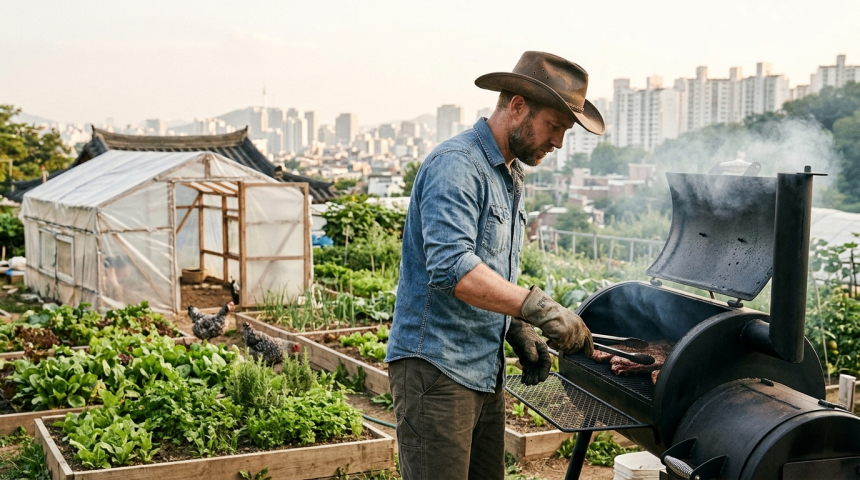
Ryan Phillips has carried a Texas tradition more than 6,000 miles, smoking meat and running a farm in Seoul, South Korea.
Born and raised in Texas, Phillips now works in a setting far removed from his home state. His story links two places with different food histories, farming systems, and urban rhythms.
The move also reflects a wider interest in regional American cooking abroad. Smoked meat has traveled well, even though the slow process behind it remains tied to local fuel, ingredients, and patient hands.
Texas Roots Meet a Korean Capital
Texas barbecue is known for long cooking times, low heat, and close attention to smoke. Beef often takes center stage, though styles vary across the state.
Phillips brought that background to Seoul, a city better known for Korean barbecue. The two traditions share a love of meat and communal meals, but their methods differ.
Korean barbecue usually cooks thin cuts quickly at the table. Texas smoking often turns larger cuts into an hours-long project. One favors speed and participation. The other asks diners to wait while smoke does the work.
That contrast gives Phillips an unusual role. He is not simply serving food from home. He is adapting a regional craft to another country’s tastes, supplies, and dining culture.
Farming Adds Another Layer
Phillips also runs a farm in Seoul. That detail separates his work from the familiar story of a cook opening an overseas restaurant.
Farming can give a food producer closer control over ingredients and growing methods. It also creates practical challenges, especially in a major city where land faces intense demand.
His two occupations suggest a hands-on approach to food:
- Growing or managing agricultural products locally
- Using smoke and time to prepare meat
- Connecting Texas cooking with Seoul’s food culture
The farm may also help Phillips build relationships with local suppliers and customers. However, details about its size, crops, livestock, or business model have not been disclosed.
A Personal Story With Wider Meaning
Phillips’ path shows how food traditions change when people carry them across borders. A recipe can travel, but its surroundings cannot be packed in a suitcase.
Wood, weather, available cuts, local rules, and customer habits can shape the final meal. Even familiar food must negotiate with its new address. Barbecue, it turns out, needs a passport too.
There is also a cultural exchange at work. Seoul diners can encounter a Texas smoking tradition, while Phillips operates within South Korea’s deep farming and grilling heritage.
Still, the available account leaves major questions unanswered. It does not explain when Phillips moved, why he chose Seoul, or how his farm supports his smoking operation. His customers and future plans are also unknown.
Those missing details matter because they would show whether his work is a small personal venture or part of a larger shift in Seoul’s dining scene.
For now, Phillips represents an uncommon bridge between rural labor and urban cooking. His Texas upbringing remains visible in the smoker, while his present life is rooted in Seoul soil. The next chapter will depend on how those two identities grow together.