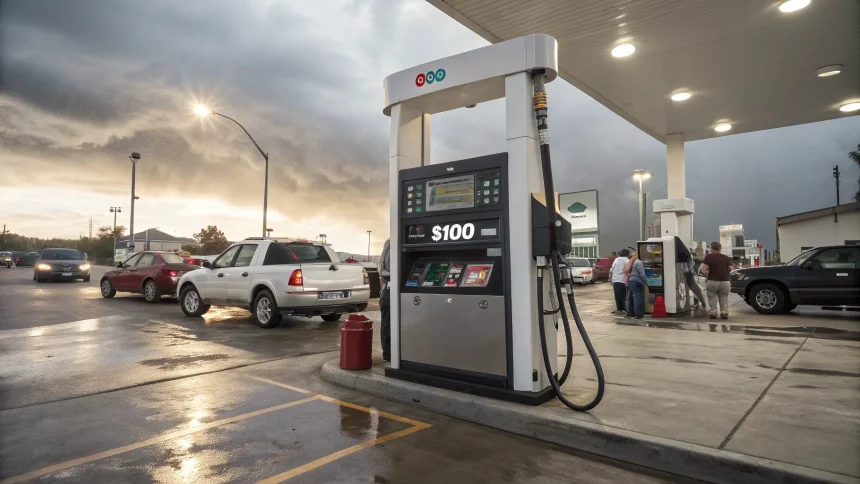
Gas costs ticked higher Monday as crude moved past the $100 mark, renewing pressure on drivers and the wider economy. The move comes as traders react to tight supply and firm demand, raising fresh concerns about inflation and summer travel budgets.
“Gasoline prices resumed climbing on Monday as oil rose back above $100.”
The jump follows weeks of choppy trading in energy markets. Crude often sets the tone for pump prices, though the effect can lag by days or weeks. When oil breaks a round number like $100, it tends to sharpen attention from shippers, retailers, and consumers. It also feeds into inflation data watched by the Federal Reserve, since fuel touches almost every part of the economy.
Why Prices Are Rising
Several forces are feeding the latest climb. Supply remains tight after earlier production cuts by major exporters. Refineries are working through maintenance season, which can limit output. Demand is steady, with freight and air travel holding up. And global uncertainty often sends investors into oil as a hedge.
- Tight crude supply and exporter discipline
- Refinery turnarounds limiting gasoline output
- Steady travel and freight demand
- Market jitters boosting commodity buying
Prices at the pump rarely move in a straight line. Wholesale costs can spike first, then retailers pass along the change. Regional factors add another layer, including fuel taxes, pipeline access, and mandated seasonal blends that are costlier to produce.
Who Feels It First
Households with long commutes feel the rise quickly. Delivery firms, rideshare drivers, and small contractors see costs jump in real time. Farmers and trucking companies plan fuel purchases weeks ahead, so swings can squeeze margins. City transit systems also watch diesel closely, since it shapes operating budgets.
Airlines track jet fuel closely, which often moves with crude. Higher fuel bills can show up as fare increases or reduced capacity on some routes. For retailers, transport costs nudge shelf prices higher, especially for heavy goods and fresh food that rely on cold chains.
The Inflation and Policy Angle
Higher gas prices can lift headline inflation even if core measures stay calmer. That makes rate decisions trickier. If fuel stays high, it can slow consumer spending in other areas, from dining to entertainment. Policymakers often face calls to tap strategic reserves or adjust fuel standards, but those steps offer mixed and short-term relief.
States may consider temporary tax holidays, though past efforts show uneven results. Some savings reach drivers, but part can be absorbed along the supply chain. Long-term answers, like adding refinery capacity or improving fuel efficiency, take time and money.
What Could Ease the Pressure
Several developments could cool prices. A stronger dollar sometimes pulls crude lower. If major producers lift output or extend spare capacity, supply would loosen. A softer global growth outlook could also curb demand. On the refinery side, returning units from maintenance should improve gasoline output ahead of peak driving season.
Drivers still have levers. Slower speeds, proper tire pressure, and route planning can trim fuel use. Fleet operators use software to optimize deliveries. While small steps, they add up when prices jump.
What to Watch Next
Market watchers will track inventory reports, refinery utilization, and signs of producer policy shifts. Any break above recent highs could pull pump prices higher within weeks. A retreat in crude would offer some relief, but the pass-through is rarely instant.
For now, the $100 threshold is a line the market cannot ignore. Households, haulers, and airlines will feel the ripple. The next few weeks will show whether this is a brief flare-up or the start of a longer squeeze.
Bottom line: oil’s push past $100 has reopened the door to pricier commutes and costlier goods. If supply frees up or demand cools, relief could follow. Until then, budgets will need a little extra fuel efficiency.