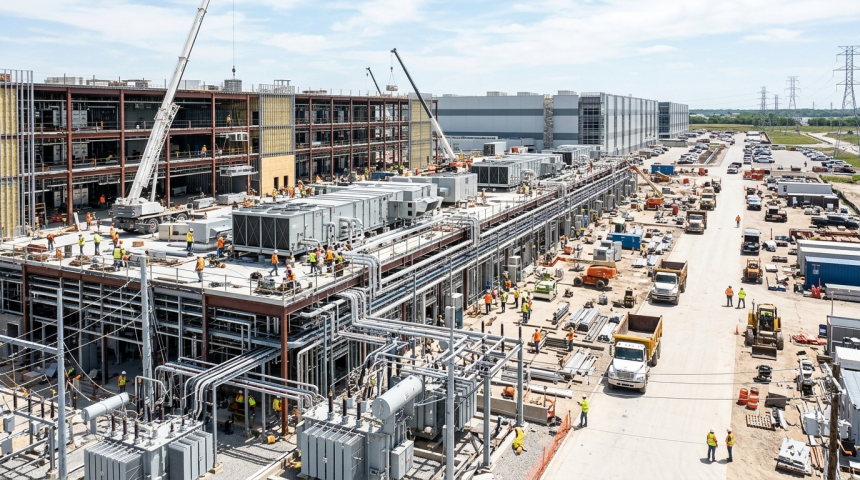
Amazon, Microsoft, Alphabet, and Meta now face pressure to deliver on their data center plans as demand for computing capacity tests budgets, infrastructure, and execution.
The four companies are closely tied to the expansion of large computing facilities. Their plans carry consequences for investors, customers, utilities, and communities that host these sites.
“Amazon, Microsoft, Alphabet, and Meta are on the hook with their data center plans.”
The assessment points to a central issue for the technology sector. Announcing capacity is only the first step. Companies must secure sites, electricity, equipment, permits, and customers while keeping costs under control.
Execution Becomes the Central Challenge
Data centers support cloud services, digital advertising, online retail, social platforms, and artificial intelligence tools. Amazon, Microsoft, Alphabet, and Meta each depend on that infrastructure, although their business models differ.
Amazon, Microsoft, and Alphabet operate major cloud platforms that sell computing services to outside customers. Meta primarily uses its infrastructure for its own platforms, products, and AI systems.
That difference affects how spending may be judged. Cloud operators can seek direct revenue from added capacity. Meta must show that infrastructure spending improves advertising, user services, or future products.
Large projects also create timing risks. A data center may take years to plan and build. Technology demand can change much faster, leaving executives to make long-term commitments based on uncertain forecasts.
Power and Construction Constraints
Electricity access is one of the main limits on data center growth. New facilities require steady power, grid connections, cooling systems, and backup capacity.
Local officials must weigh economic benefits against added pressure on power and water systems. Projects can create construction work and tax revenue, but they may also require costly upgrades to public infrastructure.
The companies must manage several connected risks:
- Delays in power connections, permits, or construction
- Higher costs for chips, servers, cooling, and electricity
- Demand that falls short of planned capacity
- Community concern about energy and water use
These pressures can affect where facilities are built and how quickly they open. They may also encourage companies to sign long-term energy agreements or redesign facilities for greater efficiency.
Investors Seek Returns From Heavy Spending
Investors are likely to focus on whether new capacity produces lasting revenue and profit. Spending alone does not prove that a strategy is working.
For cloud providers, key signs include customer demand, use of available capacity, and growth in computing sales. For Meta, the test includes whether infrastructure improves recommendations, advertising results, and AI products.
There is also a competitive argument for building early. A company without enough capacity could lose customers or delay products. Yet building too much could leave expensive equipment underused.
What Comes Next
The next stage will depend on execution rather than announcements. Each company must match construction schedules with real demand while addressing power limits and public scrutiny.
Future corporate updates may offer clearer evidence through capital spending, cloud growth, operating costs, and revised construction plans. Regulators and local governments will also shape project timelines.
The central takeaway is direct: Amazon, Microsoft, Alphabet, and Meta have tied major strategic goals to data center expansion. Their results will show whether those commitments create durable growth or place added strain on returns.