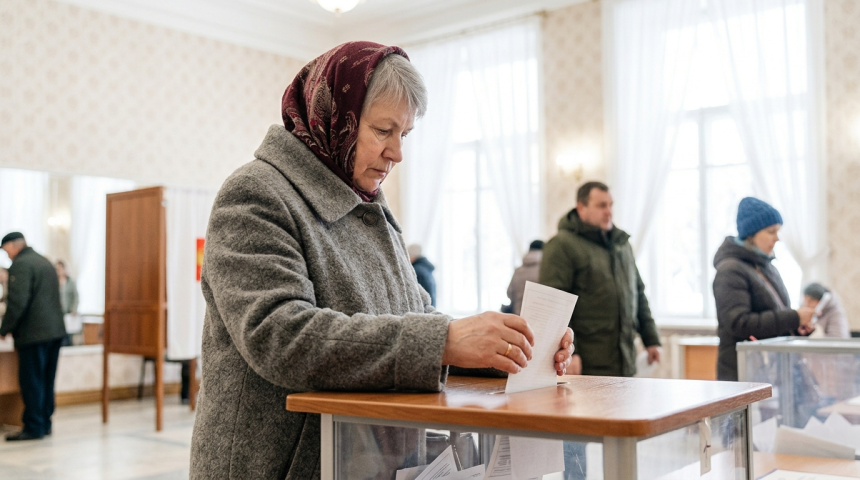
Russia is holding its first parliamentary election since the full-scale invasion of Ukraine, with meaningful political opposition largely absent from the contest.
The vote comes as the war shapes public policy, government spending, and relations with other countries. It will determine the makeup of parliament while testing how the Kremlin presents domestic support during a prolonged conflict.
Yet voters face limited political choice. Critical opposition has been effectively removed from public life, leaving little space for candidates who challenge the government or its conduct of the war.
A Vote Transformed by War
Russia launched its full-scale invasion of Ukraine in February 2022. The conflict has since affected nearly every part of the country’s political system.
Parliament passes federal laws, approves spending, and provides a formal forum for national debate. Its decisions can affect military funding, social programs, taxation, and economic policy.
However, the election is taking place under conditions that make open debate difficult. Independent candidates and government critics have little ability to organize, campaign, or reach large audiences.
Critical opposition is “effectively nonexistent” in the political environment surrounding the vote.
That absence changes the central question of the election. Rather than asking whether power could change hands, observers are likely to focus on turnout, official results, and signs of public engagement.
Limited Competition Shapes the Outcome
Elections can provide legitimacy only when voters have credible alternatives and access to competing views. Without those conditions, results offer a weaker measure of public opinion.
Parties permitted to compete may differ on domestic programs or economic priorities. Still, those differences do not necessarily create a direct challenge to the Kremlin or its wartime policies.
The main factors affecting the vote include:
- The lack of a strong, organized opposition.
- Restrictions on criticism of the government and war.
- The influence of state institutions over political debate.
- The difficulty of measuring genuine public support through official results.
Government supporters may present the election as evidence that constitutional institutions continue to operate during wartime. They may also argue that stability is necessary while Russia faces military and economic pressure.
Critics, however, view political competition as essential to a credible vote. From that perspective, holding an election does not by itself make the process open or representative.
Parliament’s Role After the Election
The next parliament will face decisions tied to the conflict and its domestic costs. These could include defense budgets, assistance for military families, labor needs, and measures responding to international sanctions.
Lawmakers may also consider policies affecting media, civil society, and political dissent. Such decisions will help show whether restrictions imposed during the war become lasting features of Russian government.
The election also carries importance outside Russia. Ukraine and its partners will watch for any shift in official policy, although the lack of critical opposition makes a major parliamentary change unlikely.
The vote may therefore confirm continuity rather than produce a new political direction. Its greater significance lies in what it reveals about wartime governance: formal institutions remain in place, but competition within them has narrowed sharply.
Attention will now turn to turnout, the treatment of dissenting voices, and the laws passed after voting ends. Those measures will provide a clearer picture of Russia’s political course than the election result alone.