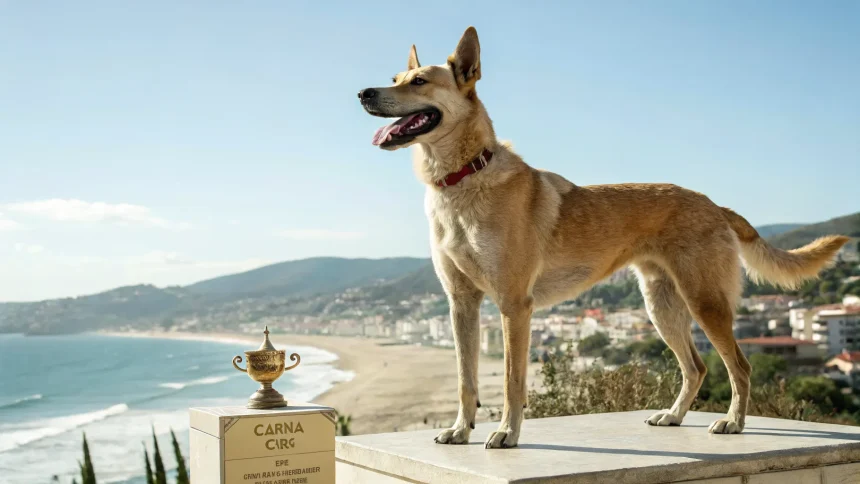
Yuri, the canine star of the Chilean feature “La Perra,” took home the Palm Dog award at Cannes, shining a spotlight on a small film with a big-hearted performance. The honor, announced during the film festival in France, recognizes the year’s standout dog on screen and adds fresh momentum to Chilean cinema on the global stage.
“Yuri the dog from the Chilean movie ‘La Perra’ has won the coveted Palm Dog award in Cannes.”
The win arrives as the festival draws worldwide attention to new filmmaking voices. While the official prizes focus on directors and actors, the Palm Dog celebrates a very different kind of screen craft. For Yuri and “La Perra,” it signals global recognition and helps the film reach audiences far from home.
What Is the Palm Dog?
The Palm Dog is a lighthearted but well-followed prize awarded during the Cannes Film Festival. Since its start in 2001, it has honored canine performances that carry scenes, deepen stories, or offer a surprise spark of emotion. Winners receive a leather collar and a burst of publicity that often outlasts the festival itself.
Past winners have ranged from trained stars to rescue dogs who became festival favorites. The award has helped make animals part of the Cannes conversation, right alongside red-carpet headlines and jury debates.
Why Yuri’s Win Matters
Chilean cinema has built a strong reputation over the last decade. Filmmakers such as Pablo Larraín and Sebastián Lelio have brought home major prizes, expanding the reach of the country’s stories. Yuri’s award adds a new note to that progress by highlighting a performance that relies on presence and behavior rather than dialogue.
Animal roles often serve as emotional anchors. A dog’s reactions can soften tense scenes, mirror a character’s growth, or move the plot in quiet ways. While the festival did not publish formal jury remarks with the announcement, the win suggests that Yuri’s scenes in “La Perra” left a clear mark on viewers.
The Film’s Global Boost
Cannes can change a film’s path. An award—even one given with a wink—can help secure distribution, press coverage, and festival bookings. For a Chilean title competing for attention against larger productions, this recognition can be a door-opener.
International programmers often look for cues that a film will connect with audiences. A lively on-screen dog, paired with strong word-of-mouth, can make a sales pitch more memorable. This is especially true for dramas that might otherwise struggle to stand out.
Animal Performances and On-Set Care
Dog-led performances depend on training, patient direction, and strict welfare standards. Coordinators plan scenes to reduce stress, limit noise, and set clear cues. Many productions use shorter takes, reward-based methods, and rest breaks to keep animals safe and responsive.
As interest in animal roles grows, so does scrutiny. Viewers expect proof that scenes are humane and carefully staged. Festivals and distributors now ask more questions about on-set practices before they promote animal-centered work.
Reading the Trend at Cannes
The Palm Dog win also fits a broader pattern. Films that feature animals often travel well because visual behavior needs little translation. That can help smaller films reach global audiences, where humor, tenderness, or tension plays out through action rather than words.
- Animal roles can broaden a film’s appeal across languages.
- Festival recognition can drive sales and streaming interest.
- Clear welfare standards build trust with viewers and partners.
What Comes Next for “La Perra”
With Cannes buzz behind it, “La Perra” is likely to appear at more festivals and could secure wider release. Programmers may position it in sidebars that celebrate fresh voices or human-animal stories. Distributors could test limited runs or target streaming platforms where word-of-mouth moves fast.
For Chilean filmmakers, Yuri’s moment adds to a growing stack of honors that draw attention to the country’s talent. For audiences, it is a reminder that screen presence does not require lines, only connection.
Yuri’s collar may be playful, but the impact is real. The award propels “La Perra” into the international conversation, gives Chilean cinema another point of pride, and highlights the craft behind a great animal performance. Watch next for release news, festival dates, and, if the momentum holds, a wider audience ready to meet Cannes’ latest four-legged star.