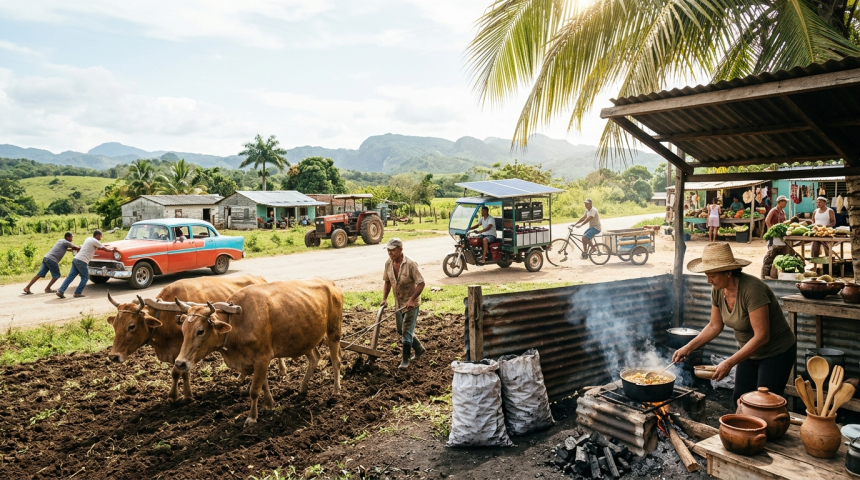
A tightening US oil blockade is forcing Cubans to replace electric machines with charcoal fires, hand tools and solar-powered vehicles. The shift is reshaping farms, transportation and tourism across the island as fuel and electricity grow harder to secure.
Farmers are pasteurizing milk over open fires. Commuters are using Chinese-made solar tricycles. Tour guides are grinding coffee by hand for the few foreign visitors who remain. These adaptations keep basic services running, but they also show the strain facing households and businesses.
Daily Work Returns to Manual Methods
Milk pasteurization usually depends on controlled heat from electric or fuel-powered equipment. Some Cuban farmers now use charcoal fires instead. The method allows production to continue, but temperature control can require more labor and attention.
Other tasks are also moving away from electrical equipment. Tour guides grind coffee by hand rather than relying on powered appliances. The practice saves electricity, although Cuba’s weakened tourism trade limits the income it can generate.
The examples point to three immediate changes:
- Businesses are substituting manual labor for electric equipment.
- Charcoal is replacing scarce fuel in some agricultural work.
- Solar transport is reducing dependence on gasoline and the electrical grid.
These measures are practical responses to shortages. Yet they can reduce output and demand more time from workers. They may also create uneven results, especially where safe food processing depends on steady temperatures.
Solar Tricycles Offer Limited Relief
Chinese-made solar tricycles provide an alternative for commuters facing fuel scarcity and unreliable electricity. Their use suggests that small-scale solar transport can fill some gaps left by conventional vehicles.
However, tricycles cannot meet every travel need. Passenger capacity, travel distance, weather and access to replacement parts may limit their role. They are best suited to shorter journeys and local transport rather than heavy freight or long-distance routes.
Even so, the vehicles offer a useful contrast with charcoal-based work. One response returns to older fuel sources, while another uses renewable energy. Together, they show how Cubans are drawing on whatever technology and materials remain available.
Tourism Weakness Adds Economic Pressure
The energy shortage is unfolding as visitor numbers appear severely reduced. Tour guides are preparing coffee by hand for a vanishingly small number of tourists, leaving fewer customers to support workers and local businesses.
Tourism normally spreads revenue through transportation, food service, lodging and informal commerce. When visitor traffic falls, the effects reach workers who may already face higher operating costs and limited supplies.
The combination of scarce oil and weak tourism creates a difficult cycle. Businesses have less revenue to buy equipment or adapt their operations. At the same time, unreliable energy can make the country less attractive and harder to serve as a destination.
Adaptation Cannot Replace Stable Supply
Cuba has long faced US economic restrictions, along with domestic production limits and recurring energy problems. The current oil pressure adds stress to a system that depends on imported fuel for transport, farming and electricity generation.
Washington views economic restrictions as leverage against Cuba’s government. Critics argue that broad pressure also falls on ordinary residents, who must find substitutes for fuel and electricity. The visible effects now include slower work, limited mobility and greater reliance on manual labor.
Cubans are showing resourcefulness under severe constraints. Charcoal fires, hand grinders and solar tricycles can keep parts of daily life moving. They cannot fully replace reliable oil imports, stable electricity or a functioning tourism economy.
The next test will be whether these local fixes can remain safe and affordable if shortages persist. Energy access, transport capacity and tourist arrivals will provide the clearest signs of whether conditions are stabilizing or placing further pressure on Cuban families.