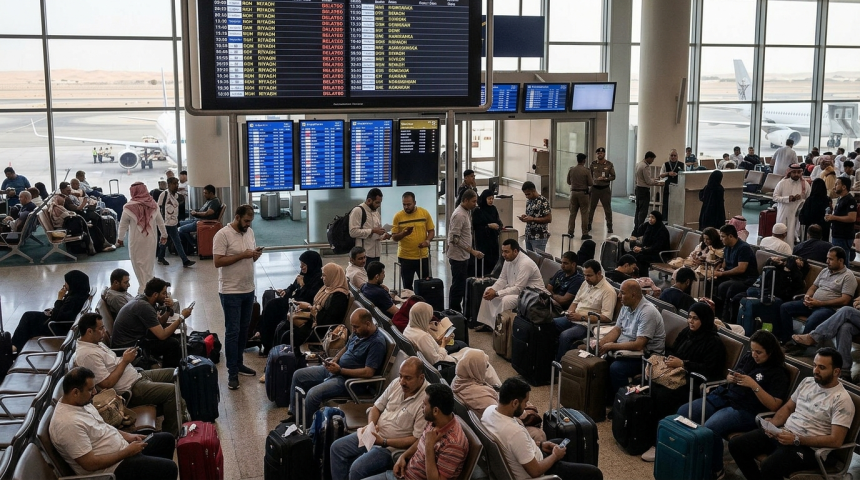
A security scare shut airspace around Riyadh and delayed arriving and departing flights, leaving travelers hours behind schedule in Saudi Arabia’s capital.
The disruption affected passengers traveling through intense heat, adding physical strain to an already uncertain journey. The cause, duration, and exact reach of the closure were not identified.
“We touched down, hours late, in the scorching Saudi capital after yet another security scare closed the airspace and delayed flights in and out.”
The traveler’s account points to two immediate concerns: the safety issue that prompted the closure and its broad effect on commercial aviation. The word “another” also suggests earlier disruptions, though no details were provided about their timing or cause.
Airspace Closure Disrupts Both Directions
Closing airspace is one of the most serious steps aviation authorities can take during a possible security threat. Such action can prevent aircraft from departing, restrict arrivals, and force planes already in flight to wait or change course.
In this case, the closure affected flights “in and out,” according to the account. That indicates disruption for travelers leaving Riyadh as well as those trying to reach the city.
Even a short closure can produce delays lasting several hours. Aircraft may no longer be in the correct place for their next scheduled service. Pilots and cabin crews can also reach legal working-time limits.
Airlines then face difficult operational choices, including:
- Holding flights at their departure airports
- Changing routes to avoid restricted airspace
- Delaying departures until authorities issue clearance
- Reassigning aircraft and flight crews
Those measures protect passengers, but they can spread delays across an airline’s wider network. Connecting travelers may miss onward flights, while airport gates can become occupied longer than planned.
Safety Takes Priority Over Schedules
Authorities generally restrict aviation when they believe normal operations may expose aircraft or passengers to danger. Without more information, the specific threat in Riyadh cannot be assessed.
The limited details also make it impossible to determine whether the scare involved activity near the airport, a wider regional concern, or a precaution based on unconfirmed information. Any firm claim about the cause would go further than the available account.
For passengers, however, the result was clear. They faced hours of delay before reaching Riyadh, where high temperatures made the arrival more taxing.
The episode shows the difficult balance between public safety and reliable transport. Travelers often receive only limited information while officials assess a threat. Security agencies may also withhold details to protect an investigation or prevent further risk.
Questions Remain After Flights Resume
The account confirms that at least one delayed aircraft eventually landed. It does not state when the airspace reopened, how many flights were affected, or whether any services were canceled.
Further information from Saudi aviation authorities, airport officials, or airlines would be needed to establish the scale of the interruption. Passengers would also need updated guidance on connections, baggage, and revised departure times.
The immediate priority remains safe flight operations. The next issue is transparency. Travelers and airlines need timely updates when security decisions interrupt major routes. Future statements may clarify what triggered the closure, how long it lasted, and whether additional restrictions are expected.