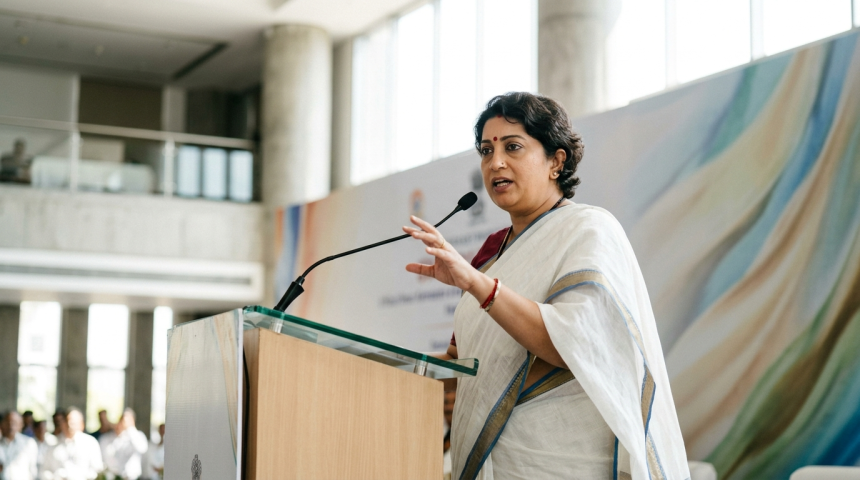
Indian politician and former Union minister Smriti Irani has called for young people’s urgency to shape India’s progress, while rejecting the idea that age limits public value.
Her message links two groups often placed on opposite sides of debates about leadership. It presents youthful impatience as a source of momentum and experience as an asset that does not expire.
“India needs the impatience of its youth, but relevance has no retirement age.”
The concise statement did not identify a specific policy, program, or institution. Instead, it offered a broad argument about who should take part in India’s economic, political, and social development.
A Case for Greater Urgency
Irani’s reference to “impatience” gives the word a positive meaning. In this context, it suggests dissatisfaction with slow progress and a demand for faster action.
Young Indians face decisions about education, employment, entrepreneurship, technology, and public service. Their expectations can pressure institutions to respond more quickly and explain their choices more clearly.
That pressure can help expose outdated systems. It can also encourage leaders to set deadlines, measure results, and make public services easier to use.
Yet impatience can carry risks if speed replaces careful planning. Policy changes often affect millions of people, and rushed decisions may create costs that were not clear at first.
Irani’s statement did not address that tension. Its central point was that youthful urgency should be viewed as useful energy rather than simple restlessness.
Experience Without an Expiry Date
The second half of the statement challenges age-based assumptions about relevance. Irani argued that retirement from a formal position should not end a person’s ability to contribute.
Older professionals can offer institutional memory, technical skill, and lessons from earlier successes and failures. Retired workers may also serve as mentors, advisers, educators, volunteers, or community leaders.
This position does not require older leaders to retain control indefinitely. Instead, it supports a model in which knowledge is shared while younger people receive genuine authority and room to act.
The balance can be difficult. Calls for experience may sometimes protect closed leadership circles. Calls for generational change may also dismiss useful expertise too quickly.
Generations as Partners, Not Rivals
Irani’s phrasing suggests that India does not need to choose between youth and age. It needs both urgency and judgment.
- Younger participants can question delays and established habits.
- Experienced participants can explain past decisions and recurring risks.
- Institutions can create mentoring and leadership paths that transfer knowledge.
For that approach to work, participation must carry real influence. Advisory roles alone may not satisfy young people seeking responsibility. Likewise, respect for experience must involve more than ceremonial recognition.
The statement also leaves several practical questions open. It does not say how employers should support older workers, how political parties should promote younger leaders, or how public bodies should divide authority across generations.
A Broad Message With Policy Questions
As a political message, Irani’s remark is direct and inclusive. It speaks to young people eager for change while assuring older citizens that their public worth continues.
Its impact, however, will depend on how leaders and institutions apply the idea. Hiring practices, leadership selection, workplace training, and public appointments offer clear tests.
The larger takeaway is that generational renewal does not have to mean generational replacement. India can use youthful impatience to increase the pace of change while drawing on the experience of people whose formal careers have ended.
Future debate will likely focus on whether institutions can turn that principle into shared authority. The key measure will be whether younger Indians gain meaningful opportunities without older citizens being treated as obsolete.