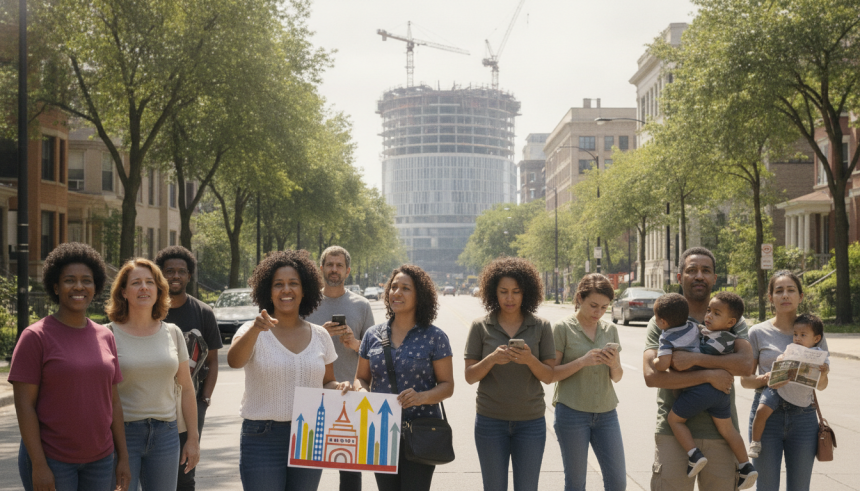
On Chicago’s South Side, neighbors greet the Obama Presidential Center with hope and caution. Residents describe the project as a point of pride and a potential spark for jobs and arts. They also fear rising rents and property taxes could push out longtime families as construction continues near Jackson Park.
The center, backed by former President Barack Obama and former First Lady Michelle Obama, is taking shape in the historic park that borders Woodlawn and South Shore. City officials and project leaders say it will bring visitors, classrooms, and a new branch of the Chicago Public Library. Community groups see a once-in-a-generation investment in a part of the city that has waited for it.
“A mixture of pride and excitement, tempered with some concerns about what it could do to housing affordability.”
Project Overview and History
The Obama Presidential Center sits on public land in Jackson Park, a site chosen after a competitive process. Ground work began after years of planning, reviews, and lawsuits over parkland use. Supporters argue the location ties the project to nearby neighborhoods that shaped the Obamas’ early lives and careers.
Plans include a museum tower, a forum building, green space, and community programming. The Obama Foundation says the center will be free to enter, with tickets for the museum. The goal is to attract visitors while offering public amenities for locals.
Community Hopes and Fears
Many South Siders see the center as overdue recognition. It could shift attention and spending to areas long left out of major civic projects. Parents point to promises of youth programs. Small business owners look for new foot traffic.
But the sharpest concern is housing. Tenants and seniors worry about property taxes and landlords raising rents. Activists have pushed for stronger protections, arguing that cultural projects can fuel gentrification if guardrails are weak.
One resident summed up the mood simply:
“A mixture of pride and excitement,” they said, “tempered with some concerns about what it could do to housing affordability.”
Housing Affordability Measures
City Hall has adopted rules to fight displacement in nearby zones, starting with the Woodlawn Housing Preservation Ordinance in 2020. That plan set targets for affordable units on city-owned land, funding for home repairs, and support for tenants facing rising costs. Advocates say the rules must be fully funded and enforced, and they want similar safeguards across South Shore.
- Affordable set-asides for new housing on city land near the site
- Home repair grants to help longtime owners stay
- Tenant assistance for legal help and relocation if needed
Landlords and developers respond that new housing supply can ease price pressure. They argue clear rules help projects get built. Tenant groups counter that supply arrives too slowly to protect vulnerable renters without firm affordability requirements.
Economic Promise and Open Questions
The Obama Foundation projects construction jobs and new visitor spending once the center opens. Nearby shops and restaurateurs are preparing for more customers. Workforce programs are training residents for roles tied to hospitality, maintenance, and museum operations.
The scale of that benefit remains an open question. Tourism can be seasonal. Service jobs may not match the wages needed to keep up with rising housing costs. Local hiring commitments and transparent reporting will be key tests.
What to Watch
Researchers and neighborhood leaders point to several markers that will show whether growth is shared:
- Trends in median rent and property tax bills in Woodlawn and South Shore
- Share of new units that are affordable to current residents
- Local hiring rates for construction and permanent jobs
- Support for Black-owned businesses on corridors like Stony Island and 63rd Street
Civic groups are calling for stronger anti-displacement funds, community land trusts, and rent stabilization tools. The city is weighing how to scale programs and measure results block by block.
The Obama Presidential Center is more than a museum. It is a test of whether a major cultural project can lift neighborhoods without pushing people out. Residents voice both pride in what it represents and worry about what it may change. As cranes rise over Jackson Park, the balance between growth and stability will be the measure that matters most. Policymakers, organizers, and the foundation will face close scrutiny as opening day nears—and long after the ribbon is cut.