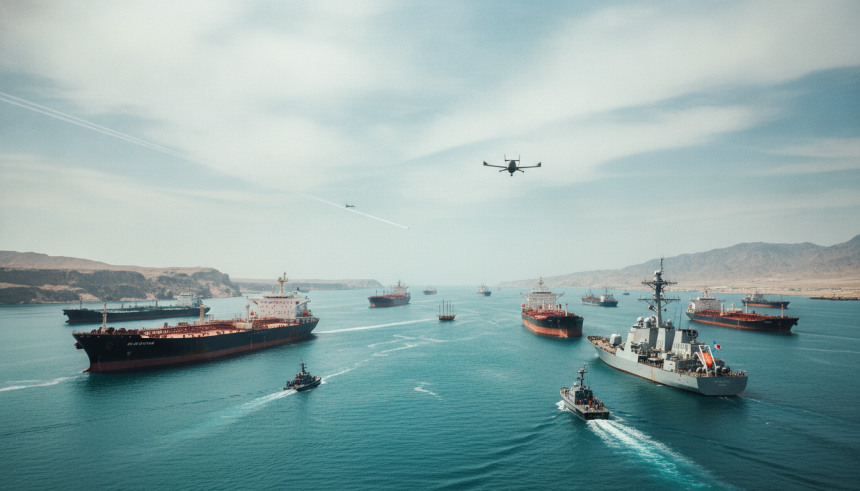
The Strait of Hormuz, a narrow waterway off Iran and Oman, sits at the heart of rising friction that links energy security to Middle East conflict. Tankers, warships, and political messages pass through the same lanes, raising the risk of miscalculation and market shock.
At stake are global oil flows and the security goals of the United States, Israel, and Iran. The strait is small on a map yet large in influence. It is where transit rights, sanctions, and deterrence all collide.
“The Strait of Hormuz is a major oil-shipping route and the epicenter of the U.S. and Israel’s ongoing war with Iran.”
Why This Waterway Matters
Energy analysts often describe the strait as the world’s most important oil chokepoint. The U.S. Energy Information Administration estimates that roughly one-fifth of global petroleum liquids move through these waters in a typical year. Each delay or scare can move prices within hours.
At its narrowest, the channel is about 21 miles wide. The shipping lanes are only a few miles across in each direction, with a buffer in between. That leaves little room for error when navies shadow tankers or when drones and patrol boats crowd the route.
Saudi Arabia, the United Arab Emirates, Iraq, Kuwait, and Qatar export much of their oil and gas through Hormuz. Some states have built pipelines to reduce reliance on the strait, but most exports still go by sea.
Signals, Standoffs, and Seizures
Maritime tensions here are not new. Tanker attacks and vessel seizures have flared in cycles over the past decade, often after sanctions tighten or clashes erupt elsewhere. Each episode brings a familiar script: accusations, denials, and hurried naval escorts.
U.S. officials say they patrol the area to keep sea lanes open and to deter threats to shipping. Iranian commanders counter that they act to defend sovereignty and to answer hostile moves, including sanctions and covert strikes. Israel focuses on Iran’s support for regional militias and the transfer of weapons by sea.
Even when gunfire is absent, the messaging war continues. Flyovers, drone footage, and public warnings help each side claim resolve, but they also raise the chance of a mistake.
Energy Markets on Edge
Oil traders watch Hormuz like a weather radar. A single incident can push insurance costs up and divert ships to longer routes. When transit risk rises, so does price volatility.
Some shippers have options. The UAE’s pipeline to Fujairah and Saudi Arabia’s line to the Red Sea offer partial relief. But these routes cannot replace the strait at scale. Natural gas shipments, especially liquefied gas from Qatar, have even fewer workarounds.
- Higher risk raises freight and insurance costs.
- Delays can squeeze supply and lift prices.
- Detours add days and cut tanker availability.
The Escalation Debate
Analysts differ on whether the current standoff points to a wider conflict or a managed confrontation. Some warn that tit-for-tat actions at sea can spiral. Others argue the players know the costs and will stop short of a direct clash.
Defense planners worry about drones, mines, and cyber tools that can disrupt shipping with little warning. Energy planners warn that sustained disruption could test global reserves and strain importers in Asia and Europe.
Diplomats, meanwhile, quietly work the phones. Maritime hotlines, third-party intermediaries, and back-channel talks have helped cool past flare-ups. They could again, if used early and often.
What History Teaches
Past crises in Hormuz show how fast events move from local to global. A seized tanker can become a week of headlines and a month of market stress. Insurance surcharges linger long after ships sail free.
The pattern is clear: pressure on Iran tends to meet pressure at sea. Each new sanction, cyberattack, or proxy strike risks a maritime echo. Breaking that cycle requires incentives for restraint and credible penalties for fresh attacks.
The central facts have not changed: the strait is narrow, the traffic is heavy, and the stakes are high. The quoted claim that Hormuz is an “epicenter” captures the fear that regional violence could choke a global artery. Whether that happens depends on choices made far from the waterline.
For now, watch these signals. Naval deployments hint at intent. Insurance rates reflect risk before prices do. And talks—quiet or public—offer the best path to keep tankers moving. The next few months will show whether the parties opt for restraint, or test how much strain this vital passage can take.