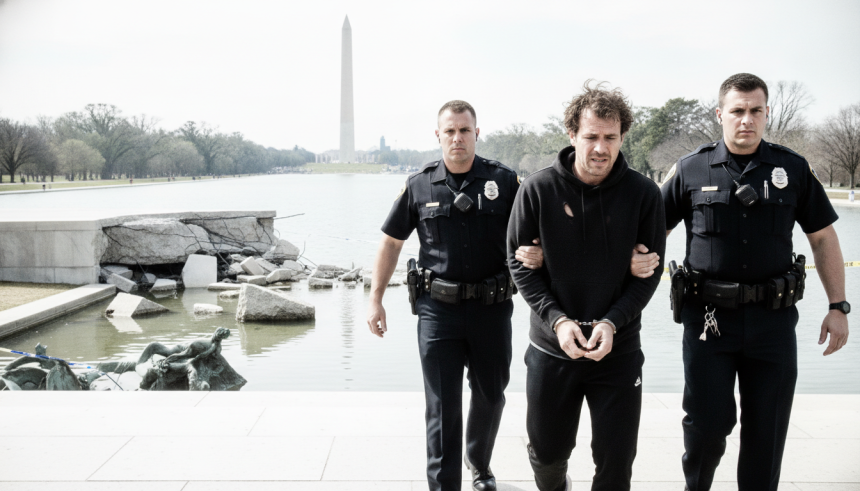
The Justice Department filed felony charges against former U.S. Olympian David Hearn, alleging he damaged the Reflecting Pool on the National Mall in Washington, D.C. The move signals an aggressive response to suspected harm to one of the capital’s most visited landmarks. Authorities say the incident involved federal property, triggering stiffer penalties under law.
The DOJ is bringing felony charges against former U.S. Olympian David Hearn, accusing him of damaging the Reflecting Pool on the National Mall.
Officials did not immediately share a full account of what led to the charges. Hearn, a veteran of multiple Olympic Games, now faces a case that could carry prison time and fines if proven in court. He remains presumed innocent.
A Landmark With National Significance
The Reflecting Pool sits between the Lincoln Memorial and the Washington Monument. It is one of the most photographed sites in the country. The pool is managed by the National Park Service and draws millions of visitors each year.
Upkeep is costly and constant. The pool underwent a major restoration in the last decade to address leaks, water quality, and structural issues. That work was funded to protect the vista and preserve the site for public use.
Damage can trigger complex repairs. Even small cracks or contaminants can require draining or specialized maintenance. That is why alleged vandalism cases often prompt a swift federal response.
The Charges and Legal Stakes
Federal law treats damage to U.S. property as a serious offense. Under 18 U.S.C. § 1361, willful injury to property of the United States can be charged as a felony, depending on the extent of damage. Prosecutors usually weigh repair costs and intent.
The Justice Department’s decision indicates the government believes the damage meets the threshold for felony prosecution. While the specific evidence is not yet public, the charge alone suggests significant alleged harm or cost.
Hearn’s case will move through federal court. He will have a chance to challenge the allegations, present evidence, and cross-examine witnesses. A judge or jury will decide whether the government meets its burden.
Public Spaces Under Pressure
Washington’s memorials have seen a steady trickle of incidents over the years. Some involve paint or etching on stone. Others target pools and fountains, which are sensitive to debris and chemicals.
- Repairs can require closures, disrupting public access.
- Even minor contaminants can force extensive cleaning or draining.
- Security has increased, but the sites remain open by design.
Park advocates argue that openness is part of the point. These places are meant to be used and shared. But high foot traffic and occasional misconduct carry real costs.
Who Is David Hearn?
Hearn is a former canoe slalom athlete who represented the United States at the Olympic level. His career spans decades, with appearances on international courses and a reputation as an experienced competitor. The charges place a high-profile figure at the center of a public property case, which raises the stakes and attention.
High-profile defendants do not change the legal standards, but they often shape public debate. Supporters may see a misunderstanding. Others focus on the need to protect civic spaces.
What To Watch Next
The court will set a schedule for the case. Key filings may reveal more about the alleged conduct and the government’s evidence. If the matter proceeds to trial, testimony from National Park Service personnel and forensic specialists could explain the damage and estimated costs.
The outcome may influence how officials police sensitive sites. It could also affect the penalties sought in similar cases. Washington’s monuments are open spaces by design. Balancing access and protection remains a constant challenge.
For now, the headline is simple. A former Olympian is charged with a serious federal crime tied to a national landmark. The legal process will sort the facts. The public will watch to see how the courts weigh intent, damage, and the value of a place that reflects more than monuments—it reflects who gets to share them, and how we care for them.