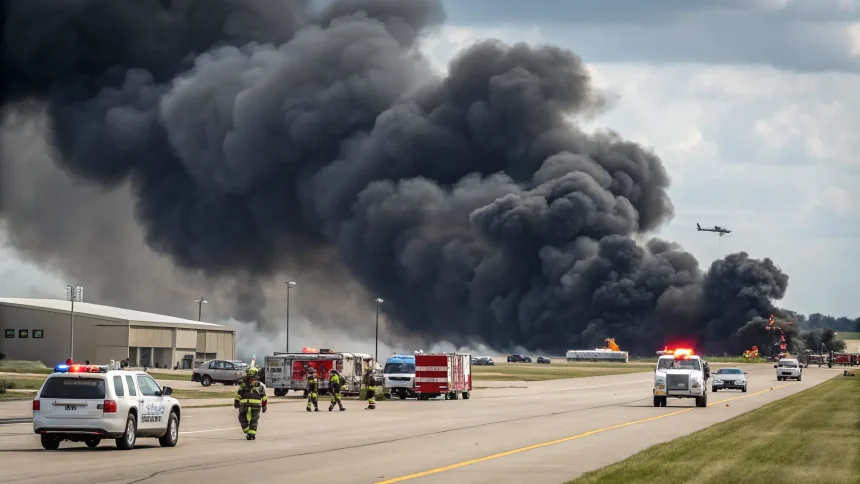
Thick smoke poured from a U.S. Air Force base as emergency crews raced to the scene, prompting concern and speculation about the source of the incident. The footage, shared shortly after the event, shows first responders working near plumes of dark smoke coming from within the installation. Officials have not released details on injuries, damage, or cause.
The incident drew quick attention because of the location and the unknowns. Air bases house fuel depots, aircraft, munitions, and sensitive operations. Even a small fire can trigger a large response and precautionary measures for nearby communities. Authorities are expected to provide updates as they assess the situation.
What the Video Shows
A short clip posted online captured the early moments of the response. The video highlights a column of smoke, flashing lights, and crews moving equipment into place. The length of the video and the vantage point make it hard to judge the exact source of the smoke.
“Footage shows smoke billowing from the US air force base and emergency crews at the scene.”
Viewers noted the rapid pace of the response. The presence of multiple vehicles suggests the base activated mutual aid or on-base emergency protocols. It is common for Air Force installations to drill for fuel fires, hangar incidents, and brush fires near airfields, which can speed real-world responses.
Background and Safety Protocols
U.S. military bases follow strict fire and incident procedures. These include immediate notification of on-base fire departments, security, and medical teams. If warranted, neighboring city or county agencies join the response under mutual-aid agreements.
Common triggers for smoke events include small structure fires, equipment malfunctions, fuel line leaks, brush fires near runways, and aircraft maintenance issues. Not every smoke event signals a large fire, but responders treat each one seriously until the source is confirmed safe.
- Fuel and munitions storage areas have layered safety systems.
- Hangars and flight lines use specialized foam and suppression tools.
- Bases conduct regular evacuation and shelter-in-place drills.
These measures aim to protect personnel and reduce the risk of spread. They also help limit disruptions to flight operations and training schedules.
Response, Investigation, and Public Information
When smoke is visible off base, public information officers typically issue guidance to nearby residents. That can include avoiding certain roads, staying clear of entry gates, or watching for smoke drift. No such notice had been confirmed at the time of this report.
Investigators usually begin by securing the site, interviewing witnesses, and reviewing maintenance logs. If an aircraft or critical equipment is involved, specialized teams take part. The timeline for findings can vary from hours to days depending on complexity.
Statements are often limited during an active response. Officials balance transparency with operational security and safety. Clear updates help reduce speculation and calm public concern.
Community Impact and What to Watch
Air bases sit near neighborhoods and business districts, so any incident can affect daily life. Traffic near gates can slow. Outdoor activities may pause if smoke drifts. Schools and local services sometimes adjust schedules if advised by authorities.
Key questions in the hours ahead include:
- What caused the smoke and how extensive is the damage?
- Were there any injuries among base personnel or responders?
- Did the incident affect flight operations or training?
- Are there environmental concerns such as fuel runoff or air quality issues?
Answers to these questions will guide next steps. If the cause involves equipment or procedures, the base may issue safety bulletins or revise training. If infrastructure is affected, repairs could delay flights or maintenance work.
For now, the main facts are limited to what the video shows and the visible presence of first responders. The scope of the incident remains unclear, but standard protocols point to active efforts to contain and assess the situation. Residents and base personnel can expect formal updates once officials confirm details. The focus will be on safety, continuity of operations, and a transparent account of what occurred.