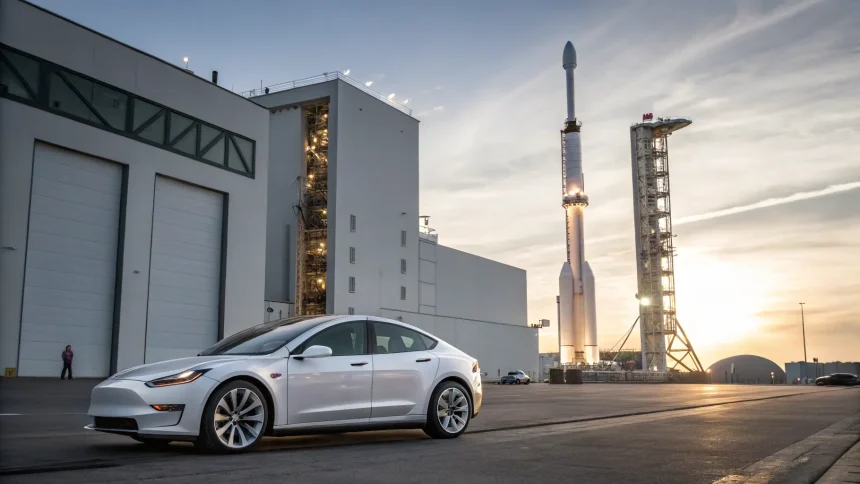
Elon Musk is weighing a plan to link Tesla and SpaceX on a new chip effort, a move that could reshape how both companies secure the computing power they need. The idea, raised in recent days, arrives as demand for artificial intelligence and autonomy surges and supply chains for high-performance chips remain tight.
Musk, who leads both companies, is known for setting bold timelines. That record fuels both optimism and caution among investors and engineers now eyeing what a joint chip push might mean for cars, rockets, and satellites.
Elon Musk recently outlined ambitious plans for a chip-building collaboration Tesla and SpaceX — but he has a history of overpromising.
Why Chips Matter To Both Companies
Tesla’s driver-assistance systems and in-house training compute have pushed it deeper into specialized silicon. Its Dojo initiative, announced in 2021, sought to cut costs and increase control by designing custom hardware for AI model training. SpaceX, meanwhile, runs Starlink, a satellite network that relies on efficient, resilient chips for communications and operations, and uses significant compute for design and launch analysis.
A shared chip program could help both firms reduce dependence on outside suppliers, align road maps, and share expensive talent. It may also offer scale advantages, from bulk component buys to shared testing.
Potential Benefits — And Risks
Supporters argue that combining design teams could speed progress and lower long-term costs. If successful, custom chips could tailor performance for autonomous driving at Tesla and for satellite and launch needs at SpaceX.
- Supply security: Less exposure to graphics processor shortages.
- Cost control: More predictable spending on training and inference.
- Design focus: Hardware tuned for each company’s workloads.
But the plan raises questions. Musk’s control of both firms creates related-party concerns that boards and shareholders would need to vet. Governance rules typically require independent review of any cross-company deal to ensure fair pricing and clear intellectual property ownership.
A Record Of Big Timelines
Musk often sets aggressive targets, then revises them. Tesla’s “Full Self-Driving” goals have slipped year after year, even as the software advanced. The Model 3 ramp in 2017-2018 ran into “production hell,” stretching deadlines and budgets. SpaceX’s Starship hit test milestones but later than first projected. Those experiences shape expectations now: a joint chip project could deliver, but likely after schedule changes.
Investors tend to tolerate delays if the end product is strong. The key question is whether a shared silicon effort will meet performance and reliability needs faster than buying from established chipmakers.
Industry Context And Competitive Pressure
AI training demand has exploded across tech and auto sectors, lifting prices for high-end accelerators and increasing wait times. Automakers from General Motors to Mercedes-Benz have expanded software plans, while suppliers race to offer safer, cheaper compute. Space companies, too, are pushing into custom electronics to cut power draw and harden systems for space.
If Tesla and SpaceX combine efforts, they could influence suppliers and standards by virtue of scale. A successful program might nudge others to co-invest across corporate families to secure parts and talent.
What To Watch Next
Several signposts will reveal whether the plan is moving from concept to execution:
- Board approvals and disclosures on related-party terms.
- Hiring of chip architects and verification engineers tied to a shared unit.
- Foundry partnerships and tape-out timelines for a first-generation design.
- Clear performance targets for training and inference benchmarks.
Clarity on who owns patents, how costs are split, and where production happens will also matter. Without that, the project could stall in legal and operational limbo.
Balanced Outlook
The idea fits Musk’s pattern: take on hard problems and integrate key technology in-house. It also carries familiar risks: tight timelines, capital needs, and oversight challenges. If governance safeguards are strong and engineering goals are realistic, a joint chip push could give Tesla better autonomy hardware and SpaceX more efficient systems for rockets and satellites.
For now, the plan is still just that — a plan. The next months will show whether boards endorse it, whether top chip talent signs on, and whether early prototypes hit targets. If they do, the effort could reshape how both companies compute. If not, it may join a list of ventures that arrived with big promises and had to reset expectations.