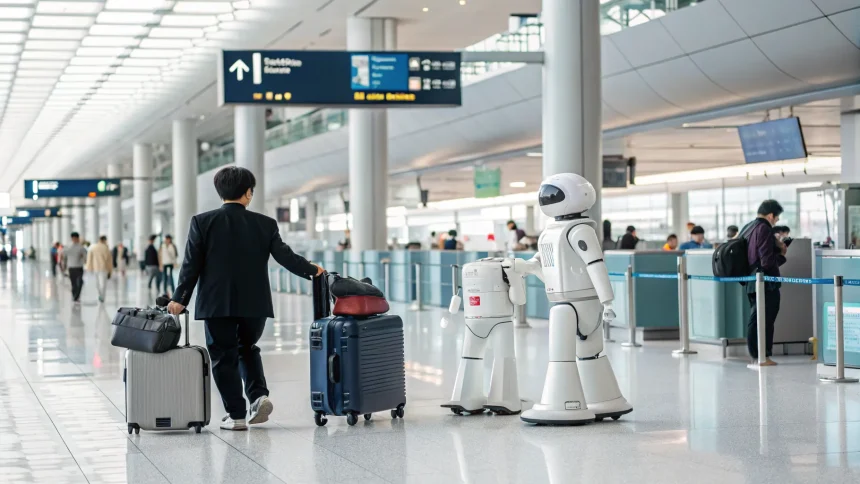
Passengers moving through Tokyo’s Haneda Airport could soon hand off their bags to a humanoid helper, signaling a new push to automate ground operations at one of the world’s busiest hubs. The initiative, discussed as part of efforts to ease staff shortages and speed service, would place robotic attendants near check-in and baggage areas as early as upcoming trial windows. The move reflects Japan’s wider turn to automation to keep services running smoothly under tight labor conditions.
“The next time you fly through Tokyo’s Haneda Airport, your luggage might be taken care of by the dexterous hands of a humanoid robot.”
Why Haneda Is Turning to Robots
Japan faces a persistent labor crunch, sharpened by an aging population and low birthrate. Government data show that nearly three in ten residents are 65 or older. Service jobs, including airport ground work, are hard to fill and keep staffed during peak travel periods.
Airports across Japan have already tested cleaning units, autonomous carts, and guide robots. Adding humanoid models to baggage handling is a logical next step. It targets one of the most strenuous and time-sensitive tasks on the ground: moving, sorting, and staging bags for loading.
Haneda, a key domestic and international gateway, handled tens of millions of passengers last year as travel rebounded. Even small improvements in baggage flow can shorten queues and reduce missed connections.
How the Trial Could Work
Officials have signaled that initial deployments would be limited and closely watched. Robots would likely operate in controlled zones, such as designated bag-drop lanes or behind-the-scenes sorting points. Staff would remain nearby to supervise and intervene if needed.
Tasks suited to early use include lifting bags onto belts, moving luggage tubs, and placing items onto carts bound for aircraft. Human-like arms could be paired with vision systems to grasp different bag shapes and handle fragile tags with care.
Promises and Trade-Offs
Supporters argue that robotic helpers can lift heavy items, work consistent shifts, and backstop teams during surges. They also see fewer injuries from repetitive strain and a chance to reassign staff to customer-facing roles.
Critics raise concerns about cost, reliability, and job security. Harsh ramp conditions—dust, rain, and constant vibration—have challenged machines in the past. Any glitch near a tight departure window risks cascading delays. Labor groups often press for clear guardrails on where and how automation is used and how workers are retrained.
Passenger trust is another hurdle. Travelers want speed, but they also want accountability when a bag is delayed or damaged. Clear signage, visible staff oversight, and easy help buttons can ease those fears during trials.
What It Means for Travelers and Airlines
For travelers, the effect could be subtle at first: shorter lines at drop-off, faster tag-and-go options, and more consistent bag handling. For airlines, steady ground times are valuable. Even small gains in on-time performance reduce costs and improve connections.
Industry reports have noted pressure on baggage systems as global travel returns to pre-pandemic levels. Automation is one lever airports use to keep mishandling rates from rising and to cut wait times at carousels.
- Near-term focus: limited pilots in select zones, with staff on standby.
- Metrics to watch: mishandled baggage rates, on-time departures, customer satisfaction.
- Worker impact: reskilling for supervision, safety, and maintenance roles.
Japan’s Playbook on Automation
Japan has long advanced industrial robotics in factories. Service robots in public spaces are a newer push, from retail stocking to hotel concierge tasks. Airports provide a test bed where tasks are repeatable and space is well mapped. Success often hinges on careful scoping and stepwise scaling rather than sweeping rollouts.
If Haneda’s program shows steady gains without added risk, other major airports in the country could follow. Partnerships with domestic robotics firms may help tailor machines to Japan’s tight spaces, high cleanliness standards, and exacting schedules.
Haneda’s step into humanoid baggage handling sets a clear test: can machines deliver faster, safer service without eroding jobs or trust? The answer will come from data gathered during trials—bag handling accuracy, incident reports, and traveler feedback. If the results hold up under peak holiday loads, expect more robots in more zones, and a steady shift in how airports move luggage from curb to cabin.