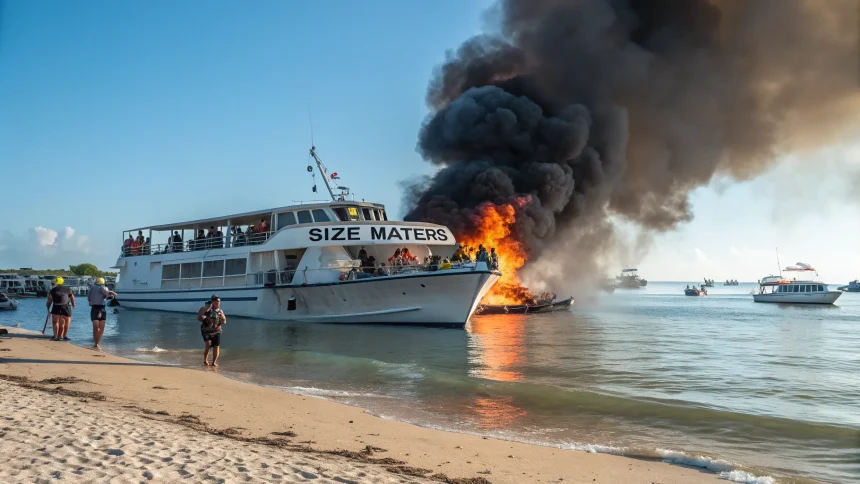
Tourists watched in shock as a 40-foot vessel named “Size Matters” burned off Miami Beach on March 12, 2026, in a fast-moving fire captured on witness video. The boat, carrying a group visiting from Nebraska, was quickly engulfed, raising fresh concerns about passenger safety on popular coastal excursions during peak travel season.
The video, filmed from a nearby vantage point, shows the vessel ablaze as smoke billows over the water. It offers a stark snapshot of a routine outing turned dangerous within minutes.
“Witness video shows the moment a 40-foot boat named ‘Size Matters’ was engulfed in flames as it carried a group of tourists from Nebraska off the coast of Miami Beach, Florida on March 12, 2026.”
— Video by Cristian Valles via Storyful
What Happened Off Miami Beach
The vessel burned offshore in clear view of nearby boats and beachgoers. The clip does not reveal what sparked the blaze or the condition of passengers and crew. It also does not show rescue efforts, leaving unanswered questions about injuries and damage.
In similar marine incidents, local fireboats and the U.S. Coast Guard typically respond, secure the scene, evacuate passengers if needed, and prevent the fire from spreading to fuel tanks or nearby craft. Authorities then open an investigation to determine the cause and assess any violations.
Background: A Busy Waterway With Familiar Risks
South Florida waters host heavy charter and recreational traffic, especially in spring when visitors pack beaches and marinas. With more boats on the water, mechanical issues can escalate fast. Marine safety officials note that fires often start in engine compartments, fuel systems, or electrical wiring, where heat and vapors can ignite.
Tour boats operate under specific safety rules that include life jackets, extinguishers, and crew training. Even so, aging equipment, deferred maintenance, and crowded decks can raise the stakes when something goes wrong.
Safety Questions and Common Causes
Investigators in cases like this look closely at three areas:
- Fuel and ventilation: Leaks and poor airflow can allow vapors to ignite.
- Electrical systems: Corroded connections or overloading can spark fires.
- Engine heat: Overheating engines and exhaust systems can trigger flames.
Weather and sea state can affect the spread of fire and the difficulty of evacuations. So can the number of people aboard and the location of safety gear.
Response and Accountability
Marine investigations typically review maintenance logs, recent repairs, and crew certifications. Operators can face penalties if inspections are lapsed or safety equipment is missing or inoperable. Insurance adjusters often conduct parallel reviews to evaluate losses and liability.
Passengers who book charters usually assume vessels are inspected and crews are trained. This incident will likely renew calls for visible proof of recent inspections, simple safety briefings before departure, and clear evacuation plans.
Tourism and Seasonal Pressures
Miami Beach draws visitors year-round, and tour operators work to meet demand during peak weeks. Busy schedules can strain maintenance windows and tempt short cuts on pre-trip checks. Industry groups often urge companies to pace departures and keep spare parts and backup systems ready.
Travelers, meanwhile, tend to focus on scenery, not safety. Videos like this one serve as a blunt reminder that a quick briefing and a glance at exits, extinguishers, and life jackets can matter.
What Boaters Can Do Now
Experts consistently recommend a few simple steps that help prevent fires and reduce harm:
- Check ventilation blowers before starting engines after fueling.
- Inspect fuel lines and electrical connections for wear and corrosion.
- Carry and know how to use marine-rated fire extinguishers.
- Run regular emergency drills and brief passengers before departure.
The Miami Beach fire on “Size Matters” shows how fast a pleasant outing can change. The video raises hard questions about maintenance, training, and preparedness that regulators and operators will need to address. Until investigators publish findings, the most practical takeaway for boaters and passengers is simple: respect the risks, ask basic safety questions, and make sure the gear works before the lines come off the dock.