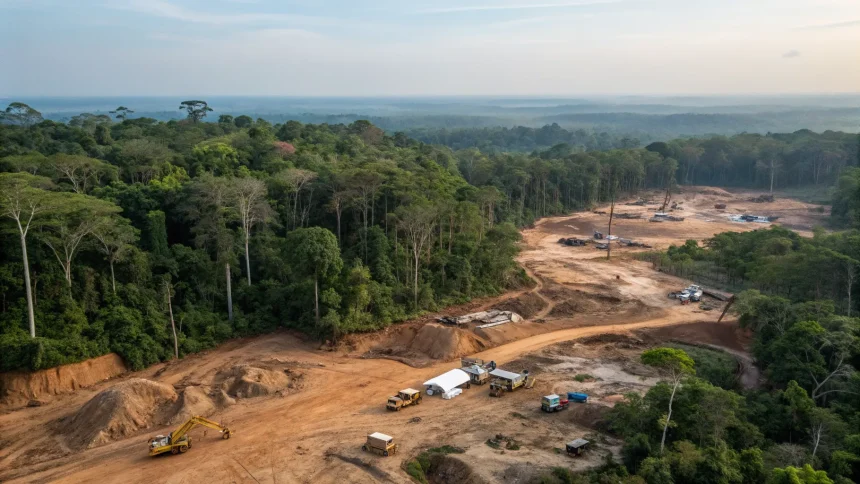
Illegal gold mining is pushing deeper into Peru’s Amazon, raising alarms over deforestation, mercury exposure, and the safety of remote communities. Environmental monitors and health researchers say the advance is straining already limited enforcement and public health systems across the southeast of the country.
“Illegal gold mining is spreading into new parts of Peru’s Amazon, and experts say it is driving a growing environmental and health crisis.”
The spread has followed river corridors and logging roads from long-impacted areas in Madre de Dios into new zones of Cusco and Puno, according to field reports. Authorities link the shift to pressure from past operations to curb mining in well-known hot spots, which pushed miners to more isolated terrain.
A Crisis Moving Into New Frontiers
For more than a decade, Madre de Dios has been a center of illegal alluvial gold mining. The work is done with dredges and backhoes along riverbanks and wetlands. Forest is cleared, topsoil is churned, and mercury is used to bind fine gold flakes. After a major security push in 2019, known as Operation Mercury, activity fell in the La Pampa zone near the Tambopata National Reserve. But analysts say much of it did not stop. It moved.
Remote sensing groups have documented new clearings along tributaries and in buffer zones that are harder to patrol. Conservation teams report pits left open and tailings ponds leaching into streams. Indigenous organizations warn that river travel has become riskier as new camps pop up near their territories.
Health Risks From Mercury
Mercury, a potent neurotoxin, is central to small-scale gold extraction. It is burned off over open flames, releasing vapors that damage the brain and nervous system. In waterways, it converts to methylmercury and builds up in fish, a key food for Amazonian families.
Public health studies in Madre de Dios over the past decade have found widespread mercury exposure among riverine and Indigenous communities, with higher levels in people who eat fish often. Doctors report symptoms that include headaches, tremors, and memory problems. Pregnant people and children face the highest risks.
Researchers say the spread of mining raises the chance that contamination will reach new villages and towns. Clinics in these areas often lack testing kits and protocols for mercury exposure. That leaves many cases undetected until symptoms worsen.
Why Enforcement Pushes Mining Elsewhere
Security operations have targeted fuel supplies, dredges, and access roads. Those efforts disrupted some networks but also scattered miners to places with fewer checkpoints. Local officials say budgets for sustained patrols are limited, and prosecutions can be slow. Rivers cross regional borders, complicating coordination.
Analysts add that the price of gold has stayed high in recent years, keeping the work profitable despite crackdowns. In remote districts with few formal jobs, mining offers fast cash for migrants and local workers. That economic pull often outpaces the reach of the state.
- Enforcement can displace activity to new sites.
- High gold prices sustain illegal operations.
- Thin resources hinder long-term patrols and prosecutions.
Communities Caught Between Economy and Law
Community leaders describe a difficult trade-off. Some families rely on mining to pay for food, fuel, and school supplies. Others fear violence, pollution, and the loss of traditional livelihoods like fishing and Brazil nut harvesting. Environmental groups argue that stronger support for legal forest economies could reduce pressure to mine.
Miners interviewed in past fieldwork say they want predictable rules and access to formalization programs that would allow small-scale operations to meet environmental standards. Government officials counter that many camps operate in prohibited zones, including protected areas and riverbanks where formalization is not allowed.
What Comes Next
Experts recommend a two-track approach: steady enforcement paired with real alternatives. That includes permanent control posts on key rivers, better tracing of mercury and fuel, and faster legal cases. It also means funding for health screening, clean water systems, and jobs tied to sustainable forestry and tourism.
Monitoring groups urge continued use of satellite alerts to detect new clearings in near real time. Early warnings can help target hotspots before they grow. Public health teams call for routine mercury testing in schools and prenatal care, along with clear guidance on safer fish consumption.
The spread of illegal mining is a moving target. The next year will test whether authorities and communities can limit new incursions while treating the hidden toll of mercury exposure. The stakes are high: protect forests and rivers now, or face deeper damage that will be harder and costlier to fix.