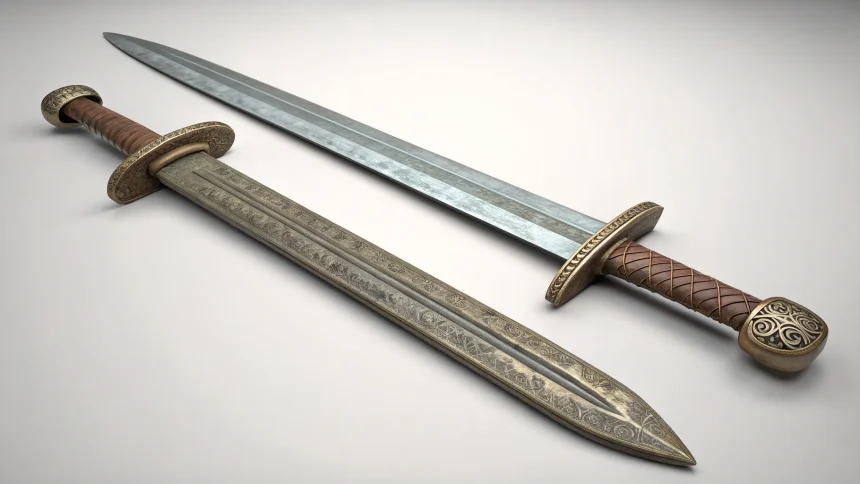
Archaeologists in France report a striking find: a Celtic burial from the Second Iron Age that holds two rare, well-preserved swords. The discovery, made at a burial site in France, offers a fresh look at how Iron Age communities honored their dead and crafted weapons. Researchers say the condition of the swords could change what is known about technology, warfare, and ritual in ancient Gaul.
A Celtic burial site from the Second Iron Age in France contains two rare, well-preserved swords.
What The Find Suggests
The Second Iron Age in France, often linked with the La Tène culture, spans roughly the fifth to first centuries BCE. Swords from this period are frequently found in graves, but many are corroded or fragmented after long burial. Two swords in a single grave, both in unusually good condition, stand out. Their preservation may allow close study of metal composition, forging techniques, and use-wear marks.
Specialists explain that iron rarely survives intact in soil. Water, oxygen, and microbes break down metal over time. When swords do remain stable, it is often due to unique burial conditions. Sealed coffins, mineral-rich soils, or waterlogged layers with little oxygen can slow decay. If those factors are present here, conservators could learn as much from the burial environment as from the weapons themselves.
Context: The Second Iron Age
During the Second Iron Age, Celtic groups in what Romans later called Gaul developed complex settlements, trade networks, and artistic styles. Weapons were symbols of status as well as tools of war. Grave goods can include brooches, pottery, wagon parts, and, for high-status individuals, swords and shields. Many communities buried elite warriors with blades bent or “killed,” a practice thought to mark the end of a weapon’s life.
Scholars look for patterns across sites to understand social roles. Two swords in one grave could indicate a person of rank, a ritual deposit, or a reused burial. Careful excavation notes, soil analysis, and radiocarbon tests from any associated organic materials may help resolve these questions. If textiles, wood fragments, or leather fittings survive, they could point to scabbards, hilts, or belt systems that are seldom preserved.
Why Preservation Matters
Well-preserved iron gives researchers a rare chance to study the finer details:
- Metallurgy: Carbon content, slag inclusions, and weld lines reveal how smiths built and hardened blades.
- Design: Blade length, cross-section, and tang style can pinpoint date and cultural links.
- Use-wear: Edge nicks and polish patterns show whether a sword saw combat or ceremonial use.
If the swords retain organic traces—wooden grips, leather wraps, or textile remains—microscopic study can reconstruct the original look and handling. This is often the missing piece when only corroded iron survives.
Implications For Celtic Studies
The find could feed into larger debates about warfare and identity in Iron Age Europe. Some scholars argue that many swords were status markers rather than everyday weapons. Others point to battle injuries, fortified oppida, and mass graves as evidence of frequent conflict. Detailed analysis of these two blades could support one view or show a mix of ceremonial and practical functions.
The French site also fits a broader pattern of high-profile Iron Age finds across Europe, including richly furnished graves in Germany, the Czech Republic, and Switzerland. Shared styles, like scabbard decorations or hilt fittings, can map trade and cultural ties across regions. Differences can highlight local traditions.
Next Steps: Excavation To Exhibit
Any project with preserved iron moves through careful stages. Archaeologists stabilize the objects on site, then transfer them to a lab for desalination and corrosion control. Conservators use CT scanning to see inside corrosion layers and guide cleaning. Only after stabilization can typologists measure and compare features with known catalogs.
Public interest in such finds is often strong. Museums usually wait for peer-reviewed study before display. When the time comes, clear labels and reconstructions help visitors understand how these swords were made and used. Digital models and high-resolution images can share details that the naked eye might miss.
The discovery of two well-preserved Celtic swords in a French burial adds a valuable piece to the Iron Age puzzle. Close study of the blades, their context, and any surviving organic parts could sharpen views on status, craft, and conflict in ancient Gaul. As conservation and analysis continue, watch for metallurgical results, dates from any associated materials, and comparisons with La Tène typologies. Those findings will decide whether this grave reflects a unique story or a broader pattern in Iron Age society.