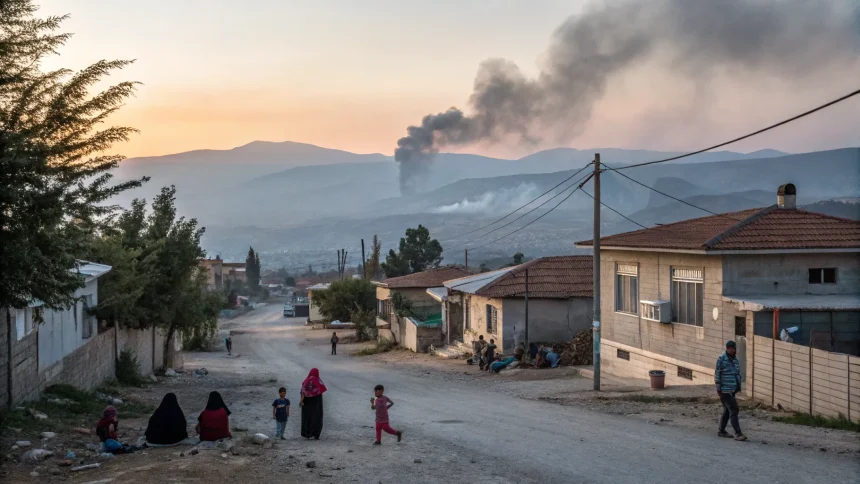
Months after Israel claimed to have removed senior Hezbollah figures and crippled its weapons stockpiles, the Iran-backed group is still launching rockets into northern Israel. The continued fire has kept border towns on alert, triggered evacuations, and raised fears of a wider war across Lebanon and Israel. At stake are regional supply lines, the balance of deterrence, and the risk of miscalculation along a tense frontier.
Background: A Costly Year, But Not a Knockout
Israel says it targeted Hezbollah’s upper ranks in 2024 and conducted large-scale strikes on depots and launch sites. The campaign followed years of sporadic clashes that escalated after the war in Gaza began. Hezbollah has long presented itself as a resistance force armed to deter Israel and to serve Tehran’s interests along the Mediterranean.
The group’s deep entrenchment in southern Lebanon dates to the 1980s. Its 2006 war with Israel ended with a UN-brokered cease-fire but left stockpiles in place and fighters experienced. Since then, it has fought in Syria alongside Iran’s Islamic Revolutionary Guard Corps and developed new skills, including drone operations and battlefield logistics under pressure.
How the Group Re-Armed
Analysts point to three channels that can explain the continued rocket fire. None is new, but each appears to have adapted.
- Smuggling and overland routes: Weapons and parts can move from Iran into Syria and then into Lebanon, often in small batches to reduce detection.
- Local production: Simple unguided rockets, small drones, and launch rails can be assembled with commercially available parts and basic machining.
- Dispersed storage: Ammunition is stashed in homes, fields, and underground sites, reducing the impact of any single strike.
These methods rely on redundancy. If one route is hit, others can still function. The reliance on smaller, frequent shipments also means the group can recover faster after raids on large depots.
Changing Tactics on the Border
The most visible shift is volume and tempo. Rather than large barrages alone, Hezbollah mixes short bursts of fire with single-launch salvos. This makes detection and interception harder and keeps Israel guessing about timing and targets.
Teams use low-signature, mobile launchers. They fire and quickly relocate, often within minutes. Many rockets are short range, aimed at communities only a few kilometers from the border. Others target military sites with guided munitions or drones when available, though such systems are used sparingly.
The group pairs rockets with surveillance drones to spot troop movements or air defense patterns. It also relies on decoys, timed fuses, and pre-positioned tubes to launch without exposing crews. These tactics are designed to stretch Israel’s air defenses and force costly responses.
Israel’s Response and the Risk of Escalation
Israel has continued airstrikes and cross-border artillery fire to disrupt launch cells and supply lines. It has evacuated parts of the north and fortified key bases. Officials say sustained pressure can erode Hezbollah’s capabilities and deter larger attacks.
Yet a cycle persists. Each strike invites retaliation, which then draws another response. Border communities in both countries pay the price, with homes damaged, farms abandoned, and schools closed. Aid groups warn of growing displacement and strain on local services.
What The Pattern Reveals
The persistence of rocket fire suggests that leadership losses do not end operations when units are decentralized. Junior commanders can plan and execute limited strikes with modest resources. The group’s training in Syria and years of preparations in Lebanon have built that depth.
It also highlights the difficulty of eliminating dispersed stockpiles and small workshops. Precision airstrikes can remove key figures and destroy known depots. But low-tech weapons are easy to hide and replace, and small teams can keep firing at a steady pace.
Outlook: Deterrence Under Strain
Both sides say they want to avoid a full-scale war. But continued skirmishes raise the chance of a miscalculation. A mass-casualty strike, a hit on a major city, or the loss of a high-profile commander could tip the conflict into a broader fight.
In the near term, watch for signs that crossing points through Syria are disrupted for an extended period, or that Israel targets more senior operatives deep inside Lebanon. Either move would test the group’s ability to sustain fire and could shift the calculus in Beirut and Tehran.
For now, the pattern is clear. Leadership decapitation and big strikes have hurt, but not stopped, Hezbollah. Small teams, local production, and mobile tactics keep rockets flying, even under heavy pressure. The next weeks will show whether that model can hold—or whether the border slides into a war that neither side says it wants.