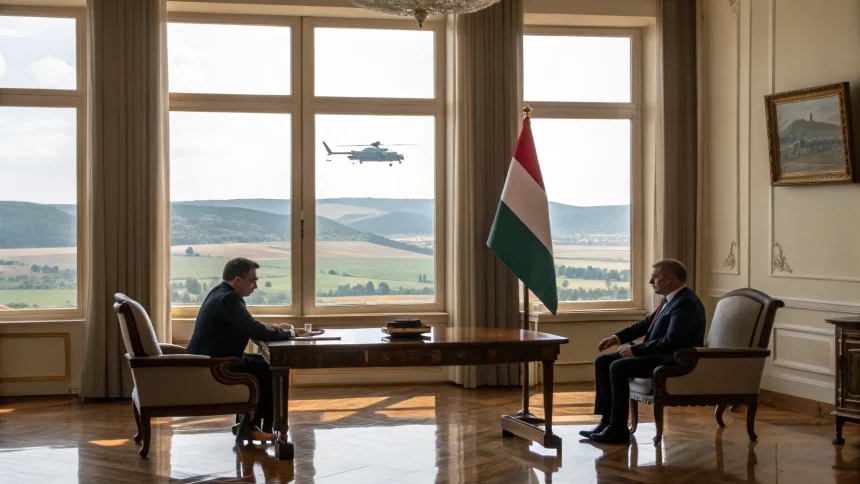
Hungary’s new prime minister, Péter Magyar, has summoned Russia’s ambassador after a massive drone attack struck near Hungary’s border with Ukraine, raising alarms over regional security and civilian safety. The move marks an early test for the new government as it confronts spillover risks from the war next door.
The government action came after drones targeted areas close to the northeastern frontier, where Hungarian communities sit only a few kilometers from Ukrainian territory. Officials said the step aims to demand explanations from Moscow and to signal concern to allies in the European Union and NATO.
What Happened and Why It Matters
The incident occurred along Hungary’s short but sensitive border with Ukraine, which stretches about 136 kilometers. Local authorities reported no direct damage on Hungarian soil, but the proximity of the strikes triggered immediate diplomatic action in Budapest.
“The government has summoned the Russian ambassador over a massive drone attack near Hungary’s border with Ukraine,” Prime Minister Péter Magyar said.
Summoning an ambassador is one of the sharpest formal protests in diplomacy short of sanctions or expulsions. It often precedes demands for clarification, assurances, or changes in military behavior near shared frontiers. For Hungary, a NATO and EU member, the stakes are high. Any accidental incursion could force consultations with allies and heighten the risk of escalation.
Background: A Borderland Under Strain
Hungary has tried to avoid direct entanglement in the war. It has condemned attacks on civilians while keeping a cautious stance on military aid and sanctions debates. The country relies on Russian energy, including long-term gas contracts and cooperation on the Paks II nuclear project.
Across the region, near-miss incidents have become a pattern since the full-scale invasion of Ukraine began in 2022. A missile blast in Poland killed two people that year, prompting urgent NATO talks. Romania has on several occasions reported fragments from Russian drones along the Danube corridor. These events show how fast the war’s hazards can spill across borders, even without intent.
Security Implications for NATO and Hungary
The latest attack will likely renew questions about allied air defenses along NATO’s eastern flank. Hungary operates Swedish-made Gripen fighter jets and has invested in modern ground-based air defense systems in recent years. Even so, defending long frontiers against small, low-flying drones is difficult and expensive.
Analysts say three risks top the list:
- Accidental overflight or debris falling inside NATO territory.
- Strain on border communities and critical infrastructure.
- Miscalculation that could trigger alliance consultations under Article 4.
None of these outcomes is automatic, but each incident adds pressure to improve detection, information-sharing, and rapid response. The government’s summons signals that Budapest wants Moscow to rein in activity that edges close to Hungarian airspace.
A Shift in Tone From Budapest?
Under previous leadership, Hungary maintained a pragmatic approach to Moscow, often urging dialogue while criticizing some EU measures seen as harmful to its economy. Péter Magyar’s early response suggests a firmer public line when incidents threaten Hungary’s security environment.
Whether this becomes long-term policy is unclear. The balance between energy needs, alliance commitments, and public safety remains delicate. Any change will be measured not only by statements, but by follow-up steps: tighter border monitoring, more frequent allied exercises, or new rules for crisis communication with Russia.
What Comes Next
The foreign ministry is expected to press the ambassador for details on flight paths, targets, and measures to prevent future incidents near the border. Hungary will also brief EU and NATO partners to keep channels open in case further action is needed.
Regional neighbors will watch for signs of coordination, including shared radar data and faster notifications when attacks approach allied territory. Energy markets may also take note, since diplomatic friction with Moscow can affect supply debates in Central Europe.
Wider Regional Pattern
The incident fits a wider pattern of high-intensity strikes across Ukraine that sometimes push danger toward NATO borders. As Russia and Ukraine adapt their tactics, drones and missiles often skirt river corridors, rail lines, and energy nodes located near neighboring states.
Past cases suggest these episodes do not always lead to immediate policy shifts. But each one builds pressure for stronger defenses, clearer red lines, and more rapid diplomacy when risks rise.
The summons of Russia’s ambassador marks a decisive early move by Hungary’s new leadership, signaling that threats near its border will draw a swift response. The next steps to watch include Moscow’s reply, any boost to allied air defenses in the region, and whether Budapest deepens coordination with partners. For now, officials say the goal is simple: keep the war from crossing a line that would endanger Hungarian lives or trigger a wider crisis.