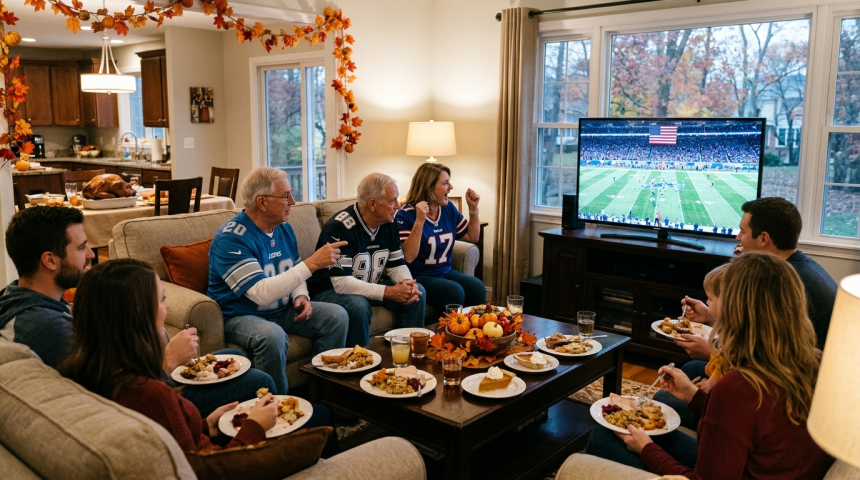
The NFL is serving its familiar Thanksgiving menu: the Detroit Lions, the Dallas Cowboys and a primetime matchup between AFC teams.
The holiday schedule gives Detroit and Dallas their customary home games before the conference rivals take over the evening slot. Opponents and kickoff details were not included in the initial schedule description.
For the league, Thanksgiving offers more than three football games. It delivers a full day of national attention while linking modern matchups with traditions that span generations.
Detroit and Dallas Anchor the Holiday
The Lions began hosting Thanksgiving games in 1934. Team owner George A. Richards used the holiday date to attract interest during the franchise’s early years in Detroit.
The gamble worked. Detroit’s annual game became one of the NFL’s longest-running traditions, pausing only during World War II.
Dallas joined the holiday lineup in 1966. The Cowboys have hosted nearly every Thanksgiving since then, missing only the 1975 and 1977 editions.
Those fixed home assignments give the schedule a familiar shape. Detroit usually occupies the early window, while Dallas follows in the late afternoon.
The arrangement also gives both clubs an unusual place in American holiday culture. Even casual viewers know where to find them, often somewhere between dinner and dessert.
Primetime Game Adds AFC Focus
The evening contest brings an AFC matchup to the national stage. That placement can carry added weight because it closes the holiday’s football schedule.
The NFL introduced a regular Thanksgiving night game in 2006. Unlike the Detroit and Dallas contests, the primetime matchup has no permanent host.
That flexibility allows schedule makers to feature competitive teams, major markets or games with playoff implications. An AFC pairing also gives the conference a dedicated spotlight after the traditional daytime windows.
The three-game format offers several benefits:
- Detroit and Dallas retain their historic holiday roles.
- The night game can rotate among teams and cities.
- National exposure reaches both established fans and holiday viewers.
A Valuable Stage for Teams and Broadcasters
Thanksgiving games are prized television events because families often watch together throughout the day. The audience includes dedicated supporters and viewers who may rarely watch regular-season football.
That attention creates pressure as well as opportunity. A strong performance can shape playoff discussion and raise a player’s profile. A poor showing unfolds before a large national audience with nowhere to hide, except perhaps behind the gravy boat.
Teams also face the challenge of playing on a short week. Thanksgiving participants often have only a few days to recover from the previous weekend, making preparation and injury management especially important.
Supporters of the format value its history and shared national audience. Critics may question competitive fairness, particularly when teams must travel or manage injuries with limited recovery time.
What Comes Next
The key remaining details are the opponents, kickoff times and broadcast assignments. Those announcements will show whether the league has paired tradition with games carrying division or postseason stakes.
For now, the broad outline is clear. Detroit and Dallas will again provide the holiday’s familiar daytime rhythm, while two AFC teams receive the primetime stage.
The formula is old, but its appeal remains practical. Football fills the gaps between family gatherings, and the NFL secures one of its most visible dates. The next question is whether the games can match the size of the occasion.