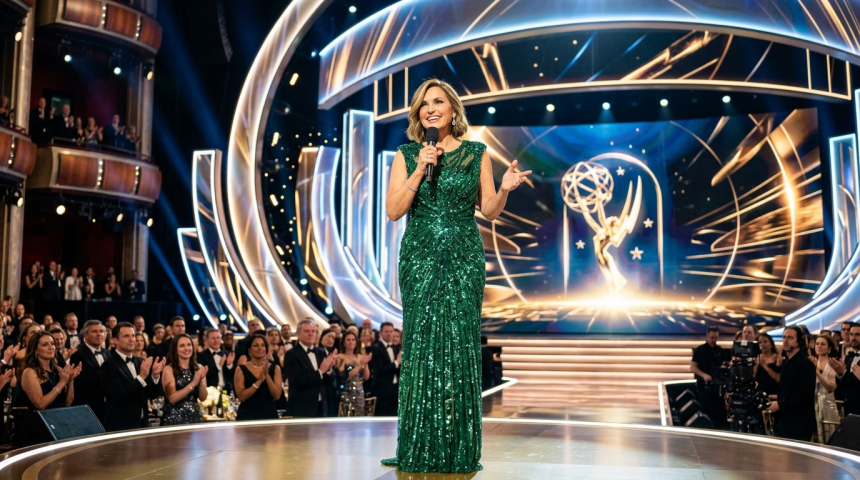
Mariska Hargitay took center stage at the 2026 Emmy Awards on Monday, September 14, leading a ceremony featuring nominees such as “The Pitt” and “Hacks.”
The hosting job placed one of television’s most familiar actors in charge of its biggest annual celebration. It also gave the ceremony a host closely linked with broadcast drama, public advocacy, and a long-running prime-time role.
A Familiar Face Takes the Microphone
Hargitay is best known for playing Olivia Benson on NBC’s “Law & Order: Special Victims Unit.” The role has made her a steady presence on American television for more than two decades.
That experience offered an advantage on Emmy night. Hosts must guide the broadcast, keep speeches moving, introduce major awards, and land jokes before the orchestra starts dropping hints.
Hargitay also brought the perspective of a past Emmy winner. She won the award for lead actress in a drama series in 2006 for her performance on “SVU.” Her career gives her a direct connection with actors, writers, directors, and crews gathered for the event.
Nominees Reflect Television’s Wide Reach
The 2026 field included “The Pitt” and “Hacks,” two programs representing different styles of television storytelling.
“The Pitt” centers on the pressures of medical work, using a hospital setting to examine personal strain and urgent decisions. “Hacks” draws comedy from ambition, age, reinvention, and the sharp edges of the entertainment business.
Their presence among the nominees showed how awards voters continue to recognize both high-pressure drama and character-led comedy. That mix also gave the broadcast room to shift between serious industry recognition and lighter moments.
- Hargitay supplied experience from a long-running network drama.
- “The Pitt” represented tense, workplace-focused storytelling.
- “Hacks” brought an established comedy voice to the nominee field.
Why the Host Still Matters
Awards shows now compete with streaming services, social media clips, and shorter viewer attention spans. The host remains the person responsible for turning separate award presentations into one coherent program.
The assignment can be tricky. A host must appeal to viewers at home without losing the room. The jokes must feel timely, but the ceremony must still leave space for winners and their work.
Hargitay’s selection suggested a preference for credibility and warmth rather than pure provocation. Her public image is closely tied to empathy, while her lengthy television career gives her authority among industry peers.
A Ceremony Balancing Legacy and Change
The Emmys have long served as television’s annual report card. Yet the medium being judged has changed. Network programs now share attention with cable and streaming productions, while audiences watch episodes on widely different schedules.
That makes the ceremony more than a parade of trophies. It is also a snapshot of what the television industry values, which programs have gained momentum, and which performers may shape the next awards season.
Hargitay’s role connected that changing industry with television’s durable past. Her career was built through weekly broadcast storytelling, while nominees such as “The Pitt” and “Hacks” reflect current viewing habits and production models.
The larger test for the Emmys will remain audience interest. Hosts can sharpen the pacing and create memorable moments, but nominated programs give the event its real stakes. In 2026, Hargitay offered a trusted guide as television honored both familiar names and newer successes.