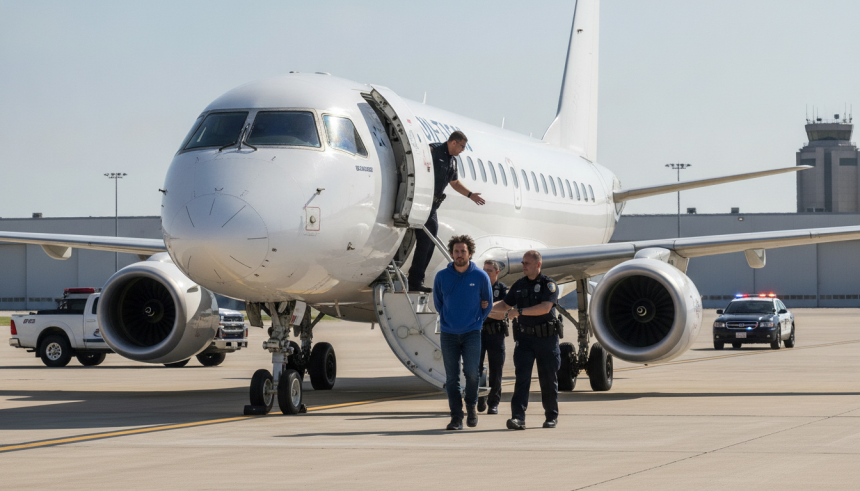
A regional jet departing Indianapolis turned back shortly after takeoff after a passenger allegedly tried to open a cabin door, prompting an arrest and fresh questions about unruly behavior in the skies. Authorities identified the passenger as Jacob Cook, who was taken into custody and charged with disrupting aircraft operations after the plane landed safely at Indianapolis International Airport.
The incident happened soon after departure on Monday, according to airport officials. Crew members reported that a traveler became combative and moved toward a door before being restrained. No injuries were reported. The airline was not immediately named, and the flight continued after the passenger was removed, according to people familiar with the response.
What Happened Onboard
Witness accounts and preliminary statements describe an intense few minutes after takeoff as the crew confronted the passenger. The decision to return was swift. Federal guidance encourages crews to divert when behavior threatens safety or order on board.
Officials described the passenger as “belligerent,” alleging he attempted to open a cabin door.
Opening a main cabin door during flight is physically unlikely due to pressure differences and locking mechanisms. Still, any attempt can start panic, distract crew members, and escalate fast. Pilots often treat such events as potential safety risks, returning to the departure airport where law enforcement can meet the aircraft.
Legal Consequences Are Growing
Cook was booked on a state charge of disrupting aircraft operations, authorities said. Interfering with flight crew or attendants can also trigger federal charges under aviation security laws. The Federal Aviation Administration (FAA) can impose civil penalties in addition to criminal cases.
Since 2021, the FAA has enforced a “Zero Tolerance” policy for unruly passengers. That policy allows fines without warnings for assault, threats, or interference with crew duties. The agency can also refer cases to the Department of Justice when warranted.
- Criminal interference with crew can carry prison time.
- FAA civil penalties can reach tens of thousands of dollars per violation.
- Airlines may place passengers on internal no-fly lists.
Unruly Incidents Spiked, Then Eased
Reports of passenger misbehavior surged during the pandemic. The FAA logged nearly 6,000 reports in 2021, the highest on record. Numbers have since fallen but remain elevated compared with pre-2020 levels, with more than 2,000 reports in 2023. Alcohol, disputes over personal space, and refusal to follow instructions are frequent triggers.
Industry groups credit stronger enforcement and better crew training for the decline. They also warn that even one incident can disrupt hundreds of travelers and strain airport police and TSA resources. Returning to the gate or diverting mid-route can force crews to time out, cancel onward flights, and ripple across a carrier’s schedule.
How Crews Manage In-Flight Disruptions
Flight attendants are trained to de-escalate conflict and coordinate with pilots. Standard steps include moving the passenger away from exits, enlisting able-bodied volunteers if needed, and using restraints when behavior becomes unsafe. Pilots notify air traffic control so law enforcement is waiting at the gate.
Security experts note that cabin doors are engineered to stay shut under pressure, but galley doors and overwing exits still require attention during taxi, takeoff, and landing. A determined passenger can cause chaos even without breaching a door. That is why interference with crew instructions—seatbelts, remaining seated, or securing carry-ons—is taken seriously.
Passengers Have Responsibilities, Too
Travelers agree to follow crew instructions under federal law. Disobeying can lead to removal, fines, or arrest. Most situations resolve after a warning. When they do not, crews escalate to protect safety.
Experts recommend simple steps: pace alcohol intake, use headphones to cool off during conflicts, and alert crew early if someone nearby appears agitated. Early reporting can prevent a bad situation from getting worse.
The Indianapolis case adds to a year of steady, if lower, reports of disorder. The good news: the system worked. The jet landed safely, the passenger was removed, and everyone else got home. The concern is what comes next. Airlines and regulators will watch charging decisions and any FAA enforcement as a signal to would-be troublemakers. For fliers, the takeaway is basic but firm: follow instructions, keep calm, and let the crew do their jobs.