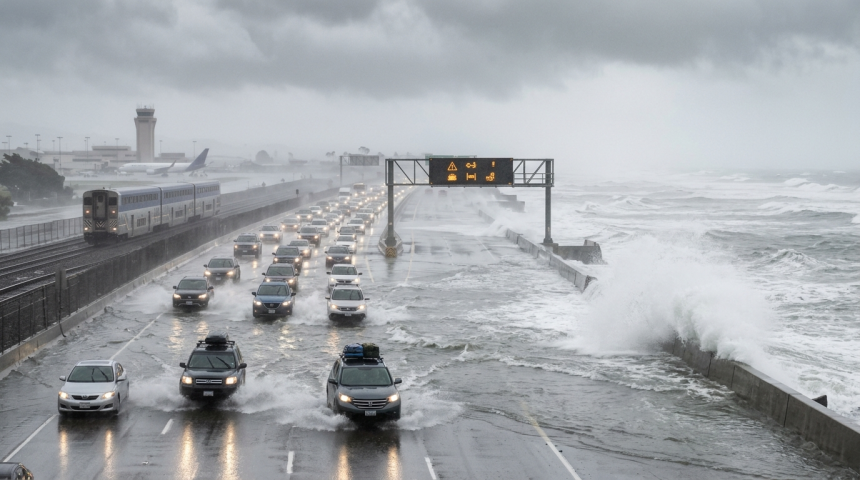
Annual king tides could combine with Pacific storms during a busy travel week, increasing the risk of coastal flooding, road closures, and delays. The timing may create difficult conditions along exposed parts of the Pacific coast as more people take to highways, airports, and transit systems.
The threat comes from two events occurring at once. King tides raise water levels along the coast, while storms can bring heavy rain, strong winds, and large waves. Their overlap can push water farther inland than either event might produce alone.
Why the Timing Matters
King tides are the highest predictable tides of the year. They occur when the gravitational pull of the sun and moon has a greater effect on ocean levels. Although they are a normal event, local weather can make their effects more severe.
A Pacific storm may raise coastal water through wind and wave action. Low atmospheric pressure can also contribute to higher water levels. Heavy rain creates another concern because drains, streams, and rivers may struggle to release water when tides are high.
The expected storms are arriving during a heavy travel week. That increases the number of people who could encounter flooded streets, fallen trees, reduced visibility, or transportation disruptions.
Coastal Routes Face Greater Exposure
Low-lying roads, waterfront neighborhoods, beaches, and harbor areas face the clearest risk. Saltwater may cover pavement, enter parking areas, or block access to coastal facilities during peak tides.
Large waves could add to the danger near beaches, cliffs, and seawalls. Even shallow moving water can make a road unsafe. Drivers may also have trouble judging pavement conditions after dark or during intense rain.
Conditions are likely to vary by location and by the timing of each storm. A high tide that arrives near the strongest winds or heaviest rainfall would create a greater threat than events separated by several hours.
- Travelers should check forecasts and road conditions before departure.
- Drivers should avoid flooded roads and obey closure signs.
- Coastal visitors should keep away from large waves and unstable cliffs.
- Extra travel time may help if routes or transit schedules change.
A Recurring Test for Coastal Communities
King tides often reveal where communities are most exposed to high water. Flooding during these events can show how roads, storm drains, buildings, and shore defenses may perform under future sea-level conditions.
However, a king tide does not guarantee damaging flooding. The outcome depends on storm strength, wind direction, wave height, rainfall, local geography, and the exact hour of high tide. Forecast updates will therefore matter as the Pacific systems approach.
Public agencies may need to monitor known flood points, clear drainage systems, and prepare temporary closures. Transportation providers could also adjust schedules if wind, standing water, or debris affects operations.
The central concern is the overlap of predictable high tides with less predictable storm conditions. Travelers should watch local alerts and remain flexible. The most important developments will be the storms’ paths, their arrival times, and whether their strongest impacts coincide with peak coastal water levels.