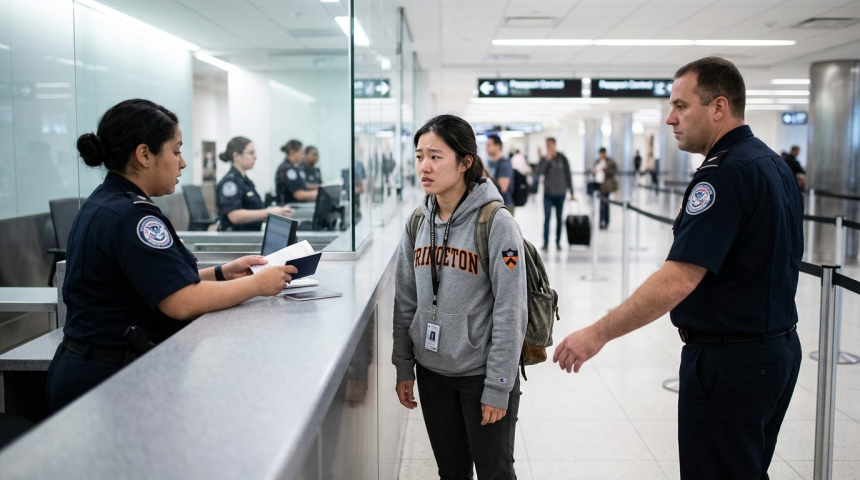
A Chinese-born neuroscience graduate student at Princeton University was detained by federal immigration authorities at a Washington, D.C., airport, according to the university and affiliated campus groups.
The detention has raised immediate questions about the student’s legal status, treatment, and access to counsel. Key details remain undisclosed, including the airport, date, agency involved, and stated reason for the action.
University Confirms the Detention
Princeton and university groups confirmed that federal immigration authorities detained the graduate student. The available account identifies the student by academic field and birthplace, but not by name.
No public statement cited criminal allegations. Authorities also had not disclosed whether the student was detained while entering the country, leaving it, or traveling within the United States.
That distinction matters. International travelers can face immigration screening at ports of entry. Domestic travelers may encounter federal officers under different legal circumstances. Without further information, the precise basis for the detention cannot be assessed.
Questions About Status and Legal Access
Graduate students born abroad may study in the United States under several immigration categories. Their rights and options depend on their visa, residency status, travel history, and any government order affecting them.
The central unanswered questions include:
- Which federal agency detained the student?
- What legal reason did officials provide?
- Has the student received access to an attorney?
- Where is the student being held?
- Is removal from the United States being considered?
Federal immigration cases can move quickly, especially when they begin at an airport. Yet the government’s authority is not unlimited. A detainee may have legal rights based on status, location, and the type of proceeding involved.
Concern for International Scholars
The case may unsettle international students and researchers at Princeton and other American universities. Many travel abroad for fieldwork, conferences, family visits, and academic collaboration.
Even a single detention can create wider uncertainty when officials provide little public information. Students may reconsider travel plans, while universities may review guidance about visas, documents, and legal support.
The student’s neuroscience work also places the case within a research community that depends heavily on international talent. Universities recruit scholars across borders, while federal agencies retain broad powers to enforce immigration rules and review travelers.
Those interests can collide. The government has a duty to explain enforcement actions through proper legal channels. Universities, meanwhile, must support students without claiming facts they cannot verify. Airport cases rarely arrive with a tidy instruction manual.
Transparency Will Shape the Response
The limited public record makes caution essential. The student’s Chinese birthplace does not establish why the detention occurred. Nor does enrollment at Princeton exempt any person from immigration review.
At the same time, a detention can carry serious academic and personal costs. Missed research, interrupted teaching, housing problems, and separation from family can begin before a court reviews the case.
Further statements from federal authorities, Princeton, the student’s representatives, or legal counsel could clarify what happened. Records showing the legal basis for detention would also help distinguish routine immigration enforcement from a disputed or unusual action.
For now, the confirmed facts are narrow but serious: a Princeton neuroscience graduate student born in China was detained by federal immigration authorities at an airport in Washington, D.C. The next developments to watch are access to counsel, the government’s stated grounds, and whether the student is released, transferred, or placed in formal proceedings.