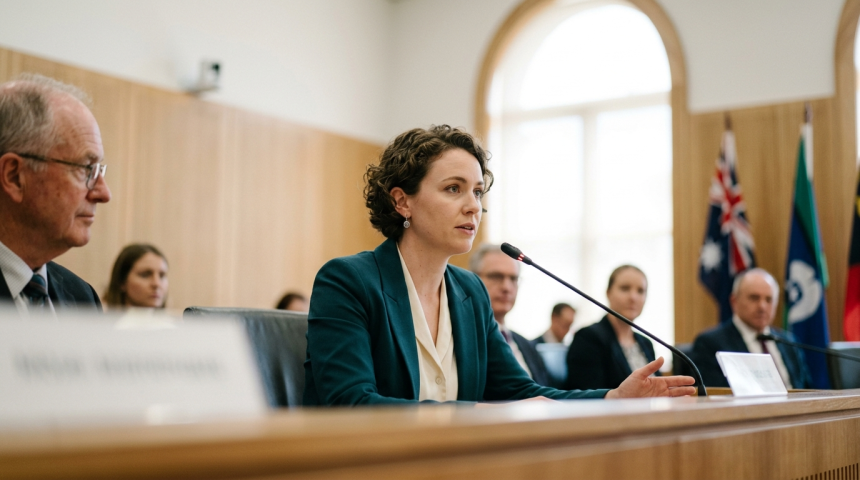
A former Redeemer Baptist School student has told a New South Wales parliamentary inquiry that nothing improper happened to her during stays linked to the school. However, she said its culture left her with much to “untangle” as an adult.
Her account draws a distinction between personal safety during those stays and the longer-term effects of the school environment. The evidence places institutional culture, rather than a specific allegation of misconduct against her, at the centre of her concerns.
A Carefully Drawn Distinction
The former student told the inquiry that “nothing untoward happened” to her during the stays. That statement limits her evidence to her own experience and does not make claims about what others may have encountered.
At the same time, she indicated that an absence of improper conduct did not mean her time connected with the school had no lasting impact. Her reflection as an adult suggests that beliefs, expectations or practices within the school required later examination.
The culture of Redeemer Baptist School left much to “untangle” as an adult, the former student told the inquiry.
The phrase points to a delayed process of understanding. Former students can reassess school experiences years later, after gaining distance from the authority structures and social expectations that shaped their childhood.
Inquiry Focuses Attention on School Culture
Parliamentary inquiries give witnesses a formal setting to describe experiences and help lawmakers examine whether public safeguards are adequate. Testimony can also reveal concerns that may not fit within a single complaint or alleged incident.
In this case, the former student’s evidence raises questions about how school culture may affect students over time. It also shows why investigators often examine both reported events and the wider setting in which students lived or studied.
Key distinctions in the account include:
- The witness did not report that anything improper happened to her during the stays.
- Her concerns centred on the culture of Redeemer Baptist School.
- She described effects that continued into adulthood and required later reflection.
- Her evidence was given to a New South Wales parliamentary inquiry.
Personal Testimony and Wider Conclusions
The account should be read with care. One former student’s experience cannot establish what every student experienced, either positively or negatively. It also cannot, by itself, settle broader questions about the school.
Yet such evidence can help an inquiry identify patterns when considered alongside other witnesses, records and institutional responses. The value lies in both what the witness reported and the limits she placed on her account.
Her evidence also highlights an important issue for schools. Student welfare is not measured only by whether a specific harmful incident occurred. Rules, teaching, discipline and authority can shape how young people understand themselves and their relationships long after leaving school.
The inquiry’s broader findings will depend on the full evidence before it. Future attention is likely to focus on whether other accounts support similar concerns, how Redeemer Baptist School responds, and whether lawmakers recommend stronger oversight or safeguards.
For now, the former student’s testimony offers a measured but serious message. She did not allege personal mistreatment during the stays, yet she said the school’s culture carried consequences into adult life. That distinction may prove important as the inquiry assesses institutional responsibility and the lasting effects of education.