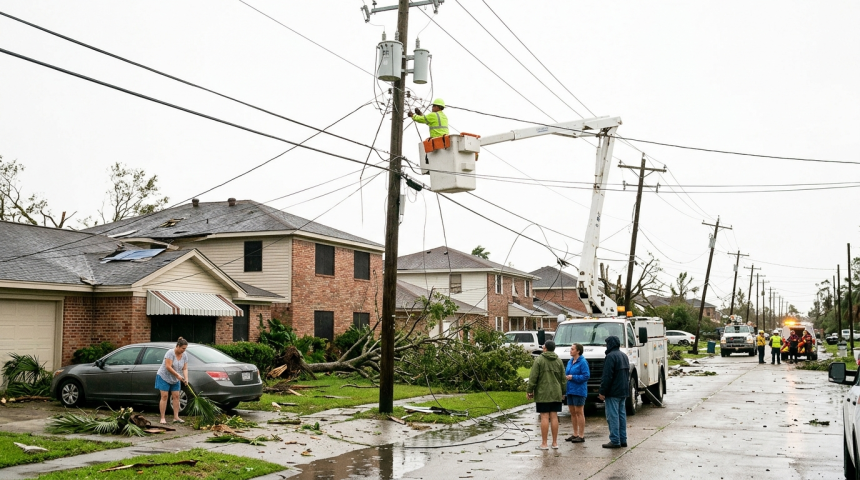
Hurricane Isaias left thousands without electricity and caused widespread damage along the Gulf Coast, according to a report by Fox News correspondent Max Gorden on “Fox Report.”
The aftermath placed affected communities under immediate pressure. Power failures can disrupt medical care, communications, water systems and access to fuel. Damage also creates hazards for residents and utility crews beginning recovery work.
Communities Face an Unclear Damage Toll
Gorden reported from the storm’s aftermath, describing conditions that left thousands without power. The report did not provide a precise outage count or financial estimate.
The hurricane left “thousands without power” and caused “widespread damage.”
Those early descriptions point to a broad emergency, but they do not establish its full scale. Initial figures often change as crews reach damaged neighborhoods and inspect electrical equipment.
Local assessments typically begin with searches for people in danger. Officials then examine roads, homes, businesses and public utilities. The absence of detailed totals means the reported impact should be treated as an early account rather than a final tally.
Power Restoration Drives Recovery
Electricity is often the first major test after a hurricane. Utilities must inspect lines before restoring service, since damaged equipment may create fire or electrocution risks.
Restoration can also be uneven. Hospitals, emergency services and key public facilities usually receive priority. Residential areas may wait longer, especially where fallen trees block access or several parts of the grid need repair.
For households, even a short outage can spoil food and limit air conditioning. Longer disruptions can threaten people who rely on powered medical devices. They may also force businesses to close when communities most need groceries, fuel and other supplies.
- Residents should avoid fallen electrical lines and flooded roads.
- Generators should remain outdoors to prevent carbon monoxide poisoning.
- Returning residents should follow instructions from local emergency officials.
Storm Damage Extends Past Landfall
A hurricane’s danger does not end once its winds weaken. Flooding, unstable buildings and scattered debris can remain hazardous for days. Cleanup crews also face risks while cutting trees or working near damaged utility equipment.
The Gulf Coast has long dealt with tropical storms, and communities have built evacuation and emergency plans around that threat. Still, each storm creates different problems based on its path, rainfall, wind speed and the condition of local infrastructure.
The Isaias report offered no confirmed casualty count, repair schedule or estimate for insured losses. Those details are needed before officials can measure the disaster’s human and economic cost.
For now, the clearest finding is that power restoration and damage inspections will shape the next stage of recovery. Updated outage totals, safety reports and local assessments will show whether the disruption is brief or becomes a longer regional emergency.