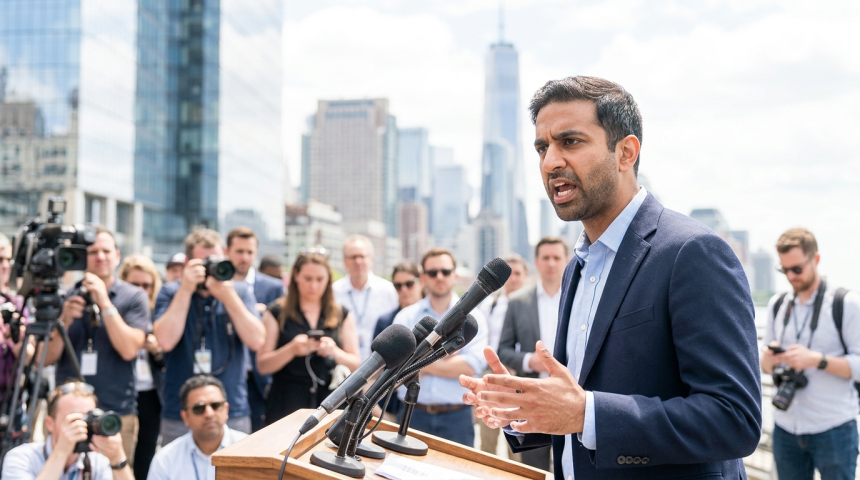
New York City Mayor Zohran Mamdani has accused past city leaders of misleading the public about air quality near the World Trade Center after Sept. 11.
Mamdani said officials “lied” when they told residents, workers and volunteers that the air was safe around Ground Zero. His charge revives a painful dispute over government warnings issued after the 2001 terrorist attacks.
The statement also renews scrutiny of how public agencies handled health risks during the rescue, cleanup and recovery effort. Thousands of people were exposed to dust containing asbestos, silica, metals and other hazardous material.
A History of Disputed Safety Assurances
Questions about official air-quality statements have persisted for more than two decades. They center on assurances that encouraged people to return to lower Manhattan while debris still burned.
Then-EPA Administrator Christine Todd Whitman said on Sept. 18, 2001, that air monitoring results were reassuring. She said the agency was “very encouraged” that New Yorkers faced no serious health threat from the air.
A 2003 report from the Environmental Protection Agency’s inspector general later found that the agency lacked enough information to make broad assurances. The report also said the White House Council on Environmental Quality influenced EPA news releases.
The inspector general found that some cautionary language was removed or softened. That history gives Mamdani’s accusation weight, although responsibility was spread among city, state and federal institutions.
City leaders “lied” about the air quality being safe around the World Trade Center site, Mamdani said.
Workers Still Carry the Health Burden
The health toll has grown clearer with time. Firefighters, police officers, construction crews, volunteers, residents and office workers reported respiratory illnesses after exposure.
Congress created the World Trade Center Health Program under the James Zadroga 9/11 Health and Compensation Act. The program monitors and treats eligible survivors and responders with certified conditions.
Those conditions include certain cancers, asthma, chronic sinus disease and post-traumatic stress disorder. The federal program has enrolled tens of thousands of people across the United States.
The long delay between exposure and diagnosis remains a central concern. Some cancers can emerge many years later, making stable health funding a continuing political issue.
Accountability Is More Complicated Than One Claim
Mamdani’s wording is direct, but proving a deliberate lie requires evidence that officials knew their statements were false. Earlier investigations documented weak data, poor coordination and political interference.
That record supports criticism of the government response. It does not place every disputed assurance solely at City Hall, since federal agencies issued some of the best-known public statements.
The dispute highlights three lasting questions:
- Who approved public safety messages during the cleanup?
- What health evidence was available when those messages were issued?
- How should governments communicate uncertainty after a disaster?
Mamdani’s comments may increase pressure for fuller disclosure of past decisions and continued support for affected communities. They may also sharpen debate over which officials and agencies bear responsibility.
For survivors and responders, the argument is not merely historical. Medical care, compensation and public trust remain at stake. The next test for city leaders will be whether strong words produce clearer records, steady health funding and safer crisis communication.