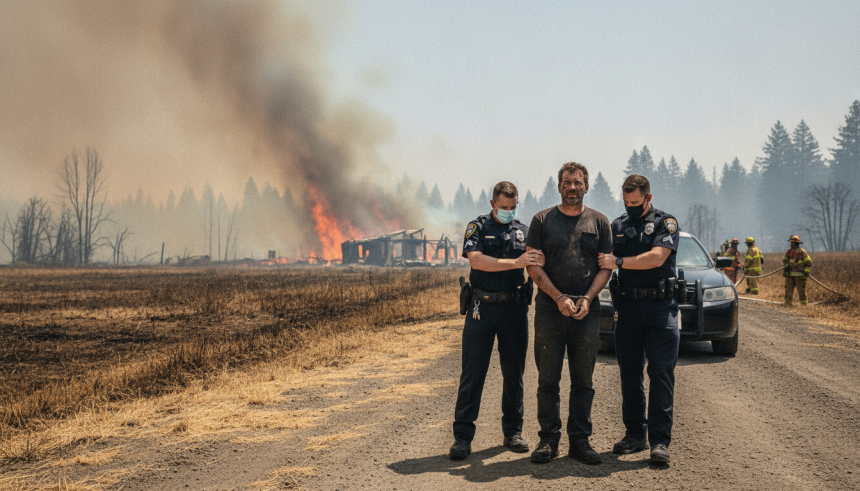
A man in Washington state has been arrested on suspicion of arson after fires tore through the Spokane area, prompting urgent response from firefighters and local officials. The arrest comes as crews battle three separate blazes near Spokane, where late-summer heat and dry brush have turned routine sparks into fast-moving threats. Authorities say the case is active, and investigators are working to confirm how the flames began and whether the incidents are connected.
What Authorities Say
Officials confirmed that one individual is in custody in connection with at least one of the three fires. The identity of the suspect has not been released. Investigators are examining ignition points, weather data, and witness accounts. They are also comparing the timing and spread of the blazes to look for patterns.
A man in Washington state has been arrested on suspicion of arson for allegedly starting one of three fires ravaging the Spokane area.
Law enforcement emphasized that the arrest is not a final determination of cause. The suspect has not been charged, and the inquiry is ongoing. Agencies are coordinating to protect evidence and to keep the public safe as the fires continue to burn.
Conditions Driving the Fires
Late summer often brings high fire danger to eastern Washington. Grasses and timber dry out after weeks without rain. Afternoon winds can push flames through canyons and neighborhoods in minutes. In these conditions, small embers can jump roads and set new spot fires that outpace ground crews.
Fire managers monitor humidity, wind speeds, and fuel moisture to predict how quickly a blaze might grow. Those factors can shift within hours, which complicates attack plans. Air support helps, but smoke can ground aircraft and limit drops when they are needed most.
Community Impact and Response
Residents in affected zones reported ash and heavy smoke, with some receiving evacuation warnings as crews worked to protect homes and critical infrastructure. Road closures and poor visibility slowed travel. Local shelters prepared to receive families and pets if conditions worsened.
Utilities tracked lines near the fire perimeter and staged repair crews. Public health officials reminded people to limit time outdoors when smoke levels rise, especially for children, older adults, and those with heart or lung issues.
- Keep a go-bag with medications, documents, and chargers.
- Set phones to receive emergency alerts.
- Clear dry vegetation within a safe buffer around homes.
Arson Allegations and Due Process
Arson cases are complex. Investigators must separate human causes from accidents like equipment sparks or power line failures. They also need to rule out natural causes, such as lightning. When an arrest occurs early, it signals investigators believe there is credible evidence to support probable cause. It does not settle the question of guilt.
Legal experts note that forensic fire analysis can take weeks. Tests may include lab reviews of debris for accelerants and modeling of how a fire moved across terrain. Witness timelines and digital records can also play a role.
The Bigger Picture on Wildfires
Washington’s wildfire seasons have grown more intense in recent years, with longer dry spells and higher fuel loads. Communities across the state have invested in defensible space projects and updated evacuation planning. Fire agencies train for multi-incident days, when crews must split resources across several fronts.
Researchers point out that accidental ignitions from daily activity are common near populated areas. Even when criminal intent is suspected, most fire spread depends on heat, wind, and fuels. That link between human activity and conditions increases the stakes for prevention.
What Happens Next
Officials will release more details as they confirm them, including any charges and court dates. For now, the focus remains on containment lines, evacuations, and keeping roads open for emergency vehicles. Residents should follow local briefings and be ready to move if asked.
The arrest adds urgency but not closure. The fires will be the first test of any theory about cause and origin. The coming days will show whether crews can box in the flames before winds shift again. If they do, Spokane will have space to recover. If not, the region may be in for a longer fight.
The larger lesson is simple. Prevention matters, even on quiet days. One spark can change a community’s week. Many hands, and steady planning, can change its outcome.