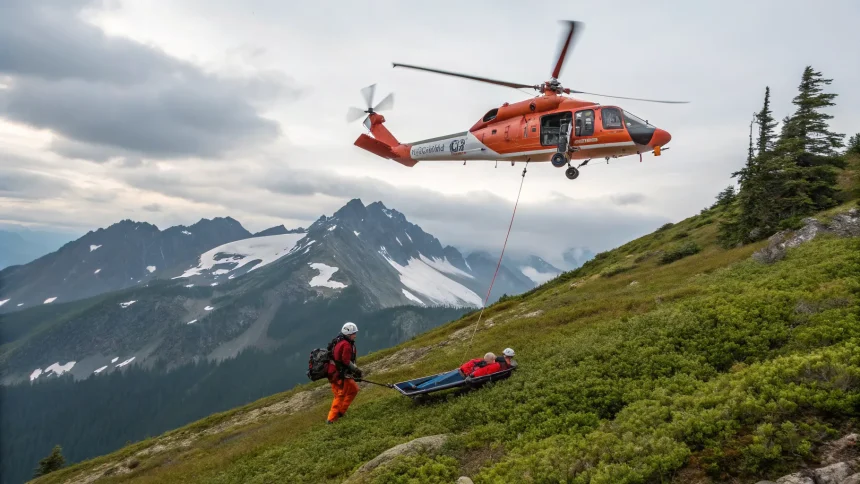
A Coast Guard aircrew hoisted an injured woman to safety on Saturday after she fell 120 feet down a mountain in Washington state, a rescue that highlights the hazards of early-season hiking and the lifesaving role of aviation teams in the Northwest.
Officials said the woman fell a significant distance on rugged terrain before the helicopter crew reached her. The aircrew lifted her from the mountainside and transferred her for medical care. No other details were released, but the incident underscored how quickly a day hike can turn into a technical rescue when the route tilts vertical and the footing turns uncertain.
“A woman was rescued by a Coast Guard aircrew on Saturday, after falling 120 feet down a mountain in Washington state.”
What Happened And How Crews Respond
In mountain rescues like this, the first call typically goes to local 911. County search-and-rescue teams assess access and medical needs. When terrain is steep, remote, or weather limits ground response, they request helicopter support. An aircrew then lowers a rescue swimmer by cable, stabilizes the patient, and performs a hoist.
Washington’s peaks offer tight valleys, tall trees, and sudden weather shifts. That can leave only short weather windows to complete a lift. Hoists often happen from hovering positions, sometimes with rotor tips only yards from rock walls. The work is fast, loud, and exacting. One slip is one too many.
Why Helicopters Get The Call In Washington
From the Olympics to the Cascades, the state’s ranges climb quickly from sea level. Trails can turn into talus, snowfields, or ice without warning. Steep gullies make stretcher carries long and risky for ground teams. Aircrews trained for hoist operations shorten response times and reduce exposure for volunteers below.
The Coast Guard primarily patrols coasts and waterways, but in Washington, aviation units often assist inland when other aircraft are unavailable or when proximity to the coast speeds the response. Coordination with sheriffs’ offices and mountain rescue units is routine. The shared goal is simple: reach the patient fast and leave no one stuck on a slope as daylight fades.
The Risks Of A 120-Foot Fall
A 120-foot fall can cause serious trauma even if the landing is broken by brush or snow. Rescuers brace for head injuries, internal bleeding, fractures, and hypothermia from lying still on cold ground. Quick packaging and a rapid lift to higher care can be the difference between a long rehab and something worse.
Steep terrain adds secondary risks. Rockfall can strike both patient and rescuers. Rotor wash can dislodge loose debris. Crews train to manage these hazards, using hand signals, careful positioning, and clear radio calls to keep the hoist precise.
Seasonal Hazards And A Surge In Trail Use
Early-season sunshine hides winter leftovers. Snow lingers in shaded chutes and covers holes between rocks. Melt-freeze cycles turn slopes slick by morning and slushy by afternoon. Even well-marked trails can vanish under patchy snow, sending hikers onto steep ground by mistake.
Outdoor use has climbed in recent years, putting more people in beautiful but unforgiving places. More hikers means more twisted ankles, wrong turns, and, sometimes, falls. Rescue teams say preparation still beats heroics. A charged phone, a map, and a plan help everyone get home before dark—and keep helicopters on standby rather than en route.
How To Cut Your Risk On Steep Ground
- Check recent trip reports for snow, ice, and washouts.
- Carry traction, trekking poles, and extra layers even on sunny days.
- Turn around at the first sign of sliding feet or shrinking visibility.
- Tell a friend your route and return time.
- Know how to call for help and enable location on your device.
None of these steps guarantees a perfect day. They do stack the odds in your favor and make you easier to find if things go wrong.
What To Watch Next
Officials may release more details about the woman’s condition and the specific location in the coming days. For rescue agencies, the takeaway is familiar: spring invites hikers before the mountains are ready. Training, coordination, and air support remain key tools when gravity wins.
For hikers, the message is even simpler. Treat steep terrain with respect. If the path looks like a slip-and-slide, it probably is. The best rescue is the one that never has to launch.