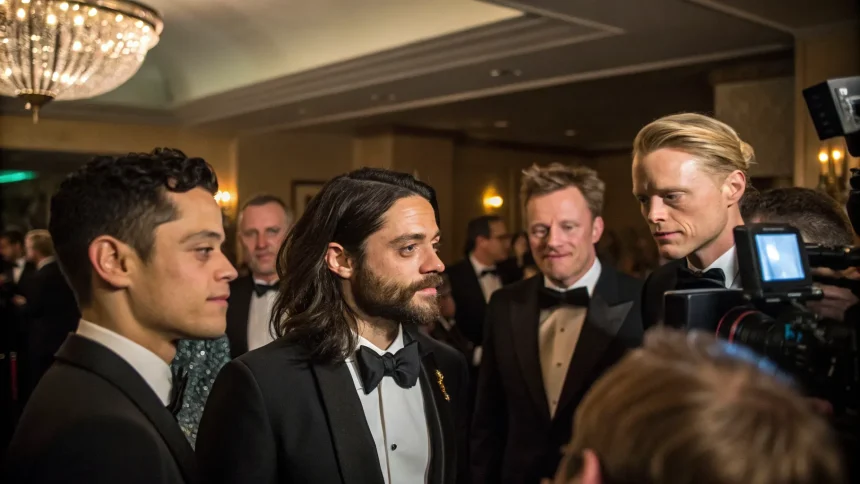
Some of film and music’s most recognizable names slipped into a hush-hush gathering this week, and one rule set the tone: no phones, no photos. Actors Rami Malek, Stellan Skarsgård, Paul Dano, and Gael García Bernal joined filmmaker Roman Coppola, producer-composer Ludwig Göransson, and even NBA champion Kevin Love at the invitation-only event, where confidentiality came first.
The gathering, held at an undisclosed location, signaled a growing shift among high-profile hosts. The who, what, when, and where stayed largely under wraps. The why was clear. The hosts wanted privacy, candor, and a break from the instant broadcast loop of social media.
Who Was in the Room
The guest list spanned industries, hinting at a cross-pollination of ideas that rarely happens in public. The presence of film, music, and sports figures suggested a cultural summit with creative stakes.
- Rami Malek
- Stellan Skarsgård
- Paul Dano
- Roman Coppola
- Gael García Bernal
- Kevin Love
- Ludwig Göransson
“No personal photography was allowed.”
That single rule shaped the night. It promised freedom from performance for the camera, and it kept spoilers or leaks to a minimum.
Why Phone-Free Events Are Back
Phone-free policies are not new, but they are gaining steam. Comedians like Dave Chappelle and musicians such as Jack White have used locking pouches at shows to curb recordings and distractions. Filmmakers have pushed similar steps at private screenings to protect early cuts and surprise reveals.
Hosts say the payoff is better attention and more honest conversation. With no cameras, guests often relax. Deals and creative sparks can happen without the shadow of a viral clip.
Privacy, Exclusivity, and the Social Trade-Off
There is a trade-off, though. Fans following their favorite stars expect photos, red carpets, and behind-the-scenes posts. A blackout frustrates that appetite. But it also builds mystique. When everything is public, nothing feels special. A blackout can make one night feel rare.
For attendees, privacy carries real value. Athletes and actors live online in high definition. One offhand remark can ricochet across platforms. A strict policy can shield guests from that blowback and allow frank debate about new projects.
Creative Stakes and Cross-Industry Interest
Bringing a group like this together hints at shared interests. Malek, Dano, Skarsgård, and García Bernal represent varied corners of cinema, from studio hits to arthouse fare. Göransson’s music crosses genres and won major awards. Roman Coppola straddles film and advertising. Kevin Love bridges sports, media, and mental health advocacy.
In past years, similar private sessions have fueled collaborations, from surprise music tie-ins to film scoring partnerships. When phones stay pocketed, ideas can move faster than posts.
Security Measures and Leak Prevention
Policies like these often rely on check-in stations, locked pouches, or device-free zones. Even without visible tech, social norms do a lot of the work. Guests know that a leak would sour future invites. The result is a floating code: show up, speak freely, and keep it in the room.
What It Means for Fans and Industry
For fans, the lack of photos can sting in the short term. But the longer game may deliver. Phone-free time can lead to better art, clearer agreements, and fewer PR skirmishes that derail projects.
For the industry, the policy suggests a recalibration. Not every moment needs a post. Some need focus, trust, and a little mystery.
The night ended without selfies or slideshows, and that was the point. The guests got a space to think and talk. The hosts got control over what, if anything, reaches the public. Expect more A-list rooms to go this route, especially when early deals, sensitive cuts, or unannounced projects are on the table. Fans may not see it in real time, but they might feel the results when the next film drops, the next soundtrack hits, or a new partnership surfaces without a leak.